





Most teams treat CMDB implementation as a modeling problem, and that's exactly why it keeps letting them down. The real trouble starts where devices enter and leave your organization. A big chunk of configuration records drift out of accuracy within the first year of go-live, and the cause almost never sits in the schema. I want to walk through the part most teams skip: the physical and geographic reality of assets that rots your configuration data from the outside in. That decay begins the moment a device gets procured somewhere your team can't see it, and no amount of elegant CMDB implementation planning fixes what happens at those blind spots when your inventory tracking can't reach them.
What You'll Find in This Guide
Here's a quick map of everything below so you can jump straight to whatever hits closest to your current headache. I've ordered the topics to follow the way CMDB data actually degrades, starting at the procurement edge and moving inward toward reporting and governance. If you've ever wondered what is CMDB supposed to deliver once the launch confetti settles, this sequence answers it.
• Why the perimeter of your CMDB matters more than the schema • The procurement blind spot that corrupts records before day one • Offboarding and the ghost assets nobody deletes • Geography as a data integrity problem • Reconciliation between discovery tools and physical reality • Federation without turning your CMDB into a junk drawer • Ownership, accountability, and who actually maintains the thing • How automation and AI-assisted lifecycle data change the game • A GroWrk fit for distributed asset accuracy • Final thoughts
TL;DR
Short on time? Here's the compressed argument, and each point stands alone as a preview of what's ahead.
- Most CMDB implementation efforts fail at the lifecycle edges (procurement and offboarding), not at the data model.
- Devices bought outside a governed process enter your CMDB wrong or never enter at all.
- Offboarding gaps create ghost CIs that inflate license counts and skew audits.
- Distributed and cross-border teams multiply the number of places your data can drift.
- Reconciliation only works when physical asset events feed the CMDB automatically.
- Clear ownership and lifecycle automation keep records trustworthy long after go-live.
If you're still working out the CMDB definition in relation to broader asset tracking, our comparison of CMDB versus ITAM frames where each system fits. Getting that distinction right early saves a lot of rework in a CMDB implementation.
The Edges of a CMDB Break Before the Middle Ever Does
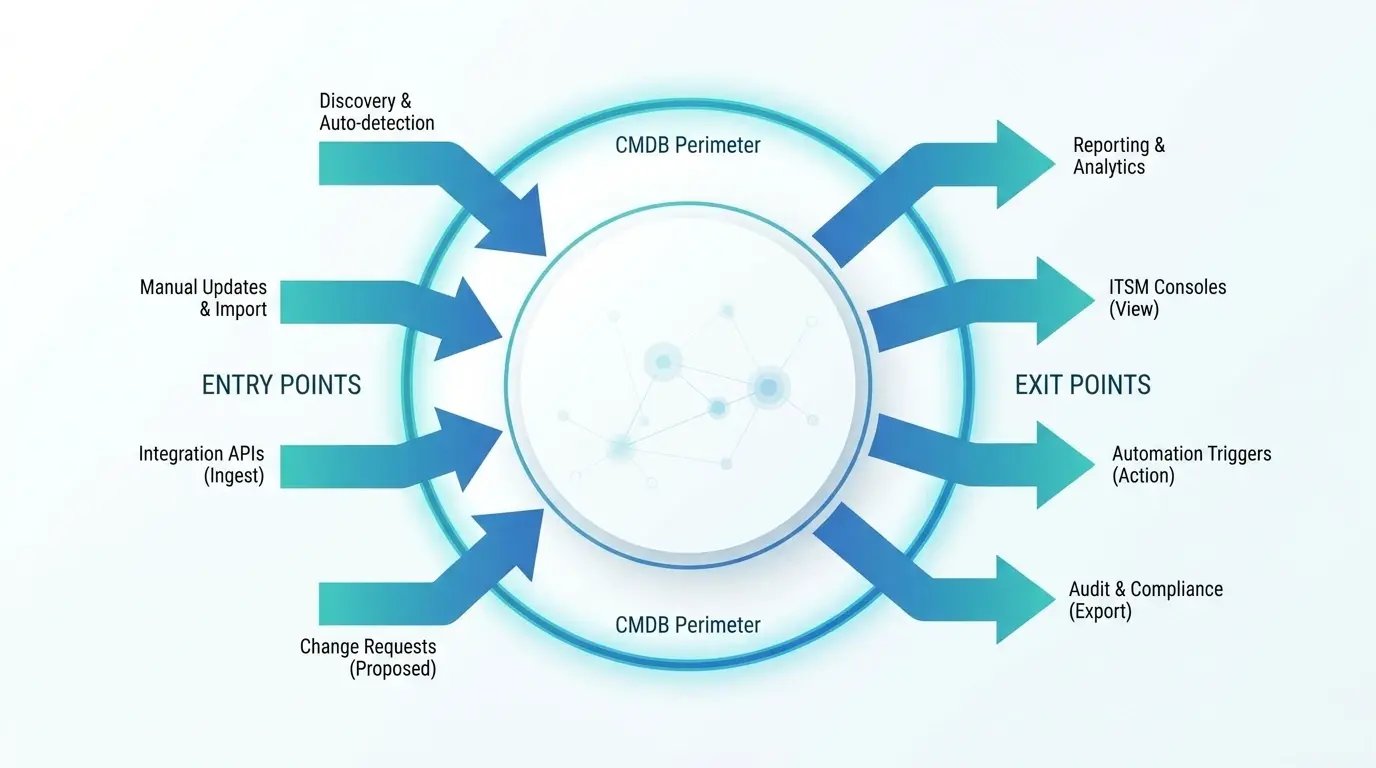
Teams pour effort into the configuration item model, relationships, and CI classes, then wonder why trust in the data collapses within a year. I've watched this happen enough times to say it plainly: the failure rarely lives in the schema. It lives at the entry and exit points, where assets get created, moved, and retired faster than any manual process can track. Plan your CMDB implementation around those two points and the rest gets easier.
The pattern behind CMDB implementation disappointment is pretty consistent. Attention flows toward the parts that feel like real design work, and the messy operational feeds get pushed to a later phase that never quite arrives. CMDB architecture discussions eat up weeks of whiteboarding while the question of how a laptop actually gets into the system stays unanswered. The scale of the letdown is well documented: an often-cited Gartner figure holds that 80 percent of CMDB projects add no value to the business, and that failure almost never traces back to the model itself. Most of that value gap traces to how a CMDB implementation handles its edges.
Fix the edges and the center mostly takes care of itself. That's the through-line for everything here. A perfect CMDB architecture built on records that arrive wrong will still hand you wrong answers, confidently and at scale. A CMDB implementation succeeds or fails at intake, not in the data model. Those failure points are mapped in our report on the state of IT lifecycle management.
| CMDB layer | Where teams focus effort | Where accuracy actually breaks |
|---|---|---|
| CI model and classes | Heavy design and review time | Rarely the cause of failure |
| Relationships and dependencies | Diagramming and mapping | Only as good as the CI data feeding it |
| Procurement intake | Little to no governance | High: records created wrong or never created |
| Offboarding and retirement | Treated as a ticket close | High: CIs linger active for months |
| Cross-region records | Assumed to match HQ | High: incomplete attributes from birth |
Teams that want the underlying discipline can review our guide to IT asset management best practices for how clean records anchor everything downstream. Those habits do more for a CMDB implementation than any schema review.
Why Schema Perfection Doesn't Save You
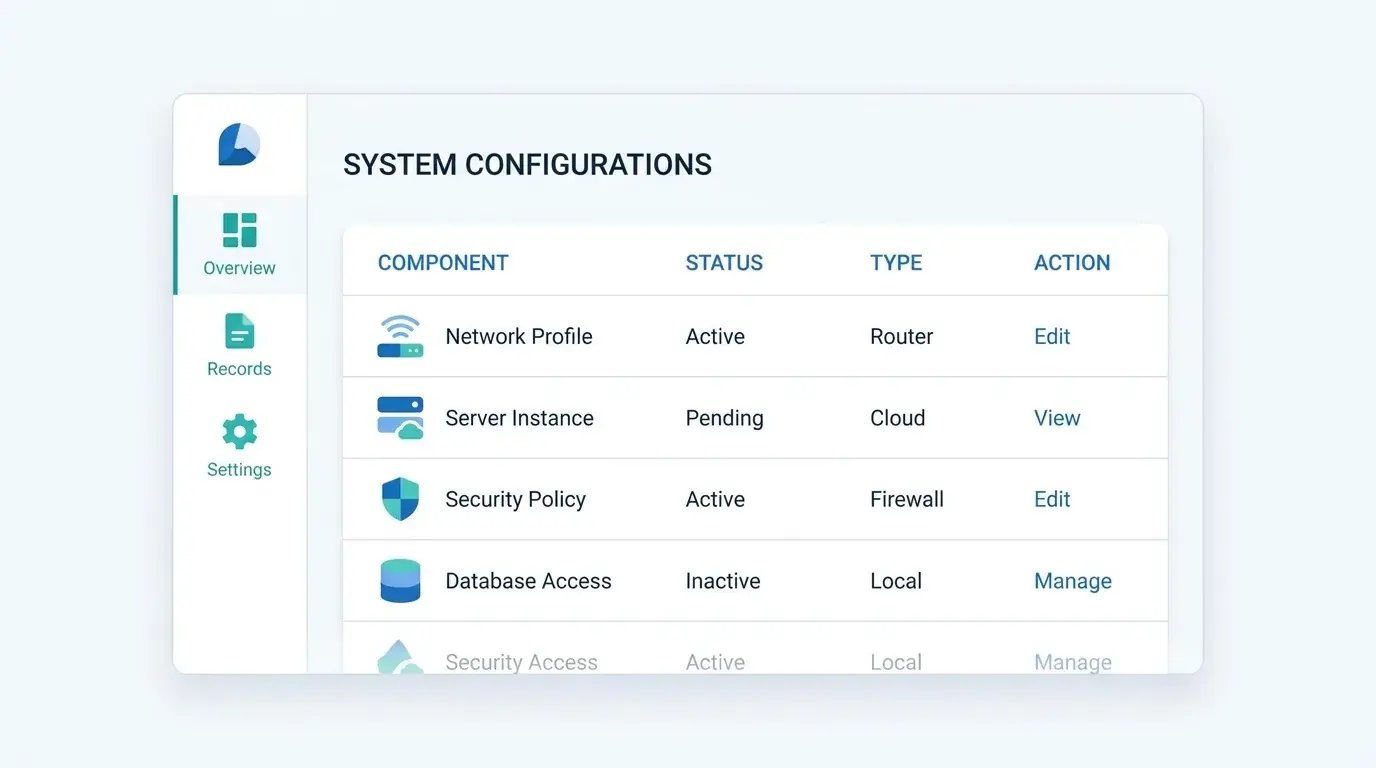
A well-designed CI model gives you nothing if the records flowing into it are stale or missing. Modeling is the visible, satisfying part of a CMDB project. You can see it, present it, and feel proud of it. Operational feeds are the opposite: invisible, unglamorous, and easy to defer. Deferring them is how a CMDB implementation starts drifting on day two.
Here's the uncomfortable math. Accurate relationships built on wrong CI data still produce wrong answers, every single time. Your CMDB database can have flawless dependency mapping and still send an engineer chasing a server that got recycled last quarter. Data quality upstream decides whether the model underneath is worth anything at all, and no amount of clever CMDB architecture makes up for garbage at intake. That is the hard truth of every CMDB implementation I have seen up close.
The Illusion of a "Complete" CMDB
Completeness on a dashboard usually means completeness at a single moment, and that moment passed the second someone shipped a laptop to a new hire. A CMDB that looks full can be functionally wrong across a meaningful chunk of its records. Completeness is the metric most likely to flatter a CMDB implementation into complacency.
Leadership tends to trust the record count more than the record accuracy, because a big number feels reassuring. When did you last verify that a random sample of CIs in your IT CMDB actually matched the physical reality on the ground? Not the count. If the answer is "a while ago" or "never," that gap is where your trust is leaking out. Sampling accuracy quarterly is the cheapest health check a CMDB implementation has.
The Cost of Trusting Bad Records
Real decisions ride on the CMDB: incident response, software license true-ups, security audits. Bad records don't sit there harmlessly. They generate wrong conclusions that cost money and credibility, and the damage compounds because people keep acting on them. Trust is the real deliverable of a CMDB implementation, and it is fragile.
A mid-size software company learned this during an outage. A customer-facing service went down late in the evening, and the on-call engineer pulled the CMDB asset management records to find the dependent servers. Two of the listed hosts had been decommissioned months earlier, yet their CIs still showed active with the original owner attached. He burned the better part of an hour chasing hardware that no longer existed (I want to say around forty minutes, though nobody was timing it) before someone dug up an old spreadsheet they trusted more than the system of record. After that night, three separate teams started keeping their own asset lists, and the system of record stopped being consulted for anything that mattered. One bad night can undo two years of CMDB implementation work.
That's the deeper cost. Once a single source proves unreliable, everyone builds their own shadow spreadsheet, and the central system becomes decorative. Trust is slow to rebuild once it's gone. Teams that recognize this pattern often revisit their whole approach, and our founder's note on why your asset inventory is wrong captures the same decay from the field.

The Procurement Blind Spot Nobody Budgets For
This is the first edge, and it's the one I see skipped most. Every device that enters your organization should create a clean CI. Trouble is, procurement rarely runs through a single governed pipeline, especially for distributed teams. Local purchases, reseller orders, and reimbursed personal buys all bypass the front door. Every one of those routes is a hole in your CMDB implementation.
Most CMDB implementation plans assume hardware arrives one way. Reality is messier than that. The sheer variety of ways a laptop shows up in someone's hands poisons the data before anyone touches a CMDB tool, because a record either gets created wrong or doesn't get created at all. Teams that want to fix intake at the source can study our IT procurement strategy breakdown for how governed buying feeds clean records. Governed buying is the single highest-leverage fix in a CMDB implementation.
Illumio ran straight into this edge as it scaled internationally. With no legal entities in key markets like Japan and Brazil, its procurement was slow and costly, vendors in those regions went unresponsive, and onboarding often required manual workarounds that left records incomplete or delayed. After partnering with GroWrk to centralize hardware logistics, Illumio was able to source and deploy preconfigured devices in countries where it had no presence, which removed the fragmented vendor buys that produce guessed-at records in the first place. That's the practical shape of closing the procurement blind spot: govern the buy so the CI is born clean, no matter which country it ships from. That is what a CMDB implementation should be buying at the front end.
Where Assets Enter Without a Record
Count the paths that skip record creation: a manager expensing a laptop, a regional office buying locally, a contractor using their own machine, a device drop-shipped without asset tagging. Each one produces a real asset with no corresponding CI, or a CI created weeks later with details someone guessed at. Closing those paths is unglamorous CMDB implementation work that pays for itself.
Consider what happened with one regional sales lead over in Germany. He needed a laptop urgently, bought one from a local electronics shop on a company card, and submitted it as an expense. IT found out three months later during a spot check. By then the serial number, warranty start date, and purchase price all had to be reconstructed from a faded receipt, which, being in German, half the team couldn't even read. The CI that eventually landed in the CMDB software carried a guessed-at deployment date and no warranty terms at all. It was wrong the day it was created, and no schema on earth could have prevented that. No CMDB implementation recovers a record that was wrong at birth.
The Reconciliation Debt You're Already Carrying
Every untracked entry point becomes reconciliation work later, and that debt piles up until it demands a full-blown project to clear. Teams end up running painful annual "true-up" efforts to match physical inventory against the CMDB, work that would have been unnecessary if intake had been governed from the start.
You can keep paying down reconciliation debt by hand every year. It just comes back. Most CMDB tools implicitly assume you'll accept that cycle. You don't have to.

Making Procurement the First CMDB Event
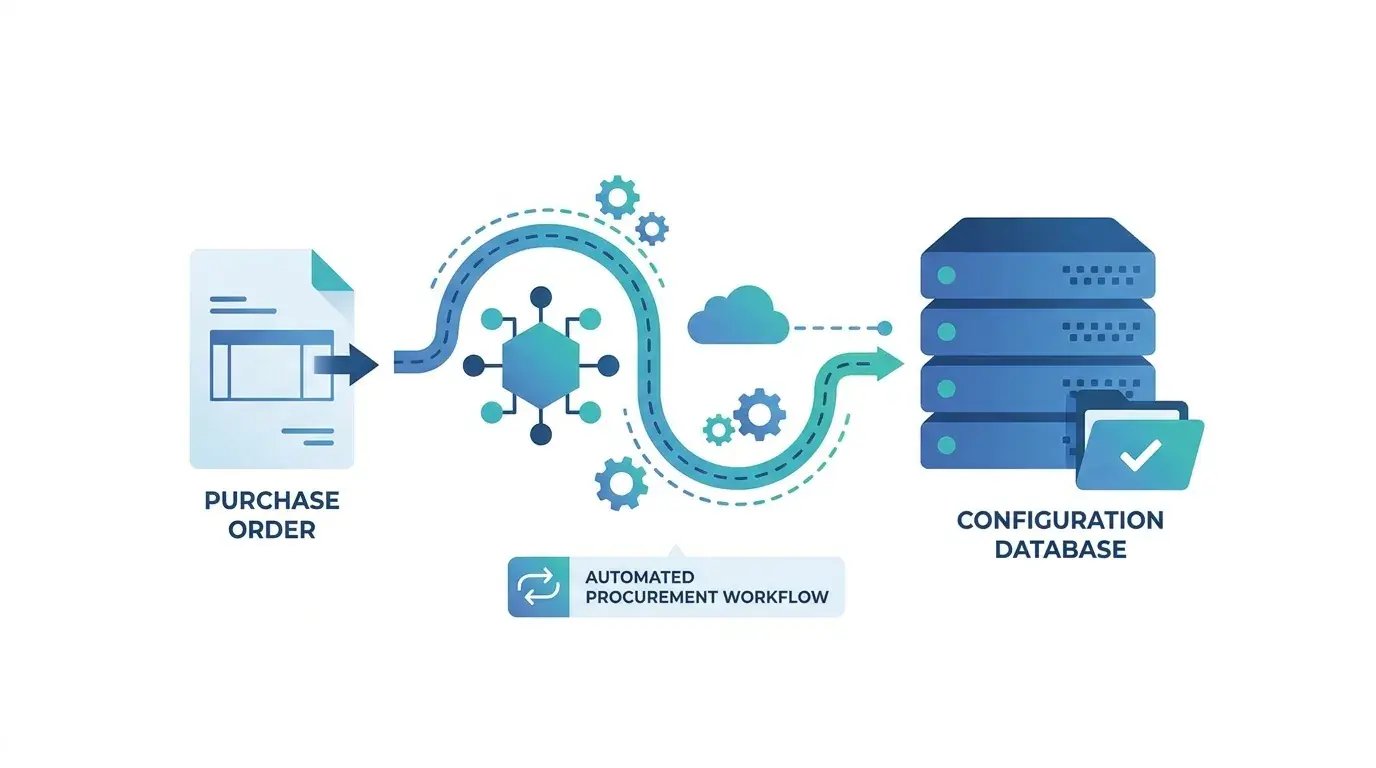
The fix treats the moment of purchase as the moment a CI is born, with real serial numbers, ownership, and location attached automatically. Route all hardware acquisition through a system that writes to the CMDB at order confirmation, and most downstream reconciliation simply disappears. Treat procurement as the first CMDB implementation event and accuracy stops being a cleanup job.
Routing every purchase through automation gets easier once you understand what zero-touch deployment does to intake accuracy. This one operational principle drives everything that follows, and it's what separates functional CMDB implementation best practices from wishful thinking. When you evaluate CMDB tools, the first question should be whether they can capture a purchase as a clean birth event rather than a retroactive cleanup task. Answer that well and the rest of the CMDB implementation gets much simpler.
Use this checklist to confirm a purchase creates a trustworthy CI at the moment of acquisition:
- Serial number captured automatically from the vendor order, not typed in later
- Purchase date and price written directly from the procurement record
- Warranty start and end dates pulled from the vendor at order confirmation
- Assigned owner and department attached before the device ships
- Delivery location and region recorded for cross-border tracking
- Asset tag generated and linked before the device reaches the employee
- CI status set to a defined pre-deployment state, not a default "active"
Ghost Assets and the Offboarding Problem
The exit edge mirrors the entry edge, and honestly it's worse. Nobody feels urgency about a departing employee's laptop the way they feel it about a new hire's first day. Devices go dark, people leave, and the CIs linger in an active state for months. Sometimes years. That lag is the quietest failure mode in a CMDB implementation.
Offboarding gaps create ghost assets that inflate your footprint, distort license consumption, and open audit exposure. This is the CMDB decay that happens with no error message and no alert to warn you. The exit side is where records rot fastest, and our secure offboarding automation guide shows how a triggered retirement step prevents ghost records. Offboarding is the second edge every CMDB implementation has to defend.
Why CIs Outlive the Assets They Describe
The mechanics of the lag are almost boringly simple. A device gets collected (or doesn't), the ticket closes, but the CI status never updates because the retirement step lives in someone's head or a separate tool nobody remembers to open. A CMDB implementation needs that step wired in, not remembered.
Records marked "in use" for hardware sitting in a drawer, in transit, or lost entirely become the default state rather than the exception. The root cause is the absence of a retirement trigger tied to the physical event. Without that trigger, your CMDB tool has no way to know the device left, so it assumes the last thing it was told, which was that everything is fine. Wiring that trigger is the difference between a CMDB implementation and a museum.
The Security and License Fallout
Ghost CIs carry real risk, not just clutter. A device marked active but physically unaccounted for is a security question you can't answer, and that alone should make a security team nervous. License counts built on inflated active records mean you're either overpaying or heading toward a compliance failure at your next audit. The dollars behind this are not trivial: a 2025 WanAware survey of 600 professionals at multi-location enterprises estimated that up to 25 percent of IT spend is wasted on ghost assets, devices and licenses still on the books but no longer in use. That number is the strongest business case a CMDB implementation will ever have.
In my experience, something like a third of hardware assets in a typical organization sit in an unknown or unverified state at any given time, which means a meaningful slice of every software license true-up rests on records that were never confirmed against a physical device. One of the clearest CMDB benefits, when the exit edge works, is watching that number shrink instead of grow.
Closing the Loop on Retirement
Retirement should be an automatic status change driven by the physical event, whether that's a warehouse receiving the device, a recycling confirmation, or a redeployment record. Tie CI lifecycle state to actual custody events, and the human memory dependency that causes ghost assets stops mattering.
This is where ITIL CMDB guidance and daily operational reality finally meet. The framework tells you a CI has a lifecycle; the physical events are what actually move it through that lifecycle without anyone having to remember. If your organization runs across borders, our case study on how Vividly runs IT across six countries with a team of one shows what disciplined retirement looks like when a tiny team can't afford ghost records.

Distance Turns Small Gaps Into Structural Ones
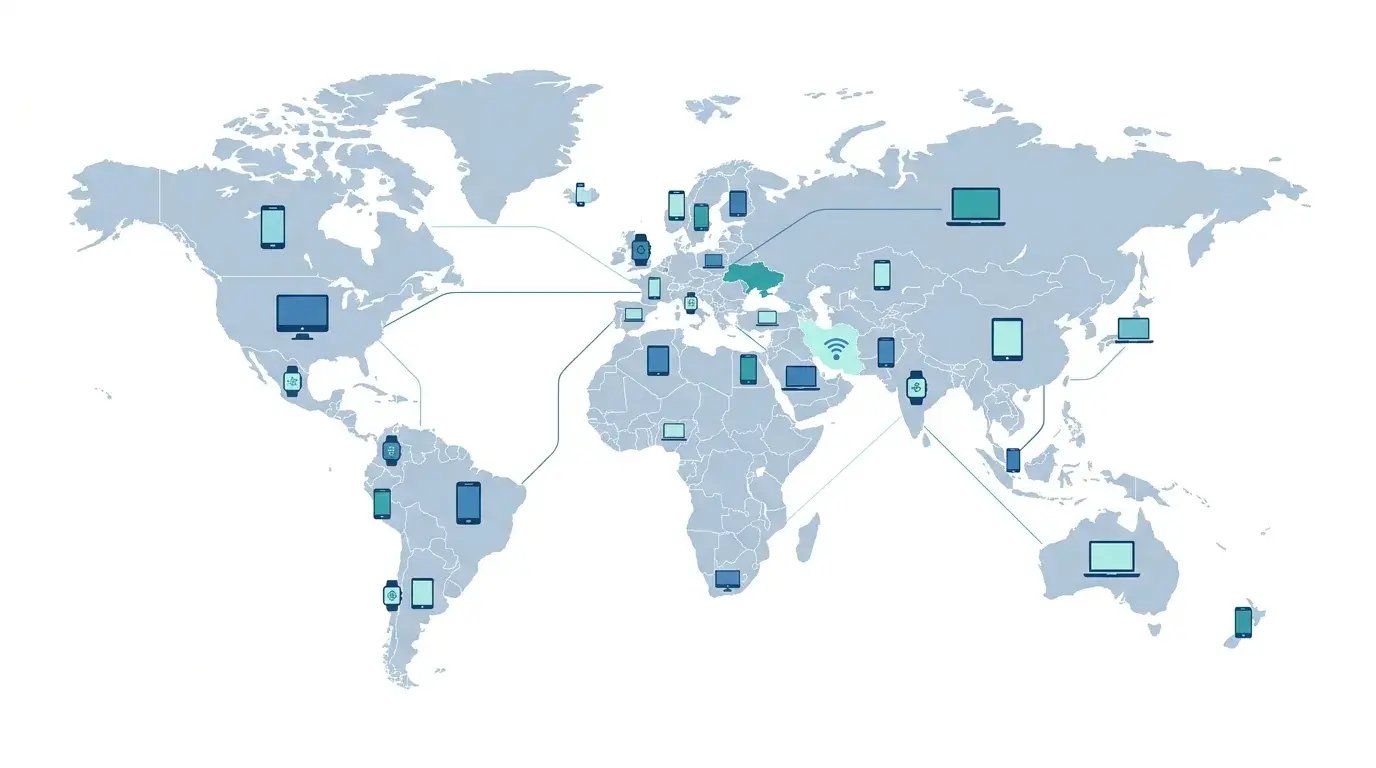
Geography earns its own section because distributed teams multiply every problem covered so far. A CMDB implementation designed for a single office quietly assumes a level of visibility that vanishes the moment assets scatter across countries. Different vendors, customs processes, local resellers, and time zones each add a place where data drifts. Distance is the third edge, and it compounds the other two.
The steady rise in remote and cross-border hiring over the past few years pushed device fleets into homes and offices across dozens of jurisdictions. IT teams that once managed everything from a single stockroom now track hardware they will never physically touch. Distributed work isn't an edge case for CMDB planning anymore. It's the default operating condition. Your CMDB implementation has to be designed for that from the start.
Cross-Border Data Drift
A laptop procured through a local reseller in another country often never gets the same attributes as a headquarters purchase, so its CI is incomplete from birth. Currency conversions, local warranty terms, compliance data, and shipping records all sit outside the central system unless something deliberately captures them. A CMDB implementation that ignores local buying inherits thin records everywhere but headquarters.
That's why a "global CMDB" is so often aspirational rather than real. The label sits on a system that holds rich records for headquarters and thin, guessed-at records for everywhere else. Distributed fleets need a deliberate playbook, which our guide to IT asset management for distributed teams lays out in detail. A global CMDB implementation is a logistics problem before it is a data problem.
Time Zones, Vendors, and the Manual Middle
Manual coordination across regions creates delays that show up as stale data. A device might be delivered days before anyone updates the record, and by then the "delivery date" is already a fiction.
Multi-vendor sprawl makes it worse because no two intake processes look alike. One region's reseller sends a clean order confirmation. Another emails a PDF invoice a week late. A third hands the laptop over in person with no paper trail at all. Your CMDB software inherits every bit of that inconsistency, and someone in the manual middle has to reconcile it, usually badly. Manual reconciliation is a tax your CMDB implementation pays every single month.
A Single Source of Truth Across Regions
The remedy is unified inventory that treats a device in one country identically to a device in another, with consistent attributes and one system writing the records. Bolting regional spreadsheets onto a central CMDB does not count, no matter how neatly they're formatted. Unified intake is the backbone of a distributed CMDB implementation.
Unified means one system captures the same fields the same way regardless of where the device ships from. Geography is a CMDB architecture decision, not something you patch in later once the drift shows up. Decide it upfront, or live with the mess for as long as the system exists.
Reconciliation That Reflects Physical Reality
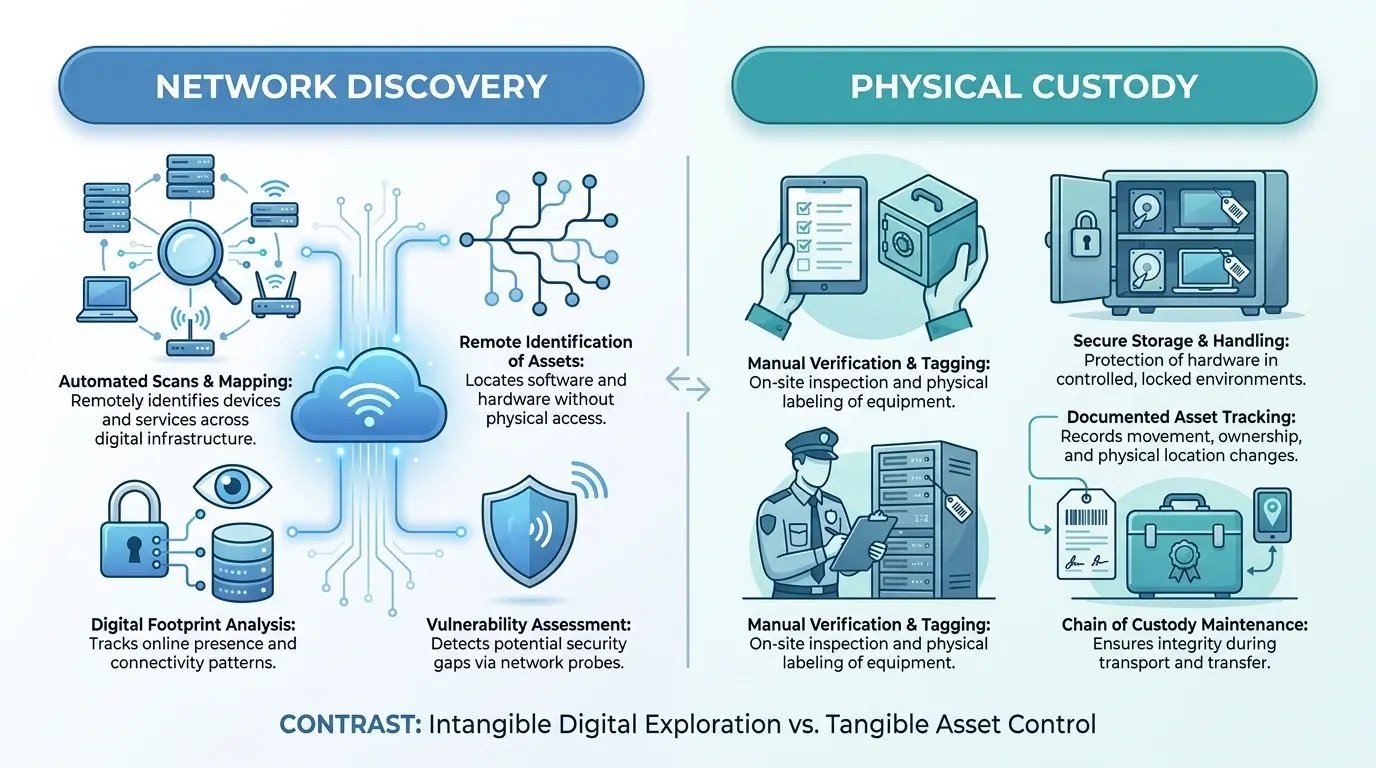
Discovery tools tell you what's on the network. They cannot tell you about the powered-off laptop in a closet or the device that never joins the VPN. That gap between automated discovery and physical truth is where reconciliation either works or falls apart, and a CMDB fed only by network discovery will always miss the assets that matter most for lifecycle and cost decisions. The trust gap shows up in the numbers too: in the same WanAware survey, 95 percent of IT leaders said they trust their asset data while only 35 percent of other managers trust the accuracy of that data, a split that usually traces straight back to records discovery alone can never confirm.
Discovery Tools See Some of the Picture
Discovery does one thing well: it finds network-connected, active devices. Ask it about offline stock, in-transit hardware, or decommissioned but undeleted CIs, and it goes blind.
Knowing that boundary matters, because it's the entire argument for pairing discovery with a second data source. Comparing discovery-heavy platforms against a lifecycle-first approach gets easier with our take on Lansweeper alternatives for teams that need physical visibility too, since the best CMDB software covers both what's on the wire and what's sitting in a box.
| Asset state | Seen by network discovery | Seen by physical custody events |
|---|---|---|
| Active device on the network | Yes | Yes |
| Powered-off laptop in a closet | No | Yes |
| Device in transit to a new hire | No | Yes |
| Spare stock in a warehouse | No | Yes |
| Decommissioned but undeleted CI | Sometimes lingers | Yes, marked retired |
| Contractor machine off the VPN | No | Only if enrolled |
Pairing Discovery With Custody Events
The strongest systems reconcile network discovery against physical custody events: warehouse intake, deployment confirmations, retirements. Combine both sources, and you catch discrepancies neither one can catch alone. Pairing the two feeds is the reconciliation model a CMDB implementation should aim for.
A device that discovery sees but custody says was retired flags a problem right away. So does a device custody shipped that never appears on the network. That combination turns reconciliation into something continuous instead of an annual scramble, and it's what makes a CMDB tool reliable between audits rather than only during them. Continuous reconciliation is what keeps a CMDB implementation honest over time.
Federate Without Building a Junk Drawer
Federation is the recommended way to pull data from multiple authoritative sources into the CMDB, and done carelessly it just pipes noise into one place. The goal is deciding which system owns which attribute, so the CMDB references trustworthy sources instead of duplicating and contradicting them. Federation done well is a CMDB implementation multiplier; done badly it is noise.
Federation works only when ownership of each data domain is explicit. Skip that discipline and you've built a very expensive place to store disagreements. This is where ITIL CMDB principles genuinely help, because they push you toward defined authoritative sources rather than a free-for-all of feeds. When mapping your CMDB architecture, treat federation as a set of ownership decisions first and connections second. Get that order right and your CMDB implementation stays a reference, not a landfill.
Deciding Who Owns Which Attribute
Each attribute should have exactly one authoritative source, with the CMDB referencing it rather than re-entering it. Hardware attributes come from the lifecycle system. Identity comes from the directory. Nobody else gets to write those fields. Single ownership per attribute keeps a federated CMDB implementation from turning into a debate.
That single rule cuts through most federation confusion without a heavy process wrapped around it. For teams standardizing feeds, our Jira integration guide shows how a ticketing source of record connects cleanly. A well-configured Jira CMDB feed references ticket data without trying to own hardware attributes it has no business editing.
Map each attribute to a single owning system before you connect any federated feed:
- Serial number, warranty, purchase data: lifecycle and procurement system
- User identity and employment status: directory or HR system
- Device location and custody state: lifecycle and logistics system
- Software installed and patch level: endpoint management tool
- Network address and connection state: discovery tool
- License assignment: software asset management system
For every field, write down the one system allowed to change it and mark the CMDB as read-only for that value. A tidy Jira CMDB setup follows this exactly: the ticketing system owns what it owns, and nothing more.
Avoiding Attribute Wars
Conflicts happen when two systems both claim to own the same field, and the CMDB ends up flip-flopping every sync. Location says "Berlin" in the morning and "London" by afternoon because two feeds keep overwriting each other. It's maddening, and I've lost hours to exactly this before figuring out what was going on.
Explicit source-of-record assignments prevent these silent overwrites. Writing that ownership down is worth the one meeting it takes. Honestly, I'd argue that meeting saves more grief than any other hour you'll spend on a Jira CMDB rollout. Skip it, and you'll spend far longer debugging why a Jira CMDB field won't hold a value, only to discover two systems fighting over it. Nine times out of ten, a misbehaving Jira CMDB comes down to an ownership decision nobody bothered to make.
Someone Has to Own the CMDB After Go-Live
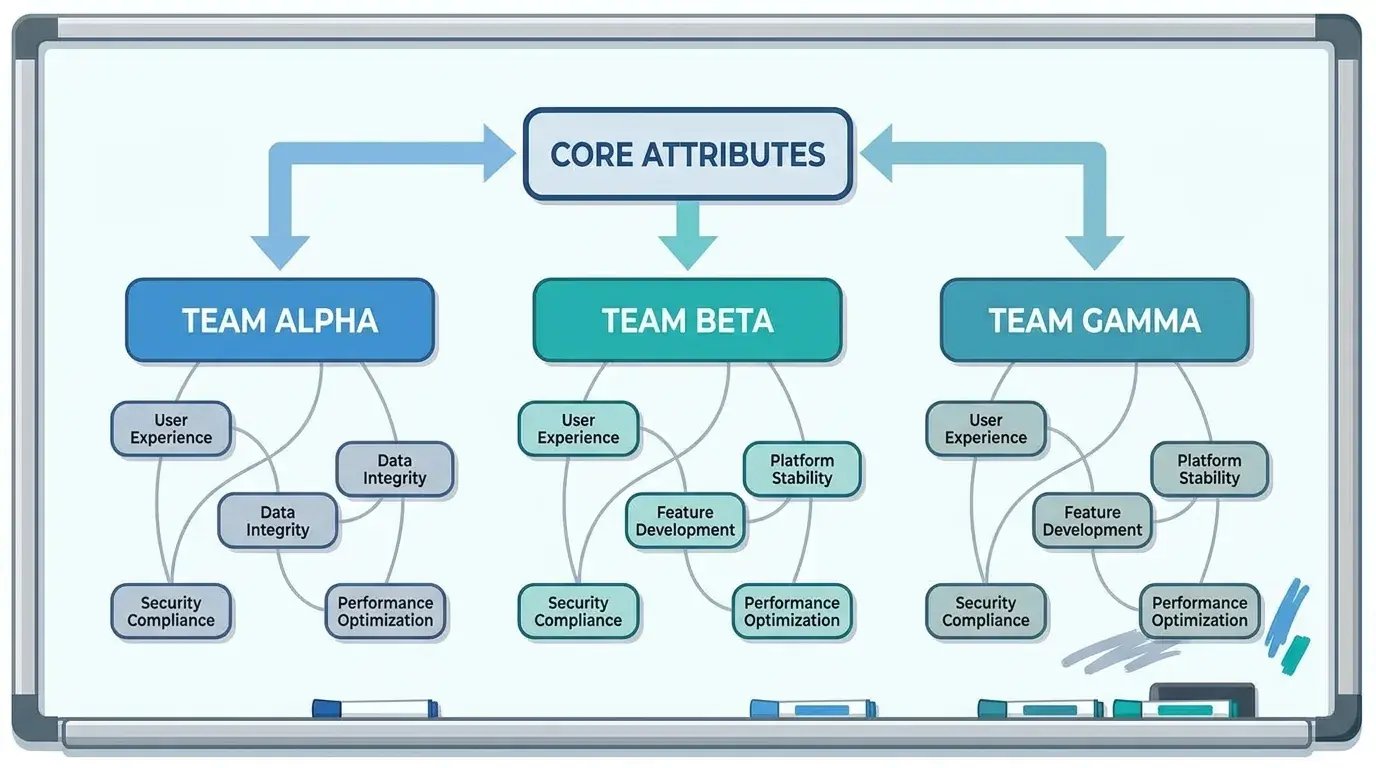
Implementation projects end. The CMDB doesn't. The accountability gap shows up right after the project team disbands and nobody owns ongoing data quality, which is a strange thing to leave unassigned given how much rides on it.
A system without a named owner and a maintenance cadence degrades no matter how well it launched. Governance is what keeps a system alive instead of stale, and it's a lot cheaper than the audit that eventually exposes the neglect. Teams that treat this as an ongoing discipline can lean on our IT asset management strategy framework for assigning long-term ownership.
The Post-Launch Accountability Gap
The common pattern goes like this. A CMDB launches strong, wins praise, then slowly rots because maintenance is nobody's explicit job. Data quality metrics stop being watched, and the decline stays invisible until an audit or incident drags it into the light.
A logistics firm rolled out theirs with a dedicated project team and hit somewhere around 96 percent CI coverage at launch (the exact figure got quoted a lot, so it stuck with me). They celebrated it in a company all-hands. The project team dissolved two we
Final Thoughts
If there's one idea worth carrying out of all this, it's that CMDB implementation lives or dies at the edges. The schema was never your problem. Procurement that skips the front door, offboarding that leaves ghosts behind, and cross-border records that were thin from birth are where trust quietly drains away, and no amount of elegant modeling patches a record that arrived wrong.
The pattern shows up in the research too. Studies put the average CMDB at only about 60 percent accurate, and the fix is rarely a better data model. Well-defined ownership clarifies accountability for maintaining accurate, complete configuration data over time, which is exactly the governance gap that opens the moment a launch team disbands. Treat the system as a program rather than a project, tie every lifecycle state to a physical custody event, and the center mostly holds on its own.
That's where GroWrk fits. When every purchase writes a clean CI at order confirmation and every retirement fires from a real custody event across 150+ countries, your IT team stops firefighting onboarding reconciliation and starts trusting the record again. Fix the edges first, and the CMDB you already built finally starts telling you the truth.