





Most procurement teams still run category management like a spreadsheet chore: sort the spend, squeeze the vendors, move on. That works fine until you point it at IT hardware, where it falls apart almost immediately. I've watched it happen more than once. The category looks perfectly controlled on paper while the actual cost keeps climbing somewhere nobody's tracking. Hardware is usually where this shows up first, and it's worth understanding why. Most functions still classify hardware spend by acquisition cost alone, which leaves everything downstream sitting outside the picture entirely.
I want to walk through what's changing, why the usual playbooks miss it, and how a lifecycle view turns scattered device buying into something you can actually steer. A smarter IT procurement strategy starts right here, and the right it procurement software is what makes it stick.
- 1. Why the Old Definition of Category Management Keeps Failing IT
- 2. Treating Hardware as a Living Category, Not a Purchase Order
- 3. The Data Gap Nobody in Procurement Wants to Admit
- 4. Cross-Border Buying Breaks Every Category Assumption
- 5. Building a Category Strategy That Holds Up in the Real World

TL;DR
- Category management procurement has moved from static spend classification to continuous, data-driven ownership.
- IT hardware is the category most affected, because devices carry a lifecycle rather than just a purchase date.
- Missing lifecycle data wrecks forecasts and weakens supplier negotiations.
- Global buying exposes assumptions that domestic-only strategies never had to test.
- A working category management strategy needs live inventory, redeployment logic, and end-of-life planning built in.
- GroWrk pulls fragmented hardware spend into one governed, trackable category.
If you've ever wondered what is category management in procurement when the devices you buy scatter across continents, this one's for you.
Why the Old Definition of Category Management Keeps Failing IT
The textbook framing of category management collapses the moment you apply it to IT hardware. Classic doctrine optimizes for the instant of purchase and then stops paying attention. Fine for pens and printer paper. Useless for laptops, which keep generating cost, risk, and value long after the invoice clears.
The upside of getting it right is measurable: one benchmark study found that category management leaders average a 9.0% cost savings rate from their projects versus 6.4% for followers, a gap that widens further once the full lifecycle enters the picture. That difference is exactly what the purchase-moment framing leaves on the table.
Distributed workforces made this obvious. When employees buy and receive equipment from wherever they happen to live, the purchase-moment framing stops describing anything real. Coverage of remote and hybrid spending patterns in the Gartner newsroom on IT spending trends shows procurement teams reconsidering where category boundaries actually belong. So what is category management supposed to cover now? A lot more than the first transaction.
Before rebuilding anything, it's worth revisiting what a sound IT procurement guide recommends for hardware. The definition matters. Category management in procurement has outgrown the version most teams still run on, and most of them haven't noticed yet.

The Purchase-Date Trap
Procurement anchors its category management work to two things: acquisition cost and supplier consolidation. Get the unit price down, shrink the vendor list, declare victory. For a lot of teams, that's the whole loop.
For consumables, that loop is complete. For IT, it barely covers the opening act. One laptop keeps costing money through deployment, support, storage, and disposal, and none of that shows up when your procurement category strategy ends at delivery. Hardware is the category where category management procurement breaks its own rules.
Spend Analysis That Stops Too Early
Traditional spend cubes capture the buy and miss the tail. Your category analysis sees the acquisition price in crisp detail and then goes dark. Deployment, configuration, ongoing support, the cost of idle devices in storage, disposal, recycling, resale value left on the table, all of it slips past the reporting. This is exactly where category management procurement has to extend past the invoice.
That gap distorts every savings number a category manager hands to finance. A category analysis built only on purchase price tells a tidy story that happens to be wrong. Here's where the money actually lives across the stages a typical category analysis never reaches:
| Cost Stage | Captured by Traditional Spend Analysis? | Typical Owner |
|---|---|---|
| Acquisition price | Yes | Procurement |
| Deployment and configuration | Rarely | IT Ops |
| Ongoing support | No | IT Ops / Helpdesk |
| Storage of idle devices | No | Often nobody |
| Disposal and recycling | No | IT Ops / Facilities |
| Resale recovery value | No | Often unrealized |
Run a proper category management analysis against that table and the picture changes fast. Four of the six stages sit outside the numbers entirely, and one of them belongs to nobody at all. A category management analysis that misses five-sixths of the cost isn't measuring a category. It's reading a receipt.
The Savings Number That Isn't Real
Negotiated unit-price savings tend to evaporate once you count full ownership. Say a team negotiates a discount somewhere in the low double digits on a bulk laptop order by switching to a cheaper supplier. Half a year later, IT is reporting those same machines throwing off way more support tickets, and it turns out the previous supplier's regional warranty coverage never came across in the switch. Support hours, replacement shipments, warranty gaps. The headline saving is gone. But the dashboard still shows a win, because it only ever measured unit price.
A category management strategy aimed purely at price can raise total cost while celebrating a discount. That's the disconnect that keeps procurement and IT talking past each other. One side is proud of the saving, the other is buried in tickets. This is exactly how teams end up reducing IT procurement overspending once they finally see the whole picture.
Why IT and Procurement Keep Missing Each Other
The organizational reason for this is almost embarrassingly simple. Procurement owns the category on paper. IT owns the asset in practice. Neither side sees the whole thing, so it never gets managed as one continuous object.
Procurement watches spend flow out and negotiates the next contract. IT watches devices arrive, break, sit idle, and eventually die in a closet. The handoff between those two views is where procurement category management for IT falls apart. Lifecycle visibility is the missing bridge, and until someone builds it, both teams keep optimizing halves of a problem that only makes sense whole. Category management procurement only works when both halves report to one owner.

Treating Hardware as a Living Category, Not a Purchase Order
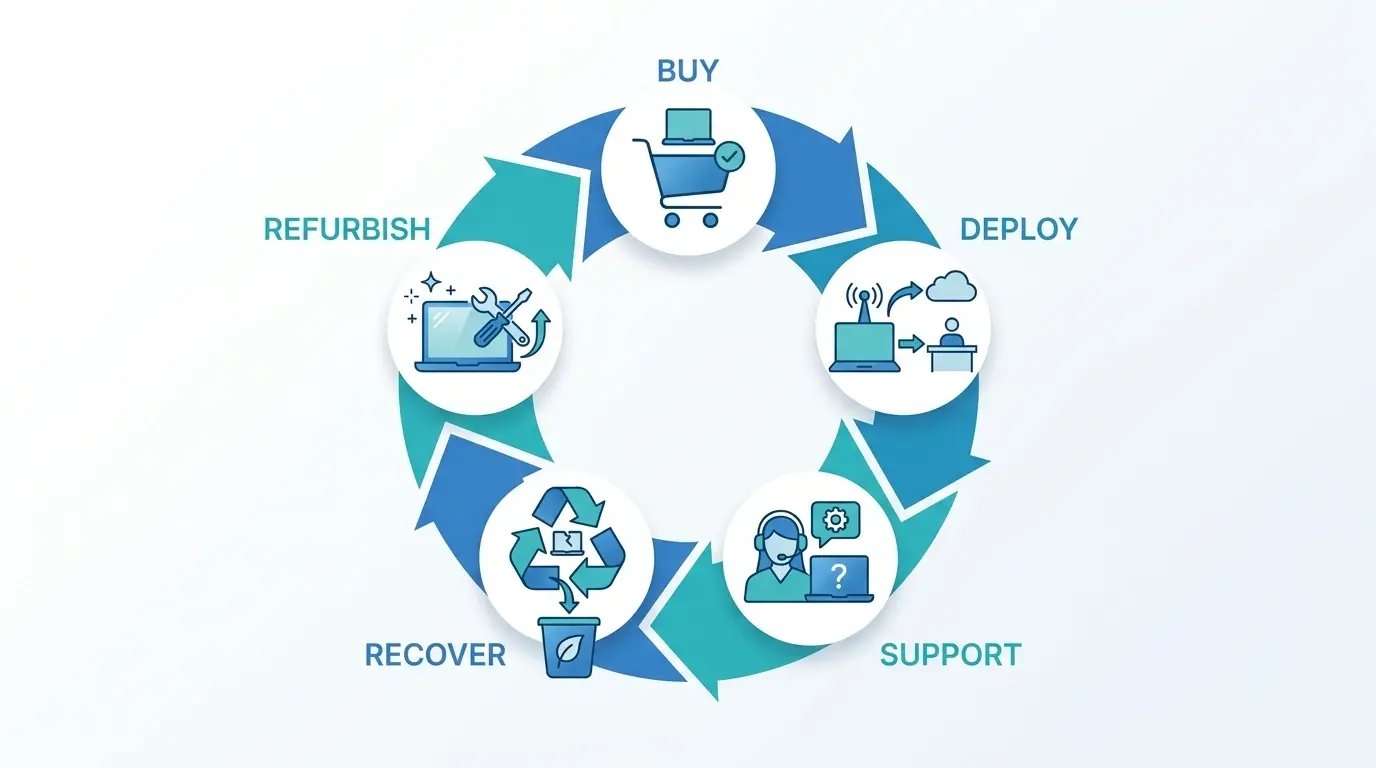
Here's the reframe I want you to sit with. IT hardware should be managed as a dynamic category with its own lifecycle economics. A single device moves through procurement, deployment, redeployment, and retirement, and every stage carries cost and data that belong inside the category. That is the shift category management procurement makes possible.
Category management that stops at the purchase order treats a living asset as a one-time event. End to end category management treats it as a loop, where the device you retire this quarter feeds the demand plan you build next quarter. This mirrors how a full device lifecycle management guide treats every stage as connected, and it's the foundation for real end to end category management across a hardware portfolio.
The Four Stages Your Category Plan Probably Ignores
Most plans sprint through delivery and lose interest. The stages that follow carry real value, and each one belongs inside the strategy rather than off in some separate IT silo:
- Procurement: sourcing, quotes, and supplier terms across regions
- Deployment: configuration, shipping time, and first-touch cost
- Redeployment: recovering and reissuing devices instead of rebuying
- End-of-life: resale, recycling, and compliant disposal
Which of these four does your current procurement category plan actually track today? For most teams the honest answer is one, maybe two. That tracks with how few organizations have the discipline mastered: Future Purchasing's research across hundreds of organizations found that only about 5% operate at high maturity levels in category management, with a much larger share still finding their feet. Sourcing and category management usually cover the first stage well and get vaguer with each step after. Genuine end to end category management needs all four, and treating sourcing and category management as the entire job is the exact habit worth breaking.
Redeployment Is the Category Lever Everyone Forgets
Redeployment is the single most underused source of category value I know of. Every recovered and reissued device is a purchase you didn't have to make. And yet almost no category plan models recovery rates at all. It's the first thing I look for and the last thing anyone's actually doing.
Every distributed team I've worked with that actually recovers and reissues devices sees its net new hardware buys drop over a fiscal year, sometimes dramatically. That turns recovery rate into a direct input to category budgets instead of an IT afterthought.
Picture a 400-person company churning through maybe 25 to 35 people a quarter. Call it 120 departures a year. With no recovery process, that's 120 fresh laptop purchases for the replacements. Add recovery and reissue at offboarding and you claw back a decent chunk of those machines, plenty of teams reclaim two-thirds or more once the process runs smoothly. The new-buy line drops hard, and suddenly the category manager has a defensible lower volume to plan against.
It works in practice, not just on a spreadsheet: after moving offboarding onto GroWrk, Upwork hit 100% SLA compliance on device returns and eliminated lost or unreturned devices across its supported countries, which is exactly the recovery discipline that feeds a lower net-new-buy number.
Everything shifts the moment recovery becomes a tracked KPI. It changes sourcing volume, supplier commitments, and forecasts all at once, which is why sourcing and category management should treat recovery rate as a first-class number. But it only works when the IT asset recovery process is built into offboarding rather than bolted on after someone finally remembers to ask for the laptop back. That last part is where most teams fall down.
End-of-Life as a Category Asset, Not a Cost
Disposal reads like a line-item expense on most budgets. Extend the category boundary and it becomes a contributor. Resale value, compliant recycling, and data security all sit inside the hardware category once you decide they belong there.
The scale of what gets thrown away is easy to underestimate: the UN's Global E-waste Monitor pegs annual electronic waste at over 60 million tonnes, and only about 22 percent of it is formally collected and recycled. That unrecovered majority is exactly the resale and recycling value a category plan can capture. Category management procurement should be claiming that value.
Ignore that boundary and you leave money and compliance exposure on the table at the same time. End to end category management captures resale recovery and certified disposal as part of the plan, not as a cleanup task nobody funded. If you want the fuller picture behind these shifts, the trends in the State of IT Lifecycle Management report are worth digging into. Disposal belongs inside category management procurement, not outside it.
Category management that ends at deployment gives this value away without anyone noticing. You never see an invoice for the resale revenue you didn't collect. Map it out with an IT asset disposal workflow that captures resale value, and the tail of the lifecycle turns from cost center into contributor. Which is the whole point. Mature category management procurement counts that recovery as category value.

The Data Gap Nobody in Procurement Wants to Admit
Most hardware category strategies run on incomplete data. That's the uncomfortable truth. Without knowing where devices are, what condition they're in, and when they'll retire, category managers forecast blind.
And every downstream decision inherits that blindness. Category management built on guesswork produces confident-looking numbers that happen to be wrong, and a category analysis assembled from partial inventory carries the same flaw no matter how polished the slides look. Category management procurement is only as good as the data underneath it.
You Can't Manage a Category You Can't See
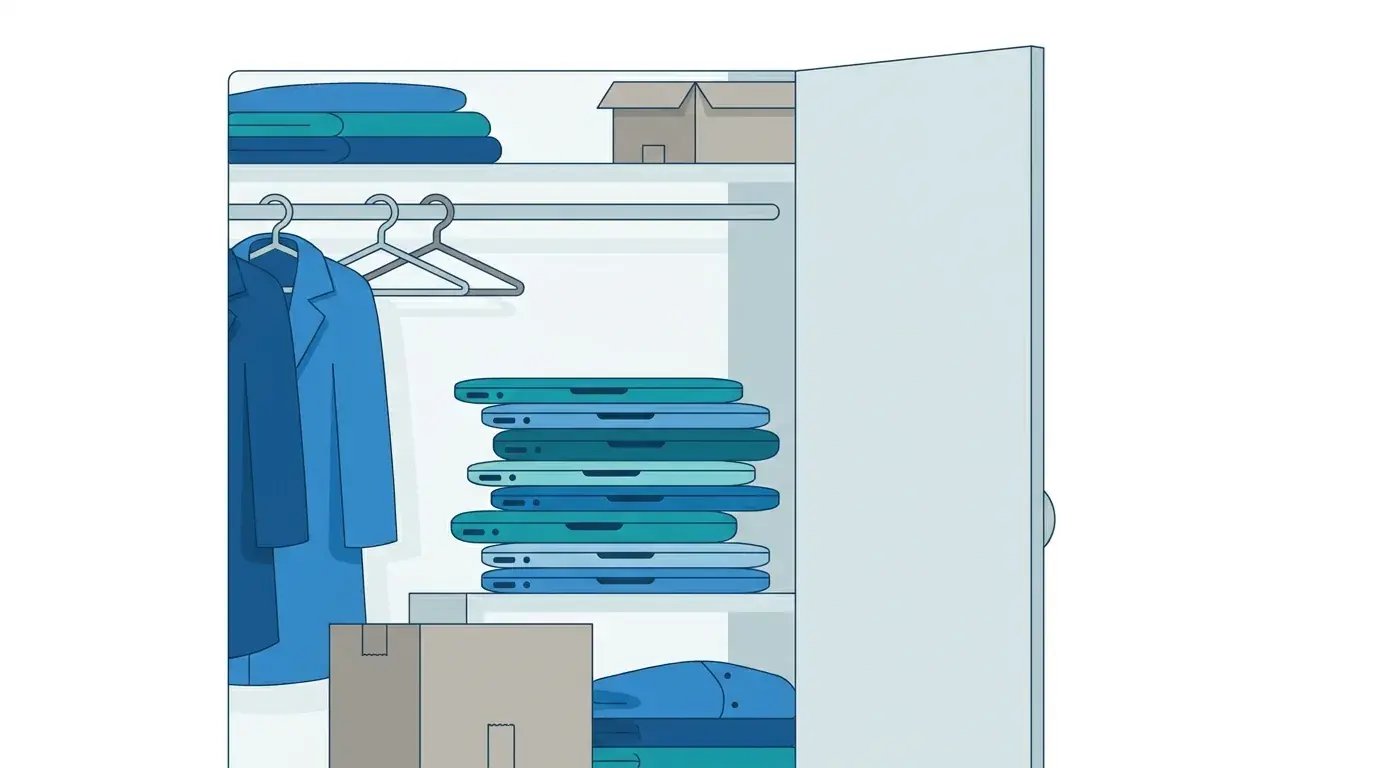
Visibility is the precondition for real category management, not something you add later. When inventory sits across personal home closets, third-party depots, and shipments nobody tracked, the category manager has no denominator to work from. Category management procurement runs on inventory data it usually does not have.
In every distributed organization I've seen, a chunk of the fleet is always unaccounted for at any given moment. The offboarding moment is where it shows up worst: in Capterra's 2022 Employee Offboarding Survey, 71% of HR workers said at least one departing employee failed to return company-owned equipment like a laptop or smartphone. Category managers plan demand against an inventory count they can't fully verify, which turns planning into educated guessing. A category management analysis is only as trustworthy as the count underneath it.
Real category management starts by fixing that count. You close the gap with global IT asset tracking that surfaces every device, wherever it happens to live.
The Forecasting Errors Hidden in Missing Inventory
Invisible inventory inflates purchase volumes in a way that feels productive. If nobody knows a hundred recoverable laptops sit idle in a depot, procurement buys a hundred new ones. The budget bloats while the numbers look busy. The idle share is rarely trivial: Gartner research cited here notes that up to 20% of IT assets in a typical organization remain underutilized, which is redeployable stock a blind forecast simply rebuys.
A category analysis that can't see idle stock counts phantom demand as real. Every one of those unnecessary purchases shows up as activity: spend flowing, orders placed, a team clearly working hard. Category management done right would have flagged the idle hundred first, and a sharper category analysis would have redeployed them before a single new order went out.
Turning Lifecycle Data Into Negotiation Power
Live lifecycle data changes supplier conversations completely. Show a supplier accurate refresh cycles, regional demand, and recovery rates, and your commitments become credible. That credibility earns better terms than volume promises ever will.
Suppliers price certainty. A vague promise of "a lot of laptops next year" gets priced for the risk you're wrong. A scheduled refresh backed by real usage data gets priced for what it is. Good category management turns data into leverage, and sourcing and category management conversations move from hopeful estimates to defensible numbers. Same principles behind strong IT vendor management best practices.
Refresh timing isn't guesswork you can defer, either. Business PCs run on an average useful life of roughly 4 to 5 years, which means a fleet of any size cycles through a predictable share of replacements every single year. Knowing that number turns your refresh schedule into a forecast a supplier can price against.
What Live Data Changes at the Negotiating Table
Lifecycle data hands you specific leverage: accurate refresh timing, defensible volume forecasts, evidence of demand consolidation across regions. A category manager armed with real usage walks in with certainty instead of estimates, and a rigorous category analysis is what supplies that certainty.
Here's how the two positions compare when you run the same category analysis with and without lifecycle data:
| Negotiation Input | Without Lifecycle Data | With Lifecycle Data |
|---|---|---|
| Volume forecast | Rough estimate, padded for safety | Defensible figure tied to refresh cycles |
| Refresh timing | Reactive, unpredictable | Scheduled and shared in advance |
| Recovery impact | Ignored | Modeled into net demand |
| Supplier confidence | Priced for uncertainty | Priced for predictability |
| Regional demand | Fragmented, per-office | Consolidated across markets |
Every row moves in your favor. Category management backed by that table walks into a negotiation from a stronger seat, because the supplier can see you know exactly what you need and when.

Cross-Border Buying Breaks Every Category Assumption
The hardware category spans multiple countries now. For distributed teams, that's just Tuesday. Local compliance, import duties, warranty coverage, reseller availability. All of it fractures the tidy single-category model the textbooks assume.
Global scope demands a different strategy. Category management designed for one country breaks the moment a device has to clear customs, and sourcing and category management decisions that felt settled turn into a fresh puzzle in every new market.
The variables stacking on top of cross-border buying keep shifting, too. GroWrk's State of Global IT Hardware Procurement 2026 flags freight softening, FX volatility, and eco-fees and right-to-repair rules as the planning pressures reshaping how distributed teams forecast hardware spend, and each one lands squarely inside the category strategy.

One Category, Many Local Realities
Managing hardware as one global category while every country enforces its own rules creates real tension. The category manager wants standardization. Local compliance wants specificity. In my experience, compliance wins that fight every single time, because a device that can't legally clear customs is worth nothing no matter how standardized your process is. So you design around it.
The answer is a category framework that flexes by region without surrendering central control. Recent changes to customs and import handling across several major markets have made cross-border shipping a lot less predictable, and Reuters business coverage on global trade and supply chains makes clear why regional flexibility now sits at the center of category design. Good category management absorbs that unpredictability instead of pretending it away, and a solid procurement category management framework builds the flex in from the start. Skip it and the whole thing snaps under the first customs delay. This is where the international procurement process has to flex by region.
Compliance Isn't a Footnote, It's a Category Requirement
Regulatory and tax compliance belong inside the category strategy from day one, not bolted on after a shipment gets held. Data protection standards, customs rules, certified disposal, they all vary by market, sometimes wildly.
A mature plan treats compliance as a sourcing criterion. When you evaluate a supplier, their ability to meet local requirements sits right beside price. A cheap device that can't legally enter the country isn't cheap at all. A category management strategy that leaves compliance for later inherits every fine and delay that follows. Treat global IT procurement compliance as a sourcing criterion, not an afterthought.
The True Cost of Deployment Speed
Delivery time becomes a hidden category variable the moment you buy across borders. A cheaper device that takes three weeks to reach a new hire carries real productivity cost, and that cost rarely appears in the unit-price comparison.
Lead time deserves a spot right next to price in any serious category management evaluation. A new hire idle for three weeks while a bargain laptop crawls through customs is not saving anyone money. A category analysis that weighs speed against price makes far smarter calls. Teams weighing these tradeoffs can see how one lean IT function handled it in the story of how Vividly runs IT across six countries with a team of one.
Why Fragmented Suppliers Quietly Erode Category Value
Scattered local vendors, ad hoc purchases, inconsistent terms. Each one strips a category of its leverage, one small leak at a time. Every one-off buy looks harmless. Together they drain the value the category should be capturing.
Consolidation across regions is where global hardware categories recover what they've been losing. Strong category management pulls those scattered buys into coherent commitments, and disciplined sourcing and category management replaces a dozen tiny negotiations with a few strong ones. The same logic behind MRO category management applies here: fragmentation across many suppliers erodes leverage everywhere, and applying that MRO category management discipline to hardware spend recovers it.
Building a Category Strategy That Holds Up in the Real World
A hardware category strategy built on lifecycle thinking, live data, and global flexibility holds up when real conditions push back against the plan. And they always do.
Good category management holds up because it was designed for reality, not for a slide. A durable category management strategy assumes things will go sideways and builds the response in advance. The discipline behind MRO category management, consolidating fragmented spend under clear ownership, carries directly into hardware.
Start With the Full Lifecycle, Not the First Purchase
The sequencing matters more than any single tactic. Define the category boundary to include recovery and retirement before you touch sourcing. Start from the whole life of the asset, and your sourcing decisions automatically account for downstream cost and value.
Here's a checklist I'd hand any team rebuilding their approach:
Lifecycle-First Category Definition Checklist
- Map every stage a device passes through, from sourcing to disposal, before setting any sourcing target.
- Assign a clear owner to each stage, including the ones that currently belong to nobody.
- Attach a cost and a data point to every stage so the boundary reflects full ownership.
- Set recovery and redeployment targets before locking new-purchase volumes.
- Define end-of-life handling, resale, and disposal rules as sourcing criteria, not later add-ons.
- Confirm compliance requirements for each active market are built into the definition from the start.
Work through those six and you've defined a category worth managing. End to end category management starts with a boundary drawn around the entire asset life. Category management that begins at the first purchase has already lost the stages where most value hides. It refuses to hand the second half of the lifecycle to whoever happens to be standing nearby.
Metrics That Actually Reflect Category Health
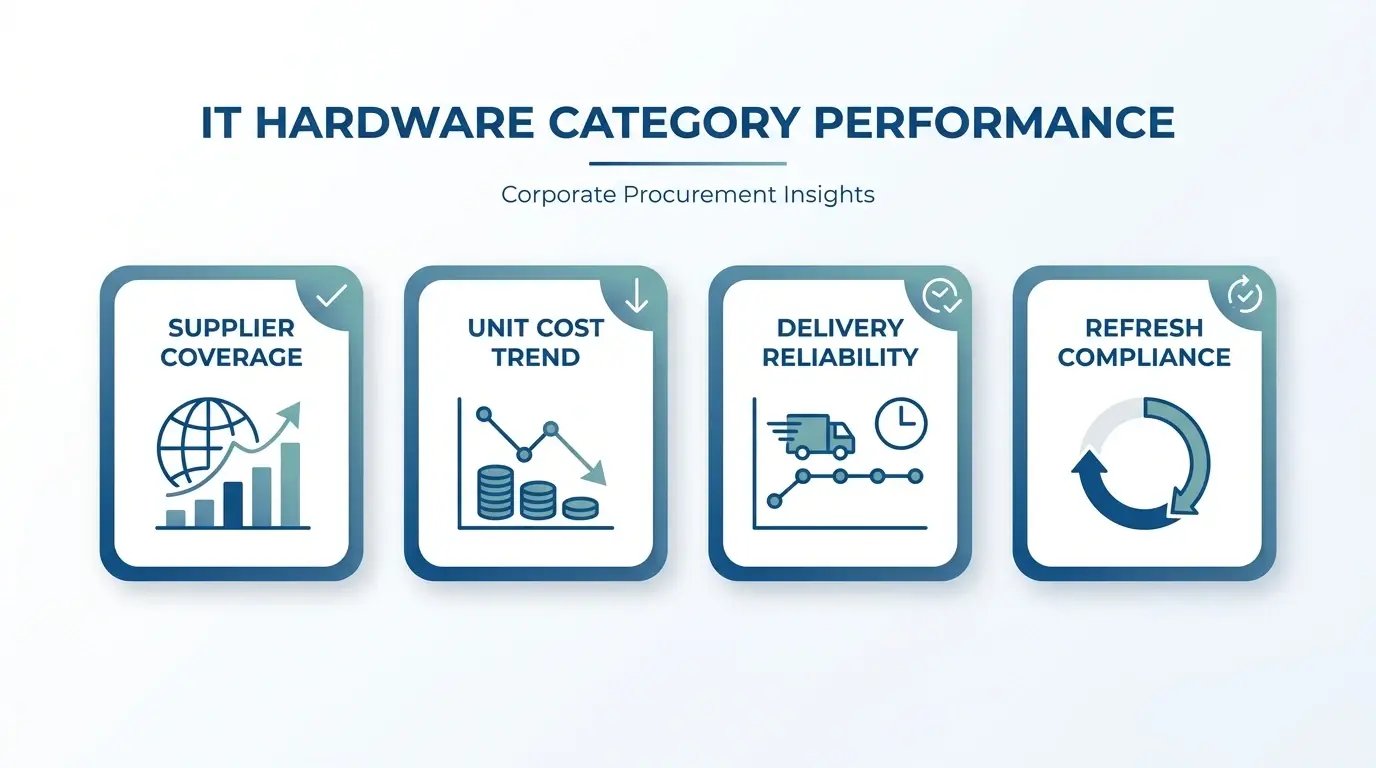
Move past unit price and a clearer set of measures comes into view:
- Recovery and redeployment rate
- Average deployment lead time by region
- Total cost of ownership per device
- Compliance coverage across active markets
These tell you more about the category than any negotiated discount. A category analysis anchored to recovery rate and total cost of ownership reveals whether the category is actually healthy. Track them and category management stops congratulating itself on discounts that ownership costs quietly reversed, because the category analysis now includes the parts that used to hide.
Governance That Doesn't Slow Everyone Down
Category governance turns into a bottleneck the moment every request needs the same approval. Balancing control against speed is the real art here.
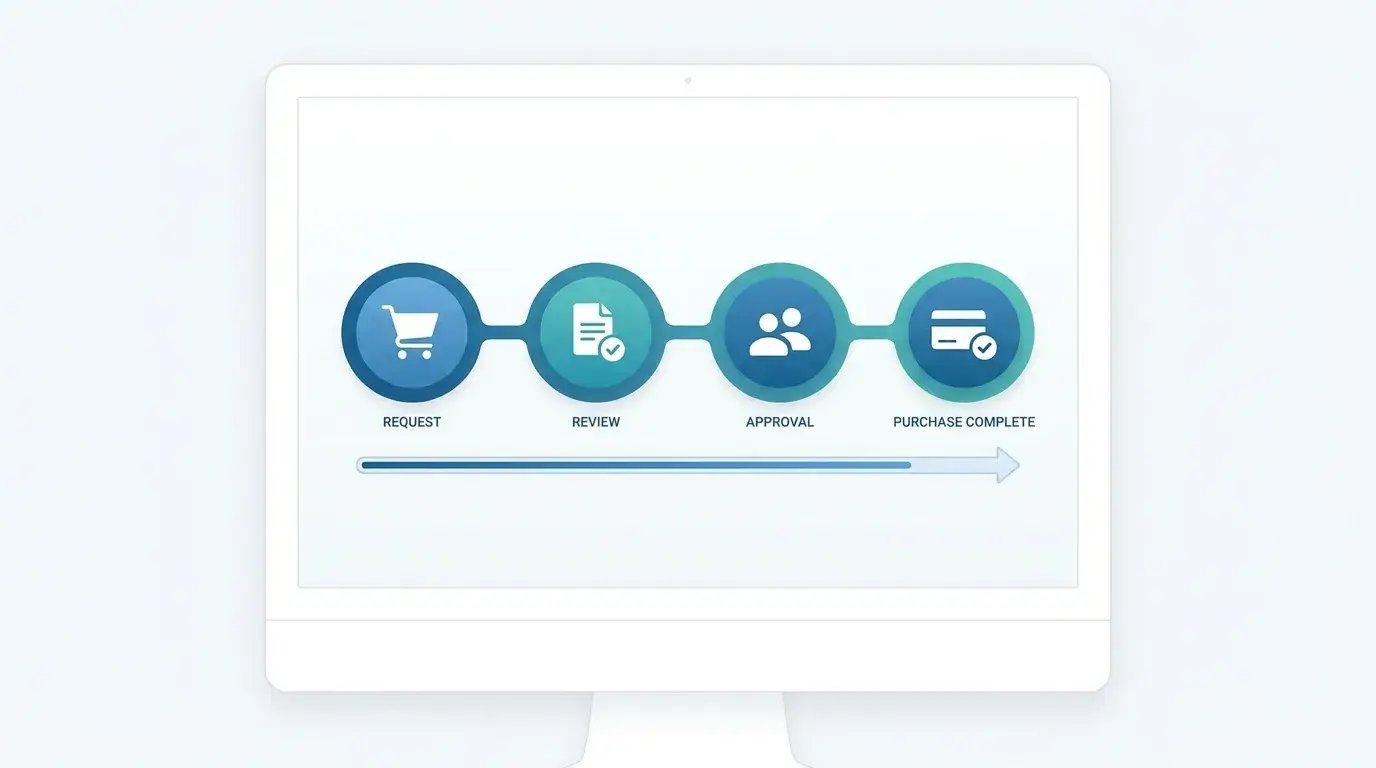
I watched a mid-size firm route every device request, from a single mouse to a full laptop refresh, through one central approver. IT waited days for routine sign-offs. New hires sat at empty desks. So they set approval scopes by value and device type, letting IT managers clear low-value standard requests instantly while procurement kept sign-off on bulk orders and new supplier terms. Approval delays dropped sharply, and procurement never lost control of the spend that mattered.
Role-based access, clear approval scopes, and shared visibility let procurement keep control without making IT wait on every decision. Category management works best when governance speeds routine work and reserves scrutiny for genuine risk. That's one of the more practical procurement category management best practices there is.
Turn Fragmented Hardware Spend Into One Governed Category With GroWrk
Everything above only works if you can actually see and act on the full lifecycle, and that is exactly the gap GroWrk closes. GroWrk's IT lifecycle platform lets you procure, deploy, and recover equipment in 150+ countries from one place, so the scattered device buying this guide keeps warning about finally lands inside a single governed category.
Zero-touch deployment means devices arrive pre-configured and ready to use, which pulls the whole category management procurement picture together: live inventory, redeployment logic, and end-of-life handling all sitting in one system instead of drifting across regions and closets. Your IT team stops firefighting onboarding and starts focusing on what matters, while procurement keeps the category analysis, recovery rates, and compliance coverage it needs to steer spend.
If the lifecycle-first approach in this guide is where you want to take your category management strategy, see how GroWrk runs global hardware as one connected category.