



Let me guess: you just spent 20 minutes Googling "free IT asset management software," clicked through five listicles, and still have no idea which tool will actually help you find the three laptops somewhere in your remote team's possession.
That's because every article assumes you're starting fresh. New company, clean slate, organized procurement from day one.
But you're not here for that fantasy scenario. You're here because you have 80 employees across 12 countries, half of them have equipment you only vaguely remember shipping, and your "asset tracking system" is currently a 2-year-old spreadsheet that three people have editing access to but nobody updates.
Here's what nobody tells you: the software part is actually the easy part. The hard part? Accounting for assets you've already deployed before you even open a tracking tool.
Table of Contents
- Why Free IT Asset Management Software Fails at Retroactive Tracking
- The Hidden Inventory Problem Most Companies Ignore
- What Free Tools Actually Track (And What They Miss)
- Building a Baseline Asset Register Without Paid Features
- How to Audit Existing Hardware When You Have Zero Documentation
- Handling BYOD Devices in Free Asset Management Systems
- The Real Cost of "Free" When Your Asset Data Is Incomplete
- Integrating Free Tools With Your Current Tech Stack
- When to Upgrade Beyond Free Software
- Compliance Requirements Free Tools Can't Always Meet
- Making Free IT Asset Management Software Work for Remote Teams
TL;DR
Here's what you actually need to know before you waste a weekend setting this up:
- Most free IT asset management software assumes you're starting fresh, but the real challenge is cataloging assets you've already distributed across who knows where
- Shadow IT and undocumented purchases create inventory gaps that free tools can't automatically fill, and nobody's going to volunteer that information
- Manual audits remain necessary even with automated discovery features, especially when half your team works from coffee shops in different time zones
- Free solutions don't integrate with procurement, HR, and finance systems, so you're stuck maintaining data in multiple places
- The "free" model works until you realize you're paying in hours of manual busywork instead of dollars
- Compliance requirements for data security and hardware lifecycle management may exceed what free software can deliver (and the penalties for non-compliance aren't free)
- Upgrading becomes necessary when you spend more time fighting with the tool than you would spend just tracking everything in a spreadsheet
- Retroactive tracking requires combining automated discovery with employee surveys, manual verification, and accepting that some data will never be perfect
Why Free IT Asset Management Software Fails at Retroactive Tracking
The Software Assumes You're Starting From Zero
Every free asset tracking tool makes the same assumption: you're starting today. Fresh install, clean slate, organized procurement from this moment forward.
Which would be great if you founded your company yesterday.
The tools excel at monitoring new purchases, recording deployment dates, and creating clean records for devices added after implementation. But you're not starting fresh. You have laptops shipped to contractors in 2022, monitors purchased through employee expense reports, and keyboards that somehow multiplied across three office locations. The software can't retroactively discover these assets unless they're connected to your network at the exact moment you run a discovery scan.
And even then, it only captures what's currently powered on and visible.
Most free platforms include network discovery features that scan for connected devices. Sounds helpful until you run your first scan and find 43 devices. You know you shipped 150. Congrats, you just discovered the limits of "automated" discovery.
That gap? That's your real problem.
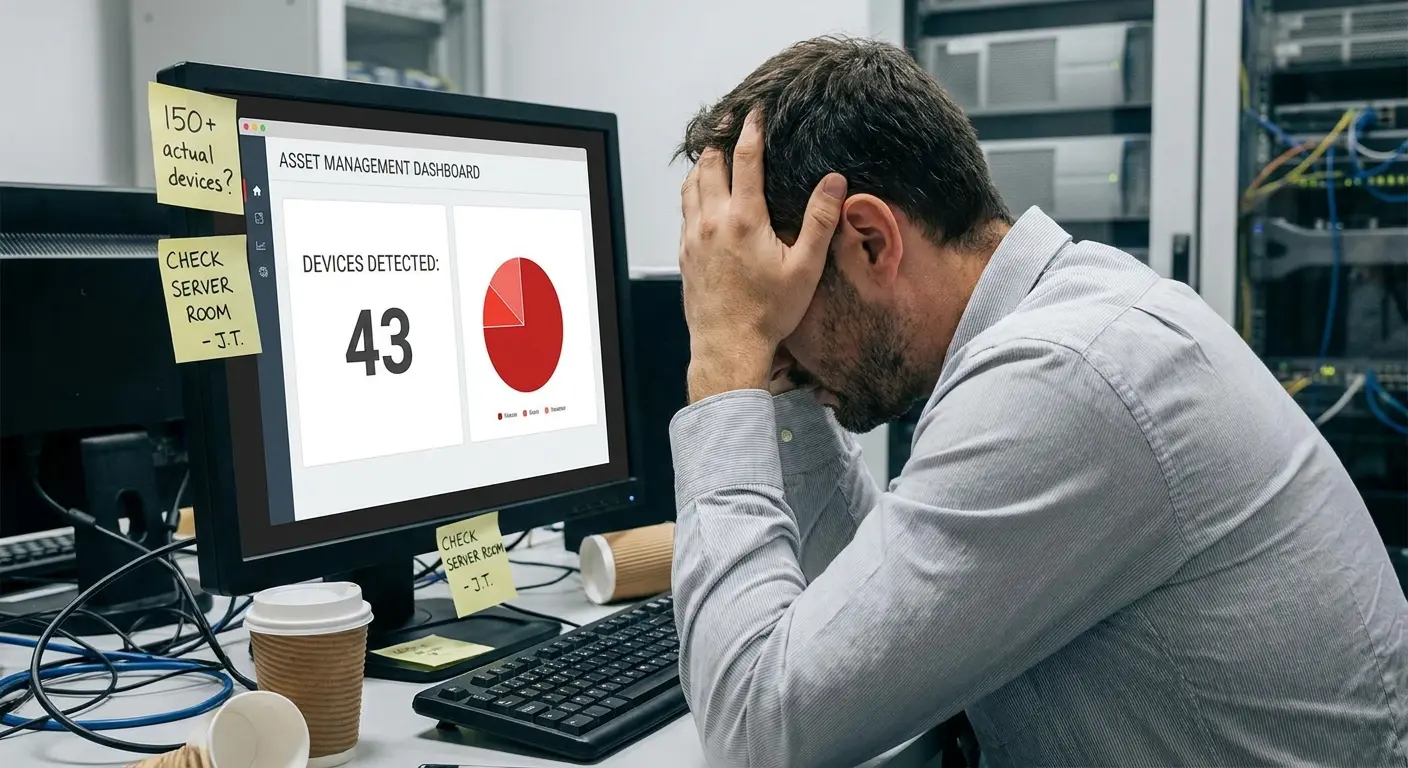
Your remote workforce spans different time zones, VPNs, and home networks. The discovery tool finds what it finds. Tomorrow you run it again and find 61 different devices because different people were online. Neither scan represents your complete inventory.
Agent-based discovery solves some of this, but only if you can install agents on devices you're trying to find. You need access to the hardware first. Circular problem.
Historical Data Doesn't Exist in Your New System
When you implement free IT asset management software, you're creating a new database with empty fields. Purchase dates, warranty information, original cost, assigned users, deployment history... none of it automatically populates.
This historical context matters tremendously for lifecycle planning, budgeting, and understanding total cost of ownership. Without it, you're managing assets in a vacuum, unable to predict when devices will need replacement or calculate depreciation accurately.
Free tools rarely include import features sophisticated enough to handle messy, inconsistent data from spreadsheets, email records, or old procurement systems. You'll spend hours manually entering information. Even then, you're relying on institutional memory and scattered documentation that may not be reliable.
You might have purchase orders in your finance system, deployment emails in Gmail, and some handwritten notes from when your office manager tracked inventory in a notebook. Consolidating this into your new free tool requires someone to do the work. The software won't.
I've watched IT teams spend weeks building their initial asset register, only to discover that 30% of their data was wrong because employees had swapped devices informally or taken equipment home during the pandemic and never returned it.
Agent Installation Requires Device Access You Don't Have
Many free IT asset management solutions rely on agents (small software programs installed on each device to report back information such as hardware specifications, installed software, and current user). This works beautifully for new deployments where you can pre-install the agent before shipping.
For existing assets? You're asking employees to install software on devices they're actively using, often without IT support physically present.
You send an all-hands email with installation instructions. Subject line: "ACTION REQUIRED: Install Asset Tracking Agent."
Three days later: 12 people have done it.
You send a follow-up. Another 8 install it, but 3 of those submit tickets because they don't have admin rights and now you're doing remote support sessions to install software that's supposed to reduce your workload.
Week two: You're personally Slacking people. "Hey, just need 5 minutes to get that agent installed." Some people ghost you. Others promise they'll do it "after this meeting" and never do.
A month in, you've got 60% coverage and you're exhausted. The other 40%? They're not ignoring you to be difficult. They're just busy, or their laptop is broken, or they're on parental leave, or they quit last week and nobody told IT yet.
This is why agent-based discovery sounds better on paper than it works in reality.
The Hidden Inventory Problem Most Companies Ignore
Shadow IT Purchases That Never Hit Your Radar
Shadow IT isn't just about software anymore. Your designer needs a specific mouse for their workflow. Do they file a procurement request and wait three days? Hell no. They buy it on Amazon, expense it, and start using it that afternoon.
Your finance team sees the $80 charge. Your IT team has no idea that mouse exists.
Marketing needs a webcam for video production and expenses it. Engineering buys monitors through a vendor relationship IT doesn't know about. These purchases are legitimate business expenses, but they create ghosts in your infrastructure (assets that exist physically but not in any tracking system).
Free asset management software can't detect purchases it was never told about, and most free tools don't integrate with expense management or accounting platforms where this spending gets recorded.
Multiply this by 50 employees over two years, and you've got hundreds of items floating around that aren't in any system. When that designer leaves, nobody knows to ask for the mouse back because nobody knew they had it. It's sitting in a drawer somewhere, an $80 ghost.
Your CFO sees the costs. Your IT team has no idea the assets exist. When employees leave, equipment disappears because it was never tracked in the first place.
Devices in Limbo Between Employees
Someone leaves the company. Their laptop should come back, get wiped, and get reassigned. But the offboarding process breaks down.
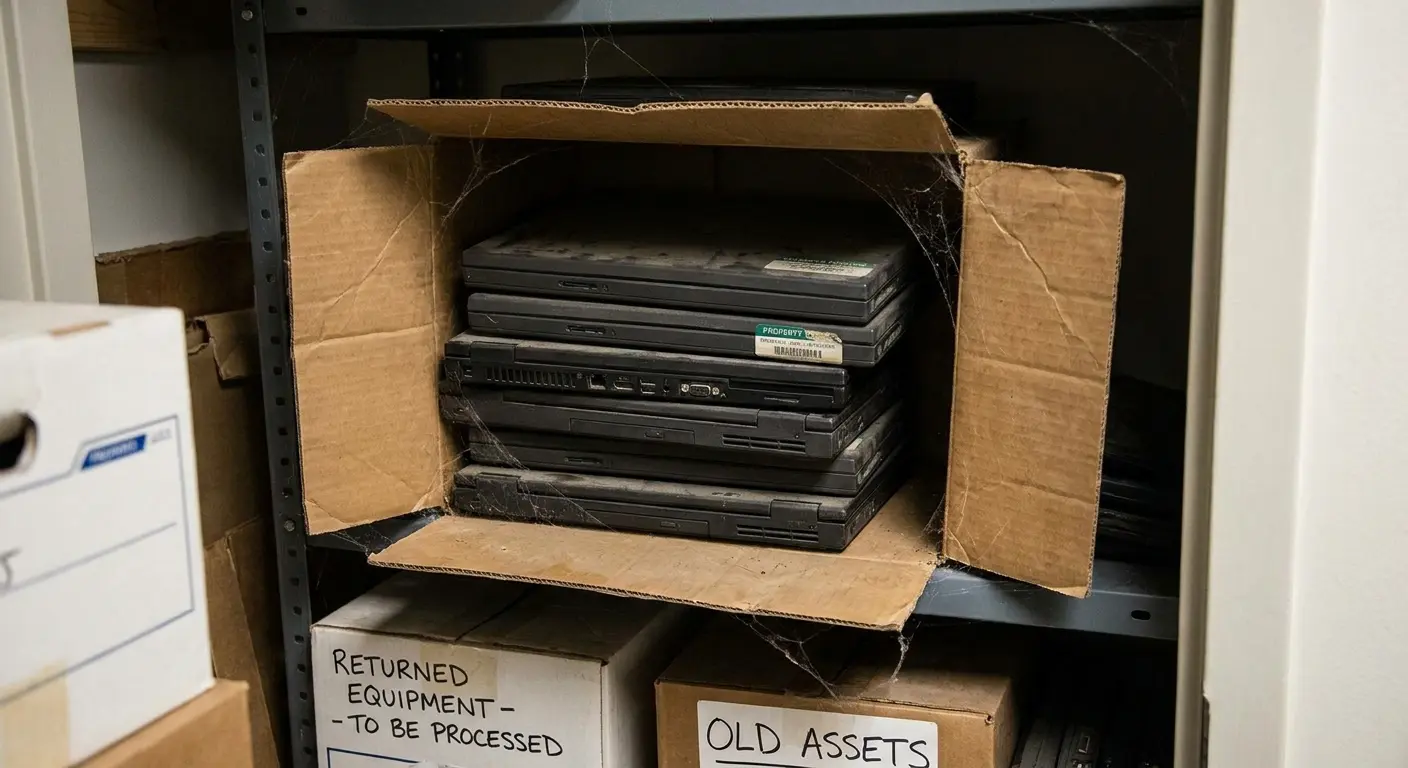
Maybe the employee lives internationally and shipping is complicated. Perhaps they ghosted and stopped responding to return requests. Sometimes the device comes back but sits in a closet for months before anyone processes it.
During this limbo period, the asset exists in a strange state. It's not assigned to anyone new, but it's also not available for redeployment. Free IT asset management software will show it assigned to a terminated employee unless someone manually updates the status.
These in-between assets accumulate over time, creating a pool of hardware that's technically available but practically invisible because nobody's tracking the transition states.
You might have ten laptops in various stages of return, refurbishment, or reassignment. Your free tool shows them assigned to people who no longer work there. When someone asks if you have a spare device, you say no because your system doesn't reflect reality.
The tracking problem isn't just about knowing what you own. It's about knowing what's available for use right now, and free software rarely handles these workflow states well. Establishing clear processes through an IT onboarding and offboarding checklist can help prevent devices from entering this limbo state.
The Geographic Scatter Problem
Remote work has distributed your IT assets across more locations than most companies can mentally map. You have devices in employees' homes, coworking spaces, temporary office locations, and with contractors who may or may not be full-time team members.
Some employees have moved cities or countries without updating their address in HR systems. Others are using equipment at a parent's house or a vacation rental where they're working for a few months.
Free IT asset management software includes a location field, but it's only accurate if someone updates it every time an asset moves. Without GPS tracking or automated location updates (features that don't exist in most free tools), you're relying on employees to tell you where their devices are.
They won't.
You need to recall devices for a security update or because a model has a battery recall. Your system says 15 laptops are in New York. You contact those employees. Three have moved. Two are traveling. One left the laptop at their parents' house in another state.
The location data is fiction.
What Free Tools Actually Track (And What They Miss)
Hardware Specifications vs. Actual Usage Patterns
Free IT asset management software excels at recording technical specifications. You'll get detailed reports on processor types, RAM capacity, storage size, and operating system versions. This data comes from automated discovery and agent reporting, making it reliable and current.
What free tools don't capture is how employees use these devices.
Is that high-spec laptop being used for basic email and web browsing while someone struggling with a slower machine is trying to run resource-intensive applications? Are devices sitting idle for weeks while employees use personal equipment instead?
Usage patterns inform smarter allocation decisions, but tracking them requires analytics features that exist only in paid tiers or separate monitoring tools that free IT asset management software doesn't integrate with.
You can generate a report showing every device's specifications. You can't generate a report showing which devices are underutilized or mismatched to their user's needs. This gap means you're optimizing for inventory accuracy rather than operational efficiency.
The hardware exists. The question is whether it's doing useful work or just depreciating in someone's closet while they use their personal MacBook instead. Understanding asset depreciation becomes critical when you can't track actual device utilization patterns.
Reality check on what these tools actually do:
| What Free Tools Track Well | What They Miss |
|---|---|
| Device model and specifications | Whether anyone's actually using the damn thing or if it's collecting dust |
| Operating system versions | Employee satisfaction with assigned hardware |
| Network connection status | Performance issues affecting productivity |
| Installed software list | Software license compliance and costs |
| Serial numbers and identifiers | Peripheral devices that connect intermittently |
| Current assigned user | Historical assignment changes and reasons |
| Basic location field | Accurate real-time geographic location |
| Purchase date (if manually entered) | Total cost of ownership including support time |
Your mileage will vary. Some tools do better than others, but this is the general pattern.
Software Licenses Versus Installed Applications
Free tools often include software inventory features that scan devices and report which applications are installed. You'll see that 47 devices have Adobe Creative Cloud installed, which seems useful for license compliance.
What you won't see is how many licenses you purchased, when they renew, what they cost, or whether those 47 installations are authorized under your agreement.
Free IT asset management software treats software as an inventory item, not as a financial and compliance asset. License management requires tracking purchase records, renewal dates, contract terms, and user entitlements (features that demand more sophisticated database structures and vendor integrations than most free tools provide).
You end up with half the picture. Knowing what's installed but not whether you're compliant, overpaying, or exposed to audit risk.
Your free tool tells you what software exists on your devices. It doesn't tell you if you're violating license agreements or paying for unused seats. You need a separate system or spreadsheet to track the commercial relationship, which defeats the purpose of having asset management software.
Software represents significant spending for most companies. Managing it as just another inventory item misses the financial complexity entirely. Popular open-source options such as Snipe-IT provide basic software inventory tracking, though Snipe-IT still requires manual entry of license purchase details and renewal dates to maintain compliance visibility.
Peripheral Devices That Connect Intermittently
Monitors, keyboards, mice, webcams, and other peripherals connect and disconnect constantly. Free IT asset management software struggles with these devices because they're not always visible to discovery scans and they don't have agents installed.
You might capture them during an initial audit, but tracking them over time requires employees to report when they receive or return peripherals.
Most won't.
The result is that your most frequently replaced, easily lost, and commonly requested items have the worst data quality in your system. You know you've ordered hundreds of keyboards over the years, but your free tool shows 23. The rest exist somewhere in the physical world, untracked and unmanaged.
Peripherals feel minor until you calculate how much you've spent replacing items that were probably sitting in someone's drawer the whole time. Free tools don't solve this because the tracking burden falls on humans, not automation.
You'll have accurate data on laptops and phones. Everything else becomes a guess based on purchase history and hope.
Building a Baseline Asset Register Without Paid Features
The Manual Audit Nobody Wants to Do
I'm about to tell you something you don't want to hear: you need to do a manual audit. Looking at what I just wrote, I need to continue from where I left off at "I'm about to tell you something you don't want to hear: you need to do a manual audit." Let me continue:
Yes, I know. That's literally why you're looking for software (to avoid manual work). But here's the thing: the software can't organize chaos it doesn't know exists.
This means asking every employee to report what IT equipment they have, cross-referencing those responses with purchase records, and physically verifying assets when possible. It's time-consuming, annoying for employees, and never 100% accurate, but it's the only way to establish a baseline when you're implementing free asset management software retroactively.
The audit should capture device type, serial number, purchase date, assigned user, location, and condition. You'll need to create a standardized form or survey that's easy for employees to complete, then dedicate someone to entering that data into your new system.
Most companies underestimate how long this takes and how much resistance they'll encounter from busy employees who don't understand why IT suddenly cares about the keyboard they've been using for three years.
Employee Hardware Audit Template
Please complete this form for all company-provided IT equipment in your possession:
1. Primary Computer
- Device type (laptop/desktop)
- Brand and model
- Serial number (usually found on bottom of device or in system settings)
- Approximate age or purchase date if known
- Current condition (excellent/good/fair/poor)
- Current location (city/country)
2. Mobile Devices
- Phone make and model
- Tablet make and model
- Serial numbers or IMEI numbers
- Condition assessment
3. Peripherals
- Monitor(s): quantity, size, and model if visible
- Keyboard type (wired/wireless, brand)
- Mouse type
- Webcam (if separate from laptop)
- Headset or microphone
- Docking station or hub
- Any other IT equipment
4. Accessories
- Charging cables and adapters
- Cases or protective equipment
- External storage devices
5. Additional Information
- Are you using any personal devices for work?
- Do you have any old company equipment that's no longer in use?
- Have you moved locations since receiving this equipment?
Send the audit request with clear context about why you're doing this. Employees are more likely to respond if they understand the benefit (faster support, better equipment allocation, easier returns when they leave). Frame it as improving their experience, not just an IT compliance exercise.
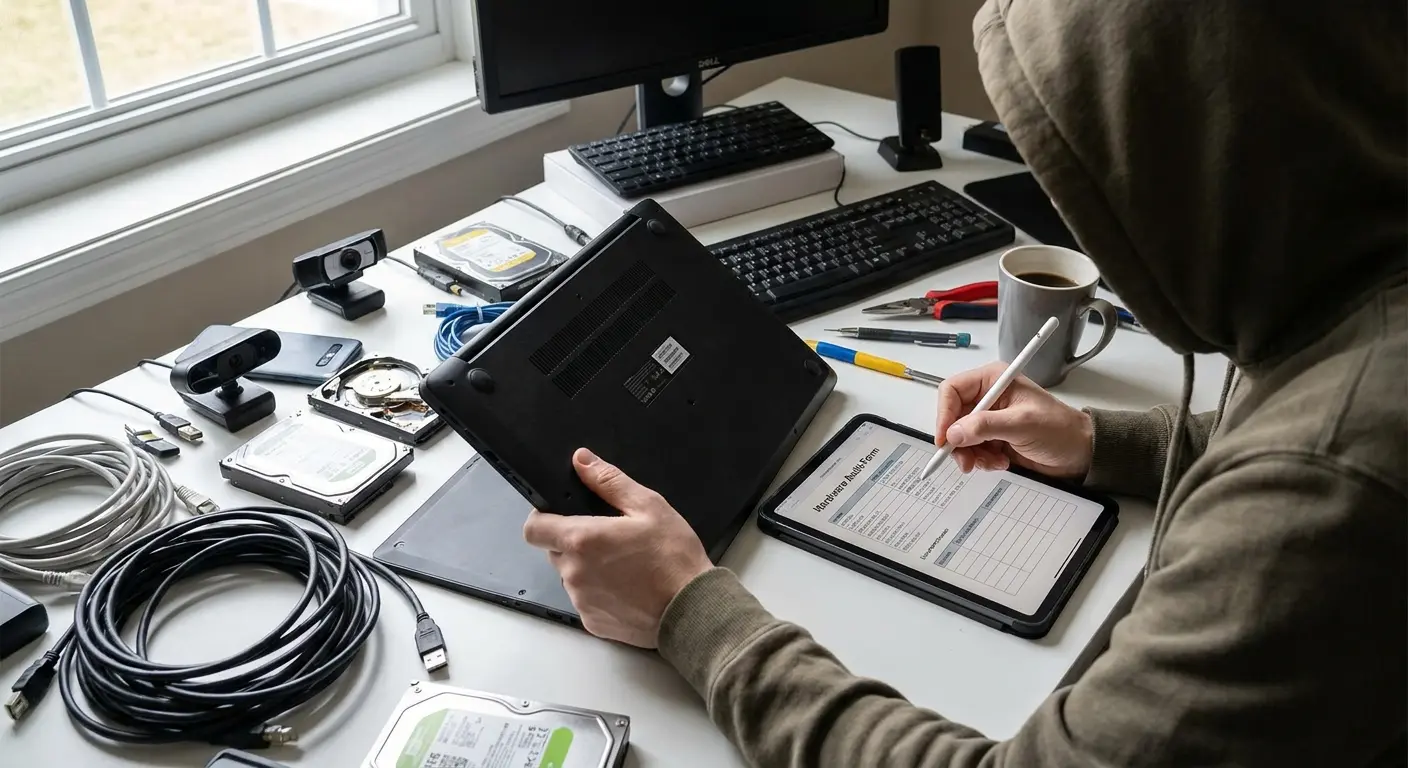
You'll get about 70% response rate on the first request. Plan for follow-ups, and accept that some data will remain incomplete until those devices naturally cycle through support or replacement processes. Whether you're importing this data into Snipe-IT or another asset management software, the manual audit remains the foundation of accurate retroactive tracking.
Cross-Referencing Purchase Records Across Multiple Systems
This is archaeology. You're going to your finance team with your hat in hand: "Can I get every IT purchase from the last three years?" They'll send you a CSV with 847 rows.
Row 1: "Computer equipment - $1,247"
Row 2: "Hardware - $892"
Row 3: "Apple Inc - $2,399"
Cool. Super helpful. Which computer? What hardware? Was that $2,399 one MacBook or two? Nobody knows. The person who made that purchase left 18 months ago.
Your hardware purchases are scattered across multiple platforms. Some came through your primary procurement system. Others were expensed through your finance platform. A few were purchased on corporate credit cards with receipts filed in email.
Building a complete purchase history means pulling data from all these sources and attempting to match it with physical devices. The challenge is that purchase records often lack serial numbers or specific device identifiers, making it impossible to definitively link a purchase order to a specific laptop.
You'll find entries such as "MacBook Pro 16-inch" with no further detail, and you need to figure out which of your five MacBook Pros that purchase represents. Free IT asset management software won't do this matching for you. You're manually creating connections between financial records and physical assets, filling in gaps with best guesses when definitive data doesn't exist.
You're going to spend hours playing detective, cross-referencing dollar amounts with Apple's historical pricing to guess which model was purchased. Sometimes you'll get lucky and find an invoice attached. Most times you won't.
Start with your most recent purchases where documentation is better, then work backward. Accept that purchases older than two or three years may be impossible to fully reconstruct. Focus on getting current assets accurately recorded rather than achieving perfect historical completeness.
This process reveals how much institutional knowledge lives in people's heads rather than in systems. When the person who handled IT procurement in 2021 has left the company, that knowledge is gone.
A SaaS company I talked to (80 people, fully remote) thought they had their stuff together. They'd been tracking purchases in their accounting software. Felt organized.
Then they actually tried to audit their inventory.
Turns out they had hardware purchases in FIVE different places:
- Main accounting software (the "official" system)
- Expensify (because employees just bought stuff and expensed it)
- Three different corporate credit cards (because different departments had different cards)
- Amazon Business (for "quick" peripheral orders that bypassed procurement)
- A spreadsheet on their former operations manager's Google Drive that nobody knew existed until someone was cleaning up files
Two weeks of reconciliation. Twenty-three devices they'd completely lost track of. Including monitors shipped to a coworking space they'd stopped using 18 months earlier. They were still paying for the coworking membership, too. Nobody had noticed.
Employee Self-Reporting and Why It's Unreliable
You'll ask employees to tell you what equipment they have. They'll forget about the extra monitor in their closet, the old laptop they're using as a backup, or the keyboard they took home during the pandemic.
Some will intentionally omit items they're worried you'll ask them to return. Others genuinely don't remember what belongs to the company versus what they purchased personally.
But let's be honest about why self-reporting fails. Some people genuinely forget (they've got a monitor in their closet from 2021 they haven't thought about in months). Others see your audit email and think "if I don't mention the old laptop, they won't ask for it back." Nobody's twirling a mustache and plotting equipment theft. They're just... people. People who don't want to box up a perfectly good backup laptop and ship it back when they might need it someday.
And some folks genuinely can't tell what's company equipment versus personal. They bought a keyboard with their own money but expensed it. Is that company property? They don't know. So they don't report it. Or they report everything just to be safe, and now your inventory includes their personal iPad.
Self-reporting gives you a starting point, but it systematically undercounts your actual inventory. Free asset management software can only be as accurate as the data you put into it, and when that data comes from memory and voluntary disclosure, accuracy suffers.
You need to build verification steps into your process (cross-checking self-reported inventories against purchase records, shipping confirmations, and any previous tracking attempts, however informal).
Treat self-reporting as one data source among several, not as gospel truth. When you find discrepancies, approach employees with curiosity rather than accusation. Most inventory gaps are honest mistakes, not theft.
The goal is to get close enough to reality that you can manage forward effectively. Perfect historical accuracy is impossible when you're working backward.
How to Audit Existing Hardware When You Have Zero Documentation
Starting With Financial Records Instead of IT Systems
When IT documentation doesn't exist, your finance department probably has something. Purchase orders, expense reports, and credit card statements create a financial trail of hardware spending even if nobody tracked the physical assets.
Start by requesting all IT-related purchases for the past two to three years. You'll get a messy spreadsheet with varying levels of detail, but it tells you the minimum number of devices that should exist.
Each purchase represents hardware that was bought for a reason and presumably deployed to someone. Free IT asset management software becomes the place where you consolidate this financial data with whatever physical verification you can accomplish. The process is backward (using financial records to infer what should exist physically, then trying to locate those assets and get them into your tracking system).
Finance won't have serial numbers or specific device identifiers in most cases. You'll see line items such as "laptop computer" with a dollar amount. Use price points and purchase dates to make educated guesses about which model was purchased, then try to match that with devices you find during your audit.
This approach works better for recent purchases where prices and available models are easier to recall. Older purchases become increasingly speculative. Even an open-source asset management software tool like Snipe-IT requires this foundational financial data to build a complete asset register.
Companies struggling with scattered purchase data often benefit from implementing structured IT procurement strategies going forward to prevent future documentation gaps.
Leveraging Shipping Confirmations and Email Trails
Someone in your organization probably has emails confirming device shipments, even if no formal tracking system existed. Search company email for shipping confirmations from common vendors, tracking numbers, and deployment notifications.
These emails often contain serial numbers, recipient addresses, and specific device models that financial records omit. Building your asset register from email archaeology is tedious, but it can fill significant gaps in your baseline inventory.
Look for automated shipping notifications from vendors, internal emails about equipment assignments, and support tickets where employees mentioned specific devices. Free IT asset management software won't crawl your email for you, so this is purely manual detective work, but the payoff is finding concrete evidence of who received what device and when.
Create search queries for common vendor names, tracking number patterns, and phrases about equipment deployment. Export relevant emails and extract the useful data points into a temporary spreadsheet before importing into your free tool.
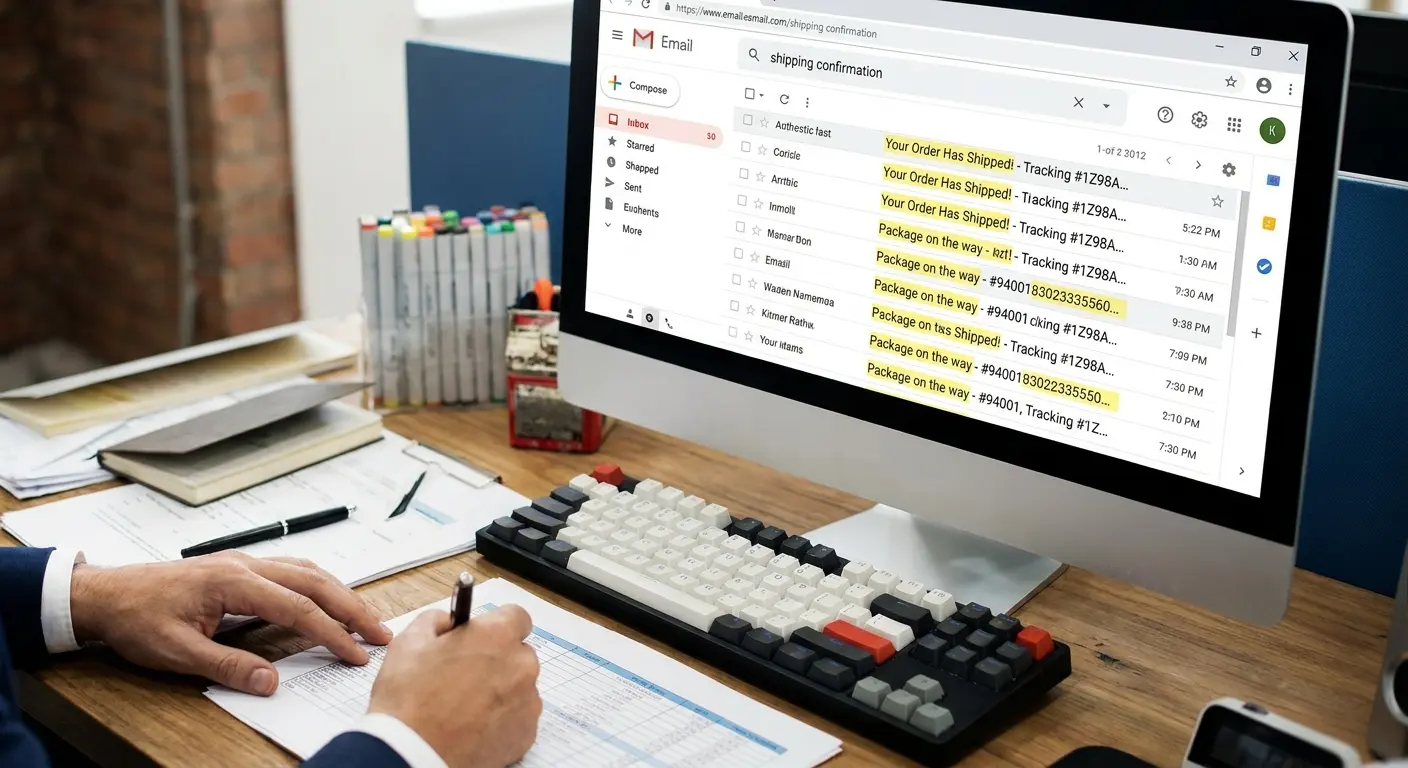
You'll find devices you completely forgot about. You'll also discover that some employees received multiple laptops over the years and nobody ever asked for the old ones back.
A marketing agency reconstructing their IT inventory searched their Google Workspace for "tracking number" and "shipped" combined with vendor names such as Dell, Apple, and Lenovo. They found 140 shipping confirmations spanning three years, including 18 devices sent to contractors whose contracts had ended without any equipment return process. The email trail revealed that their former office manager had been manually tracking everything in Gmail labels (a system that disappeared when that person left and nobody thought to preserve their organizational method).
Using HR Records to Identify Who Should Have Equipment
Your HR system knows who was hired, when they started, and whether they're still employed. Cross-reference this with your IT purchasing timeline to identify who should have received equipment during their onboarding.
If someone started in March 2023 and you have a laptop purchase from that same month, there's a reasonable chance that device went to them. This inference method isn't perfect, but it helps you build a list of people to contact during your audit.
Free IT asset management software might integrate with HR platforms in paid versions, but free tiers require manual correlation. Export your employee list with start dates, then match it against your purchase timeline to create educated guesses about initial assignments.
Current employees are easier to verify. Contact them directly and ask what equipment they received during onboarding. Former employees create a problem because you can't ask them, and if their equipment was never returned, you need to decide whether to write it off or attempt recovery.
This method reveals onboarding gaps where new hires somehow started without proper equipment provisioning, often because they used personal devices temporarily and that temporary solution became permanent. Whether you're using Snipe-IT or another platform, correlating HR data with purchase records remains a manual but essential step.
Handling BYOD Devices in Free Asset Management Systems
The Blurry Line Between Company and Personal Property
Bring Your Own Device policies create tracking complications that free asset management software wasn't designed to handle. Employees use personal laptops, phones, and tablets for work, accessing company data and applications without the device being company property.
Should you track these in your asset management system? They're not assets you own, but they're part of your IT infrastructure and security perimeter.
Most free tools don't distinguish well between owned and BYOD devices, or they require manual tagging that's easy to get wrong. You end up either excluding BYOD entirely (which gives you incomplete infrastructure visibility) or including it and creating confusion about what equipment you're responsible for managing, maintaining, and eventually replacing.
Tracking BYOD separately (even in a different system or spreadsheet) works better than trying to force it into asset management software designed for owned equipment. You need different data points for BYOD (device type for security policy application, owner contact information) versus owned assets (purchase date, warranty status, depreciation).
The question becomes whether your free IT asset management software can handle custom fields and tags well enough to maintain this distinction, or whether you're better off keeping BYOD in a separate tracking mechanism.
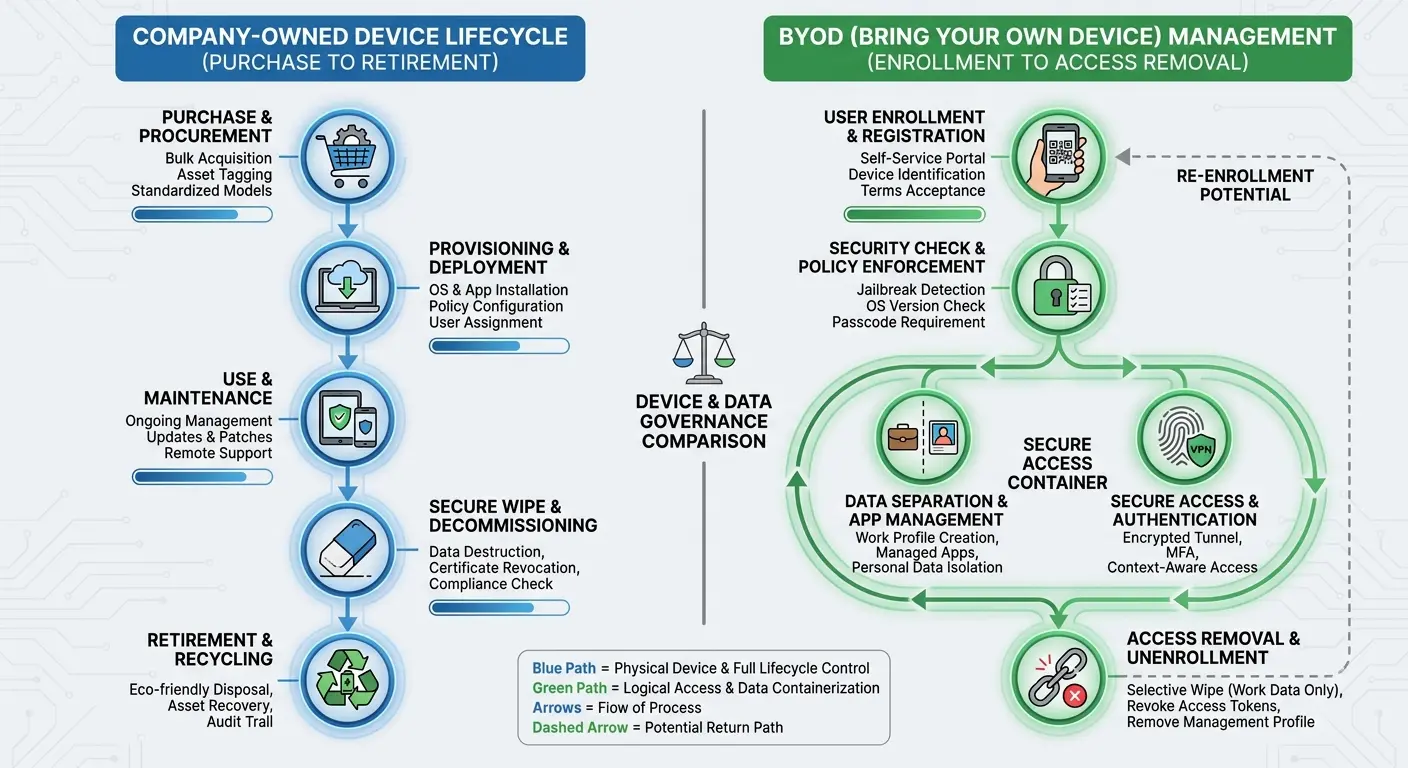
Quick reference because everyone asks about this:
| Company-Owned Assets | BYOD Devices |
|---|---|
| Company purchases and owns | Employee owns personally |
| Full management and control rights | Limited management through MDM/consent |
| Responsible for repairs and replacement | Employee handles maintenance |
| Track purchase date, warranty, depreciation | Track device type for security policies |
| Must be returned when employee leaves | Remains with employee, remove access only |
| Can enforce any software/security requirements | Must respect privacy, limited enforcement |
| Included in asset depreciation calculations | Not a balance sheet item |
| IT determines refresh cycle | Employee upgrades on their schedule |
Security and Compliance Tracking Without Ownership
BYOD devices access your network, store company data, and represent security risks that you need to manage even though you don't own the hardware. Free IT asset management software focuses on inventory and lifecycle management, not security posture and compliance status.
You need to know which BYOD devices have encryption enabled, whether they're running updated operating systems, and if they comply with your security policies. This information matters more than knowing the purchase date or warranty status, but it requires integration with mobile device management or endpoint security tools that free asset management platforms rarely connect with.
You're left tracking compliance in one system and inventory in another, creating fragmented visibility that makes holistic IT management difficult. Looking at what I just wrote, I need to continue from "You're left tracking compliance in one system and inventory in another, creating fragmented visibility that makes holistic IT management difficult." Let me continue:
Some companies solve this by requiring BYOD users to install MDM profiles that report device status. This gives you security visibility but doesn't really belong in your asset register since you don't own the devices.
The tracking question shifts from "what do we own?" to "what accesses our systems?" and free IT asset management software answers the first question much better than the second. Organizations implementing BYOD policies should review MDM policy best practices to ensure security compliance alongside asset tracking.
Reimbursement Tracking for BYOD Programs
If you reimburse employees for using personal devices for work, you've got a financial obligation to track even though the assets aren't yours. You need records of who receives reimbursements, how much you pay, and whether those reimbursements are tied to specific devices or just general stipends.
This data doesn't fit neatly into free asset management software because it's more about payroll and expense management than hardware tracking. You end up maintaining parallel records (one in your asset system for any company-owned equipment and another in your finance platform for BYOD reimbursements).
The lack of integration means you can't easily answer questions about total IT spending per employee or compare the cost of providing company devices versus reimbursing personal ones.
Your free tool tracks the company laptop you provided to 60% of your team. Your payroll system tracks the monthly stipend you give the other 40% who use their own devices. Nobody has a unified view of your actual IT provisioning costs.
This fragmentation makes budgeting and planning harder because you're working with incomplete pictures in multiple systems that don't talk to each other.
The Real Cost of "Free" When Your Asset Data Is Incomplete
Duplicate Purchases Because You Don't Know What You Have
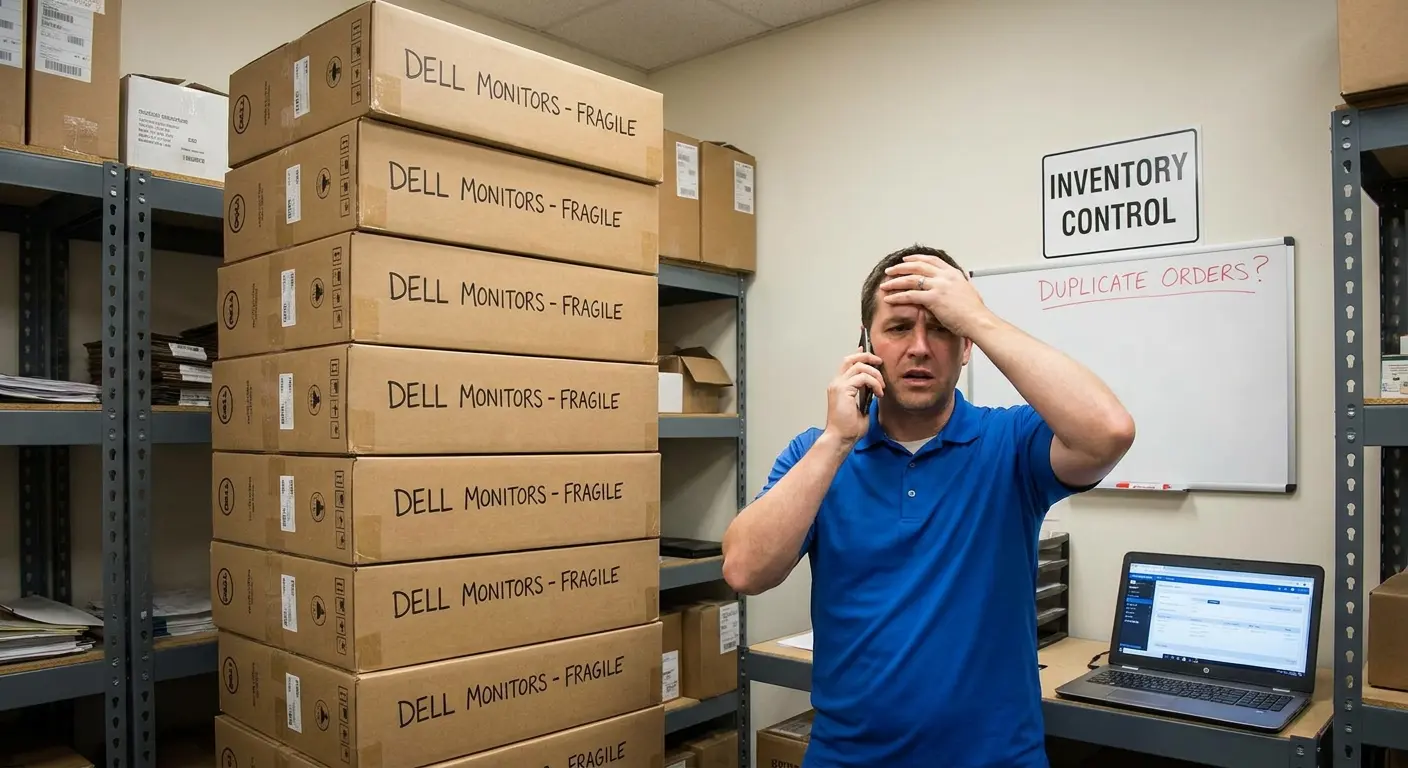
Incomplete asset data leads directly to unnecessary spending. An employee needs a monitor. You check your free IT asset management software, see nothing available, and order a new one.
Three weeks later, someone cleaning out a storage closet finds four monitors that were never entered into the system.
You've just spent money on equipment you already owned but couldn't find. This happens constantly when your asset register doesn't reflect reality. Free tools give you a database, but if that database is missing 40% of your actual inventory, it's worse than useless because it creates false confidence in your purchasing decisions.
You're making procurement choices based on incomplete information, leading to redundant purchases, inflated budgets, and accumulating surplus equipment that nobody knows exists.
Let me put actual numbers to this because "hidden costs" sounds vague.
Your IT person makes $75K. They spend 5 hours a week on manual asset tracking tasks (updating spreadsheets, chasing people for information, reconciling purchase records). That's 260 hours annually. At their fully-loaded cost (salary plus benefits plus overhead), that's roughly $15,000 in labor.
You buy duplicate equipment because your inventory data is wrong. Three monitors this year because you didn't know you had two in storage. Two laptops because your "available" count was off. That's another $4,000.
You can't find equipment when people leave. Write off six devices this year that are "somewhere" but not worth the effort to track down. Another $8,000 gone.
Your free software just cost you $27,000.
A paid solution that eliminates most of that manual work? Probably $3,000-5,000 annually for a company your size.
The math isn't mathing.
Lost Devices That Were Never Properly Tracked
You can't recover what you don't know is missing. When devices aren't in your free IT asset management software, or when the data is so outdated that you don't know who has what, equipment disappears without anyone noticing.
Employees leave and keep devices because nobody asked for them back. Contractors finish projects and retain hardware because it wasn't flagged as company property. Devices get stolen, and you don't realize it for months because there's no regular reconciliation process.
Each lost device represents direct financial loss plus potential security and compliance risk if company data was on that hardware. Free tools can't prevent loss if the devices were never properly tracked in the first place, and they can't alert you to missing equipment if your baseline inventory was wrong from the start.
You think you have 100 laptops deployed. You deployed 130, but 30 were never entered into your system. Over two years, 15 of those untracked devices disappear through various means. You have no idea because they were ghosts from the beginning.
The financial impact compounds over time. Each annual budget cycle, you're making decisions based on flawed assumptions about how much equipment you have and how much you need to replace.
A consulting firm discovered during an office move that they had 12 laptops in a storage unit they'd forgotten about (equipment returned by employees over 18 months that never got processed or entered into their tracking system). Meanwhile, they'd purchased 8 new laptops during that same period because their free asset management tool showed they were short on available devices. The duplicate spending totaled nearly $15,000, money that could have been avoided with accurate inventory data and proper return processing workflows.
Time Spent on Manual Workarounds
Free IT asset management software lacks features that would automate routine tasks, so your team builds manual workarounds. Someone maintains a separate spreadsheet for warranty tracking because the free tool doesn't have good reporting for expiration dates.
Another person manually checks for software updates because the free version doesn't include patch management. Your IT team spends hours each week on administrative tasks that paid software would automate, and that labor has a cost even if the software doesn't.
When you calculate the fully loaded cost of an IT professional's time spent on manual asset tracking tasks, the "free" software might be more expensive than a paid solution that reduces administrative overhead.
You're paying someone $75,000 annually, and they spend five hours per week on manual asset tracking tasks that automation could eliminate. That's roughly $9,000 in annual labor cost dedicated to compensating for missing features in your free tool.
The software is free. The operational cost is substantial. Most companies don't do this math until they're frustrated enough with the manual burden to seriously evaluate paid alternatives.
Integrating Free Tools With Your Current Tech Stack
API Limitations in Free Tiers
Free IT asset management software often restricts API access or limits the number of API calls you can make, which directly impacts your ability to integrate with other systems. You want asset data to flow automatically into your service desk when someone submits a hardware request. You need device assignments to sync with your HR platform when employees are onboarded or terminated.
These integrations require APIs that can push and pull data between systems, but free tiers frequently lock this functionality behind paid upgrades. You're left with manual data entry or periodic CSV exports and imports, which defeats much of the efficiency gain you hoped to achieve by implementing asset management software in the first place.
Check API documentation before committing to a free tool. Some providers offer API access but throttle it so heavily that it's practically unusable. Others reserve it entirely for paid customers.
The integration question determines whether your free IT asset management software becomes part of a connected tech stack or remains an isolated database that requires constant manual updating. Snipe-IT offers full API access even in its free version, making it one of the more integration-friendly options for companies needing to connect their asset management with other business systems.
Single Sign-On and User Management Challenges
Most companies use SSO to manage access across their software tools, providing security and convenience. Free IT asset management software frequently doesn't support SSO integration, requiring separate login credentials and manual user provisioning.
Every time you hire or terminate someone, you need to remember to add or remove them from the asset management system separately from your standard onboarding workflow. This creates security gaps when former employees retain access because nobody remembered to deprovision them, and it adds friction for current employees who need to manage yet another set of login credentials.
The lack of SSO integration seems minor until you're managing it across dozens of users and multiple systems that don't talk to each other.
You implement SSO everywhere else in your stack for security and compliance. Your free asset management tool sits outside that infrastructure, creating an exception that your security team isn't thrilled about.

User management becomes another manual task on top of the asset tracking itself, compounding the administrative burden that free software was supposed to reduce.
Export Formats and Data Portability
You'll eventually want to move your data somewhere else (either to a different asset management tool or into reporting and analysis platforms). Free IT asset management software should let you export your data in standard formats, but some providers make this deliberately difficult to create lock-in.
You might get CSV exports with poorly structured data, missing fields, or formatting that requires significant cleanup before you can use it elsewhere. Others limit how frequently you can export or restrict exports to small batches.
Data portability matters because your needs will evolve, and being trapped in a free tool that can't easily release your data creates long-term problems. Before implementing any free solution, test the export functionality with sample data to understand what you're working with.
I've seen companies spend weeks reformatting exported data because the free tool they'd used for two years exported everything into a single text field instead of properly structured columns.
Your data is yours. Make sure the free IT asset management software you choose treats it that way and doesn't hold it hostage behind export limitations or proprietary formats. Snipe-IT provides clean CSV exports with properly structured fields, making data migration relatively straightforward compared to some proprietary solutions.
When to Upgrade Beyond Free Software
Crossing the Complexity Threshold
Free IT asset management software works reasonably well up to a certain level of complexity. When you cross that threshold, the limitations become operational obstacles rather than minor inconveniences.
The threshold is different for every company, but common indicators include managing assets across multiple countries with different compliance requirements, supporting complex hardware configurations that need detailed specification tracking, or coordinating IT assets with facilities management and physical security systems.
Complexity also increases when you have multiple device types (laptops, phones, tablets, IoT devices, servers) that require different tracking approaches and lifecycle management processes. Free tools offer one-size-fits-all functionality that works for straightforward scenarios but breaks down when you need nuanced workflows, custom fields, or specialized reporting.
You'll know you've crossed the threshold when you're spending more time working around the software's limitations than you're saving by not paying for it.
The decision to upgrade isn't about the absolute number of assets. It's about the complexity of managing them and whether your free tool can handle that complexity without requiring extensive manual intervention. Even the best free IT asset management software has practical limits when your asset management system needs to support global operations with diverse compliance requirements.
You'll know it's time to upgrade when you have this exact thought: "I'm spending more time fighting with this tool than I would spend just tracking everything in a spreadsheet."
That thought is your sign.
But if you want a more systematic way to evaluate it, here's what to watch for:
Signs You've Outgrown Free Asset Management Software
Evaluate whether these indicators apply to your situation:
Scale Indicators:
- Managing more than 100 active devices
- Supporting employees in more than 5 countries
- Processing more than 10 device deployments or returns per month
- Tracking assets across multiple legal entities or subsidiaries
Operational Complexity:
- IT team spending more than 10 hours weekly on manual asset tracking tasks
- Regular duplicate purchases due to inventory visibility gaps
- Unable to locate devices when needed for recalls or security updates
- Missing SLA targets because asset data delays troubleshooting
Integration Needs:
- Requiring automated sync with HR, finance, or procurement systems
- Needing API access for custom workflows or reporting
- SSO integration becoming a security requirement
- Mobile device management or endpoint security tool integration necessary
Compliance and Risk:
- Facing audit requirements that free tools can't support
- Industry regulations requiring specific asset tracking capabilities
- Data residency requirements for employee information
- Need for detailed audit trails and change history
Financial Impact:
- Lost or unrecovered devices exceeding $5,000 annually
- Duplicate purchases due to poor inventory visibility
- Unable to calculate accurate total cost of ownership
- Warranty and support contract renewals being missed
If you checked 3-5 boxes: You're in the gray zone. Free tools are painful but probably still viable if you're willing to live with the friction.
If you checked 6 or more: You crossed the threshold weeks ago. You're just in denial because "free" feels responsible and spending money feels like admitting defeat.
It's not defeat. It's recognizing that your time costs money too.
Compliance and Audit Requirements
Certain industries and certifications require specific asset tracking capabilities that free IT asset management software may not provide. SOC 2 audits need detailed access logs showing who viewed or modified asset records. GDPR compliance might require tracking which devices have processed personal data and demonstrating secure disposal processes.
Government contracts often mandate specific inventory reporting formats and audit trails. Free tools rarely include the compliance features (detailed audit logging, role-based access controls, and certified reporting templates) that paid solutions offer.
You can try to meet compliance requirements with a free tool by building manual processes around it, but auditors want to see systematic controls embedded in your software, not compensating procedures that rely on people remembering to do things correctly.
Your auditor asks for a report showing all asset changes in the past 12 months with user attribution and timestamps. Your free tool doesn't log that level of detail. You're stuck trying to reconstruct the information from other sources or explaining why you can't produce it.
Compliance failures are expensive. If your free IT asset management software can't support your audit and regulatory requirements, the cost of non-compliance far exceeds the price of paid software. Organizations in regulated industries should review IT compliance requirements before selecting asset management tools to ensure they meet industry standards.
Asset Recovery and End-of-Life Management
Getting devices back when employees leave is one of the hardest parts of IT asset management, especially with remote teams. Paid solutions often include features specifically designed for this (automated offboarding workflows, prepaid shipping labels, device wipe verification, and tracking through the return process).
Free IT asset management software stops at recording that a device should be returned, leaving the actual logistics to you. You're manually coordinating shipping, tracking packages, verifying condition, and updating records when devices arrive.
For small teams, this might be manageable. For companies with regular turnover or large remote workforces, asset recovery becomes a significant operational burden that free tools don't adequately address.
You have 15 employees leaving this quarter across eight countries. Each device return requires coordinating shipping, customs documentation in some cases, and verification that the equipment arrived in working condition. Your free tool tracks the devices but doesn't help with any of the actual recovery logistics.
This is where the value proposition of platforms such as GroWrk becomes clear. When asset recovery and global logistics are core challenges, free software only solves the tracking piece while leaving the hardest operational problems entirely on your shoulders. For organizations managing distributed teams at scale, exploring resources such as GroWrk's State of IT Lifecycle Management can provide insights into how comprehensive platforms address these challenges beyond basic tracking.
Compliance Requirements Free Tools Can't Always Meet
Data Residency and Privacy Regulations
Where your asset data is stored matters for compliance with regulations including GDPR, CCPA, and various national data protection laws. Free IT asset management software providers host data in whatever region is most cost-effective for them, which might not align with your compliance requirements.
If you're managing assets in the EU, regulations may require that employee data (including device assignments and usage information) stays within EU data centers. Free tools rarely offer data residency options or regional hosting choices. You're accepting whatever infrastructure the provider uses, which could create compliance gaps if that infrastructure doesn't meet your regulatory obligations.
Paid solutions often include regional hosting options as a standard feature, but free tiers usually don't.
Your asset register contains employee names, locations, and potentially other personal information. If that data is hosted on servers in a jurisdiction that doesn't meet your compliance requirements, you've got a problem that the free software created.
Data residency seems abstract until an auditor asks where your employee data is stored and you realize you don't know because your free tool's terms of service were vague about infrastructure location. Self-hosted options such as Snipe-IT give you complete control over data residency since you choose where to deploy the application.
Retention Policies and Data Deletion
Regulations often specify how long you must retain certain records and when you're required to delete them. Asset data tied to former employees might need to be purged after a specific period, or conversely, maintained for several years for warranty or financial audit purposes.
Free IT asset management software doesn't include sophisticated retention policy features or automated deletion workflows. You're responsible for manually identifying records that need deletion and removing them according to your compliance schedule.
This creates risk because manual processes fail (someone forgets to delete old records, or nobody remembers that certain data has retention requirements). The lack of automated retention management in free tools means you're relying entirely on human memory and discipline to stay compliant.
You're supposed to delete device assignment records for terminated employees after seven years. Your free tool has no way to automatically identify and purge those records. Someone needs to remember to do it manually, and in practice, nobody does.
Retention violations can trigger significant penalties in regulated industries. The free software saves you money upfront but exposes you to compliance risk that could cost far more than a paid solution.
Audit Trail Completeness
Auditors want to see who made changes to asset records, when those changes occurred, and what the previous values were. Comprehensive audit trails are standard in paid IT asset management software but often limited or absent in free versions.
You might get basic logging that shows a record was modified, but not detailed change history showing exactly what changed and who authorized it. This creates problems during audits when you need to demonstrate controls and accountability.
Without complete audit trails, you can't prove that asset data hasn't been inappropriately modified or that access controls are working as intended. Free tools that lack robust logging force you to build compensating controls (additional documentation, manual verification processes) that add complexity and still might not satisfy auditors.
Your auditor asks who changed the assigned user on a specific laptop six months ago. Your free tool shows the current assignment but no change history. You have no way to answer the question with certainty.
Audit trail gaps undermine your entire compliance posture because you can't demonstrate the integrity of your asset data over time. Snipe-IT does include basic audit logging that tracks changes to asset records, though the detail level may not meet requirements for highly regulated industries.
Making Free IT Asset Management Software Work for Remote Teams
Discovery Limitations Across Distributed Networks
Network discovery features assume devices connect to a centralized network where your discovery tools can scan them. Remote teams break this assumption entirely.
Employees work from home networks, coffee shops, mobile hotspots, and coworking spaces that your discovery tools can't access. Even VPN connections don't always solve this because employees don't stay connected constantly, and discovery scans only find what's online at the moment you run them.
Free IT asset management software with network discovery will give you a partial, constantly shifting view of your remote fleet. The devices that show up depend entirely on who happened to be connected when you ran the scan, which means your asset data is never complete and constantly outdated.
You run a discovery scan and find 52 devices. Tomorrow you run it again and find 61 different devices because different people were online. Neither scan represents your complete inventory.
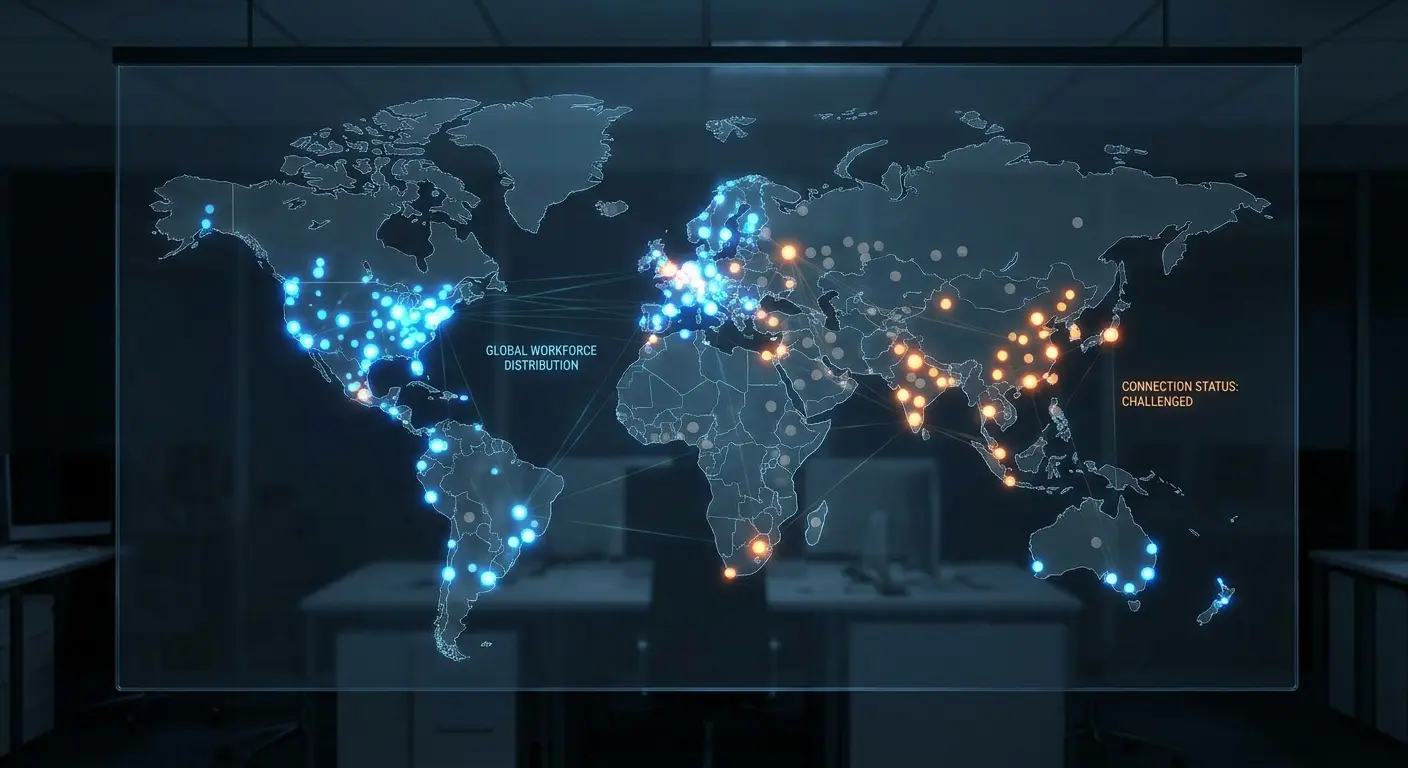
Discovery tools built for office environments don't translate well to distributed workforces, and free IT asset management software rarely includes features specifically designed for remote asset management.
Self-Service Portals and Employee Autonomy
Remote employees need ways to request equipment, report issues, and update their information without going through IT for every small thing. Self-service portals empower employees while reducing support burden, but they're a paid feature in most IT asset management platforms.
Free tools might offer basic user access, but not the polished self-service experiences that make it easy for employees to see what equipment they have, request accessories, or update their location when they move.
Without self-service capabilities, every asset-related interaction requires IT involvement, creating bottlenecks and frustration. Your IT team becomes the intermediary for simple tasks that employees could handle themselves if the software supported it.
An employee moves to a new city and needs to update their address so you know where their equipment is located. With a self-service portal, they log in and change it themselves. With your free tool, they email IT, someone manually updates the record, and the process takes three days for something that should take 30 seconds.
Self-service isn't just about convenience. It's about scaling your IT operations without proportionally scaling your team size. Free IT asset management software that lacks self-service features creates operational bottlenecks that become more painful as your team grows.
Remote Deployment Tracking
Shipping devices to remote employees creates tracking challenges that free IT asset management software doesn't address well. You need to know when devices shipped, where they are in transit, when they were delivered, and whether the employee has confirmed receipt and begun setup.
This requires integration between your asset management system, shipping carriers, and potentially your onboarding workflows. Free tools let you record that a device was assigned and shipped, but they don't integrate with carrier tracking APIs or provide visibility into the deployment pipeline.
You're manually checking tracking numbers, following up with employees, and updating records across multiple systems. The lack of integrated deployment tracking means you can't easily answer basic questions about how long it takes to get new hires fully equipped or where delays are occurring in your process.
You shipped a laptop to a new hire in Berlin two weeks ago. Your free IT asset management software shows it as "assigned" to them. You have no idea if they received it without manually checking the shipping carrier's website and then emailing the employee to confirm.
Deployment tracking matters for remote teams because physical distance removes the natural visibility you'd have if everyone worked in an office where you could see devices being handed out. Asset management software designed for traditional office environments doesn't account for the complexities of international shipping, customs delays, and remote onboarding timelines.
The Honest Truth About Free Asset Management Software
Free tools work. They're not broken. They're just limited.
If you're a 30-person startup with everyone in the same city and straightforward hardware needs, free software is probably fine. You'll spend a weekend setting it up, an hour a month maintaining it, and it'll do what you need.
If you're managing 100 or more devices across multiple countries, dealing with complex compliance requirements, or spending more than a few hours a week on asset tracking busywork, free tools are costing you money. You're just paying in time instead of subscription fees.
The hardest part of this whole thing isn't the software. It's getting accurate data about what you already own. The software (free or paid) is just a database. It can only work with what you put into it.
So before you spend three days evaluating free tools, spend three hours doing an honest inventory audit. Figure out how messy your current situation actually is. Then pick the tool that matches your mess.
If your mess is small, free tools are great.
If your mess is large, free tools will just give you a prettier way to look at your mess while it continues being messy.
Choose accordingly.
For teams managing globally distributed workforces, understanding how companies at scale handle these challenges can provide valuable perspective. Case studies such as how Upwork manages IT assets demonstrate approaches that go beyond basic tracking to address the full lifecycle of distributed hardware management.
Practical Implementation: Your First 30 Days
Week 1: Audit and Data Collection
Don't touch any software yet. Spend your first week gathering information about what you actually have.
Send the employee hardware audit survey. Set a deadline. Follow up with people who don't respond. Get purchase records from finance. Search email for shipping confirmations. Talk to your office manager, your former office manager if they're still reachable, and anyone else who might know where bodies are buried.
Create a master spreadsheet with everything you find. Don't worry about it being perfect. You're building a baseline, not a permanent system.
By the end of week one, you should have a rough count of how many devices you think exist, who has them, and how big your data gaps are. This tells you whether you need a simple free tool or whether your situation is complicated enough to warrant paid software.
Week 2: Tool Selection and Setup
Now you can pick your software. Based on your week one findings, choose a free IT asset management tool that matches your complexity level.
Popular free options include:
- Snipe-IT: Open source, self-hosted, full featured but requires technical setup
- InvGate Assets: Free tier available, cloud-hosted, easier setup but limited features
- Spiceworks: Free but ad-supported, good for Windows environments
- GLPI: Open source, comprehensive but complex interface
Set up your chosen tool. Create your asset categories, custom fields if needed, and user accounts. Import whatever clean data you have from your week one audit.
Don't try to import everything perfectly. Get the basics in: device type, serial number if you have it, assigned user, and current status. You can enrich the data later.
Week 3: Agent Deployment and Discovery
If your tool uses agents, start the deployment process. Send clear instructions to employees. Offer to help people who need it. Accept that you won't get 100% compliance immediately.
Run network discovery scans if your tool supports them. Compare what the automated discovery finds against your manual audit data. The gaps between these two datasets show you where your tracking problems are.
Document devices that don't show up in automated discovery. These need manual tracking and will require more attention going forward.
Week 4: Process Documentation and Training
Write down your new asset management processes:
- How do you handle new employee equipment requests?
- What's the process when someone's device breaks?
- How do employees report changes (new address, device issues)?
- What happens when someone leaves?
Train your team on the new system. Show them where to log in, how to view their assigned assets, and who to contact with questions.
Set up a regular maintenance schedule. Someone needs to own this. Weekly or biweekly, review new assets, update statuses, and chase down missing information.
Making Peace with Imperfect Data
Here's the thing nobody wants to admit: your asset data will never be 100% accurate.
Even with the best paid software, perfect tracking requires perfect human behavior, and that doesn't exist. Someone will forget to report a broken laptop. Devices will get lost. People will swap equipment informally and not tell IT.
Your goal isn't perfection. It's having data that's good enough to make informed decisions about purchasing, budgeting, and security.
If you know where 85% of your assets are, who has them, and roughly what condition they're in, you're doing better than most companies. Don't let the pursuit of perfect data prevent you from implementing a system that makes things better.
Free IT asset management software gives you a framework for improvement. It won't magically solve all your problems, but it creates structure where chaos existed before.
Start messy. Get cleaner over time. That's the realistic path forward.
Final Recommendations
Use free IT asset management software if:
- You have fewer than 50 devices to track
- Your team is mostly in one location or a few locations
- You have someone who can dedicate time to manual maintenance
- Your compliance requirements are straightforward
- You're willing to accept limitations in exchange for zero software cost
Upgrade to paid software when:
- Manual workarounds consume more than 5-10 hours weekly
- You're losing or duplicating equipment due to poor visibility
- Compliance requirements exceed free tool capabilities
- Integration with other systems becomes necessary
- You cross 100+ devices or expand internationally
Consider a full lifecycle management platform like GroWrk if:
- You're managing globally distributed teams
- Device procurement, deployment, and recovery logistics are major pain points
- You need a single system handling everything from purchase to disposal
- The operational burden of managing IT assets is preventing your team from focusing on strategic work
The right choice depends on your specific situation, not on what works for other companies. Be honest about your current mess, realistic about how much time you can dedicate to asset management, and pragmatic about what "free" actually costs when you factor in labor.
Your asset tracking doesn't need to be impressive. It just needs to work.