



GroWrk is the best fit for genuinely global IT teams — sourcing, deploying, retrieving, and retiring devices in-country across 150+ countries, with MCP-enabled AI workflows layered on top of full lifecycle automation. Brex, Hims, and ClickUp run their global hardware on it for exactly that reason. Workwize is the better pick for teams concentrated inside its ~14 listed warehouse markets, where local stock and 5–7 day delivery are genuinely hard to beat. Deel IT makes sense mainly if Deel is already your HR and payroll system of record — its instant lock-and-wipe at termination is the standout. This guide compares all three across coverage (150+ vs ~14 vs 130+ countries), pricing (à la carte vs $8–$25 per employee/month plus service fees vs per-seat Deel add-on), and lifecycle depth — with G2, Trustpilot, and Vendr evidence throughout.
All three move hardware for distributed teams. But they're built on three very different bets:
- Workwize bets on a defined local warehouse footprint in a handful of regions.
- Deel IT bets on being a module inside the Deel HR and payroll suite.
- GroWrk bets on in-country execution — sourcing, deploying, and recovering devices locally across 150+ countries.
This guide is about which of those bets pays off for your footprint. And it's worth being upfront about the one that gets marketed the hardest: the warehouse.
A local warehouse footprint sounds like an unbeatable advantage. Ship from nearby stock, reduce friction, arrive in 5–7 days. And inside the regions where that stock physically sits, it genuinely works.
Here's the catch buyers need to pressure-test: Workwize publicly lists local warehouses in roughly 14 markets while marketing 100+ countries of coverage. So what happens in the other markets?
The answer depends on the fulfillment model in that specific country — and that's the part to verify, because it isn't published per market. If an order isn't fulfilled from local stock or a local partner, it becomes a cross-border shipment, and cross-border fulfillment in general raises questions a buyer should get answered in writing: who handles customs clearance, who pays import duties and brokerage fees, and what the realistic lead time is. A warehouse outside the country where your employee lives can still be useful, but it is not the same as true in-country execution.
That's the structural ceiling. A warehouse-first model can be excellent in its core regions, but the experience may become less predictable outside that footprint. The buyer risk is simple: your service quality can start to depend on whether your employee happens to live near the vendor's strongest fulfillment lanes.
GroWrk's model is built around in-country execution. Instead of relying primarily on stock in a limited set of warehouse markets and shipping outward, GroWrk sources devices locally, in the country where your employee works, through a network of in-country resellers across 150+ countries. That reduces the need for customer-specific cross-border fulfillment and avoids turning employees outside core regions into second-tier service cases.
That operating difference is the spine of every comparison below.
GroWrk vs Workwize vs Deel IT: 60-second comparison table
What are GroWrk, Workwize, and Deel IT?
GroWrk is a global IT asset lifecycle platform. It procures, deploys, retrieves, stores, redeploys, repairs, and retires employee devices across 150+ countries by sourcing locally rather than shipping from a central warehouse. It runs as a fully managed program or as À La Carte services, so you can buy the whole lifecycle or just the pieces you need this quarter — and it pairs that reach with deep automation: HRIS-triggered onboarding and offboarding workflows, lifecycle automations, and its own AI/MCP integration, so global execution doesn't mean manual ops.
Workwize is a hardware-operations platform built around a listed local warehouse footprint in ~14 markets. It's strong and structured when your equipment needs are standardized and your people are concentrated where the stock lives. It also carries the broadest catalog of the three — 1,200+ SKUs including monitors, peripherals, furniture, and merch.
Deel IT (formerly Hofy) is the device module inside Deel's HR, payroll, and compliance suite. Its real advantage is that an HR event in Deel — a hire, a termination — can automatically trigger an IT action. That's powerful if Deel is already your system of record, and far less compelling if it isn't.
How many countries does Workwize cover (and what does "support" actually mean)?
Every vendor lists a big country number. The number tells you almost nothing. What matters is what "supported" means once you're standing in that country:
- Can the vendor source the device locally, or does it cross a border to get there?
- Who eats the import duties and customs delay — them, or you, on every order?
- Can they retrieve equipment from a departing employee there, not just deliver to one?
- Can they store and redeploy recovered devices in-region?
- Can they handle repairs, replacements, and end-of-life locally?
Workwize answers these cleanly inside its strongest warehouse markets and less clearly outside them, where buyers should confirm whether fulfillment comes from local stock, a local partner, or cross-border shipment. Deel IT covers 130+ countries through centralized hubs plus partners, with similar seams. GroWrk's entire model is built to answer "yes" to all of the above in markets — Latin America, Africa, Southeast Asia — where local execution matters more than a regional warehouse map.
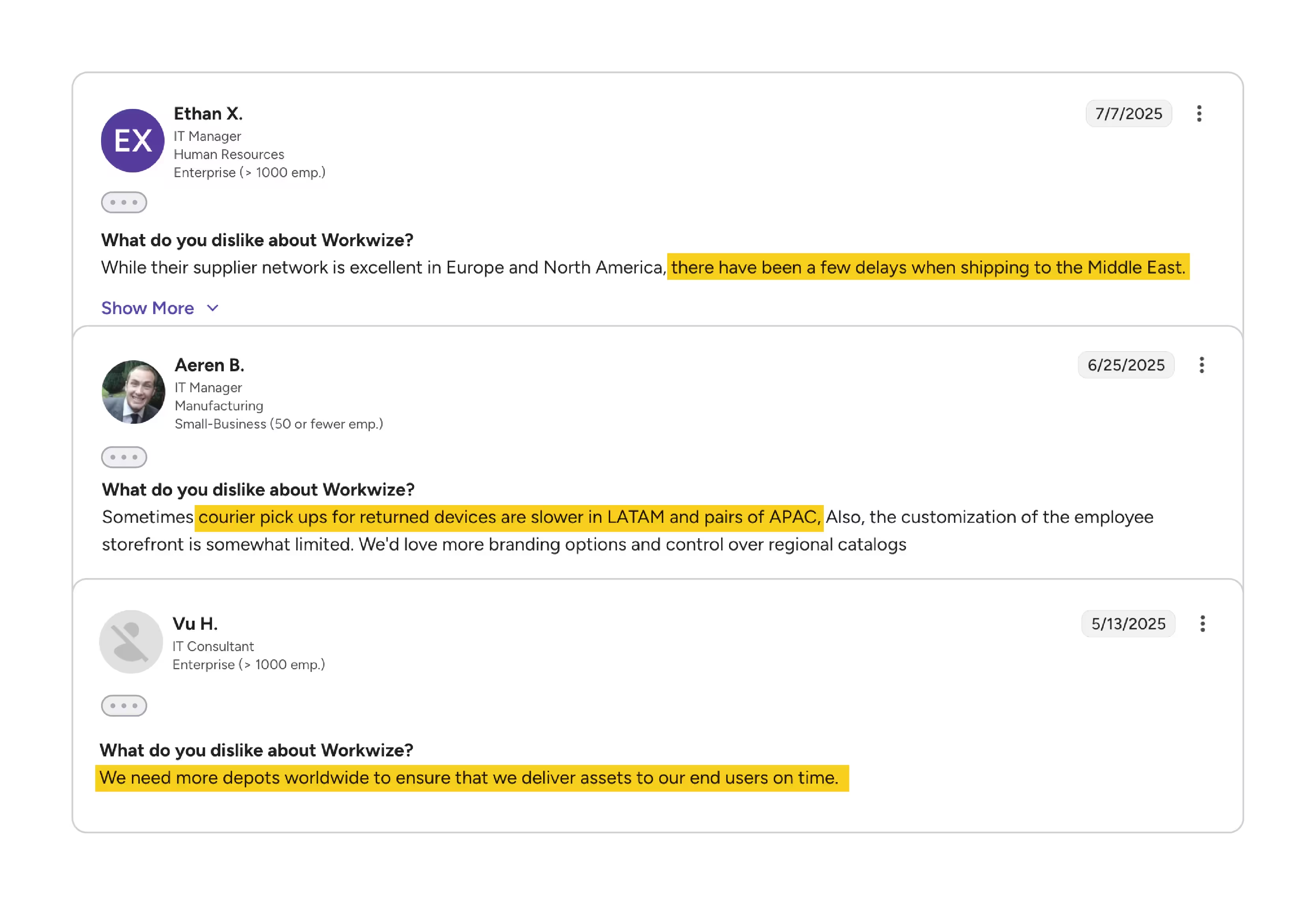
This isn't a hypothetical. It's the single most consistent theme in Workwize's own public reviews — and tellingly, it shows up in the positive ones, not just the critical ones. On G2, a five-star reviewer praises the European and North American network in the same breath as flagging delays shipping to the Middle East. Another satisfied customer notes slower return pickups in LATAM and parts of APAC. A third fan's main request is simply more depots worldwide so devices arrive on time. When even your happiest customers are asking for more warehouses, the warehouse model is telling on itself.
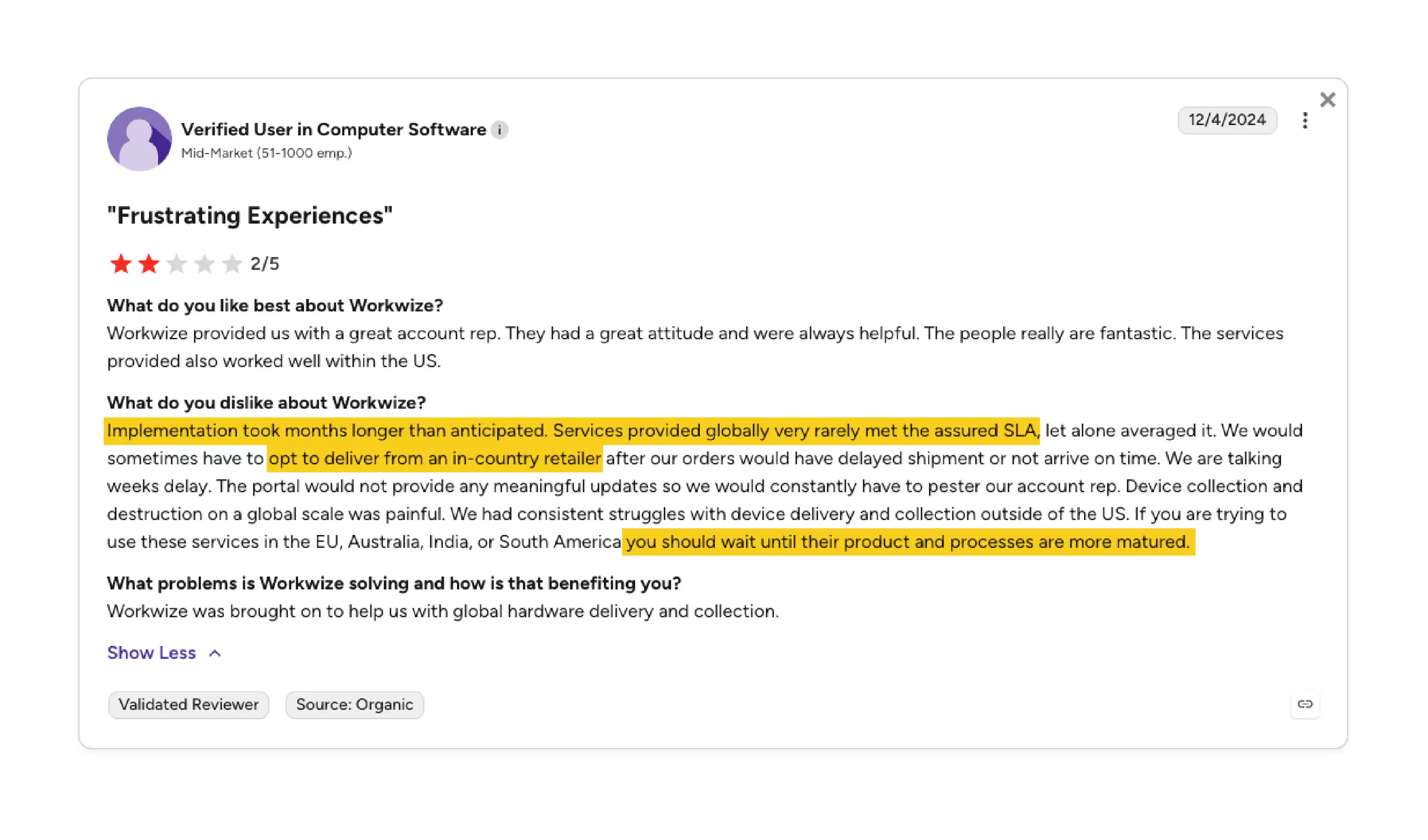
The critical reviews are blunter. A mid-market IT team's two-star G2 review reports that implementation ran months over, global SLAs were rarely met, and that they were sometimes forced to fall back to a local in-country retailer when Workwize orders stalled or didn't arrive — exactly the local-sourcing approach GroWrk runs by default. Their verdict was that the platform worked well in the US, but they'd advise waiting until it matured before relying on it in the EU, Australia, India, or South America.
Winner: GroWrk — for any team whose footprint extends past a handful of core regions. If your people are concentrated where Workwize keeps stock, that's a real exception, and we'll give it its due below.
Pricing: usage should map to actual activity
Subscription pricing works when the subscription is actually the whole bill. Workwize's model is a per-seat platform fee — but buyers report it rarely stops there: service tiers, logistics charges, geographic coverage adjustments, and product markups get layered on top. The headline number is per head; the invoice is per head plus per activity. That's the worst of both worlds for budgeting — a fixed fee you pay whether devices move or not, plus variable fees when they do.
The numbers and reviews bear this out. SelectHub lists Workwize starting at $8 per user per month plus a one-time setup fee of roughly $540. Vendr's transaction data shows platform fees of $8–$18 per employee per month, rising to $15–$25 with white-glove service, with premium support adding another $3–$8 — and pricing that adjusts upward with geographic coverage, while hardware procurement, logistics, and add-on modules are billed on top. Even a vendor-invited Capterra reviewer acknowledged a "small price overhead" on purchases made through Workwize — an admission against interest, given the review was incentivized.
Global IT demand is lumpy. Heavy procurement one quarter, a wave of retrievals the next, redeployments after that. GroWrk's À La Carte model lets you pay only when a device actually moves — procure, retrieve, store, deploy — with managed plans available when you want predictable coverage instead. The point is to align spend with real lifecycle activity, not force every use case into a seat-based model.
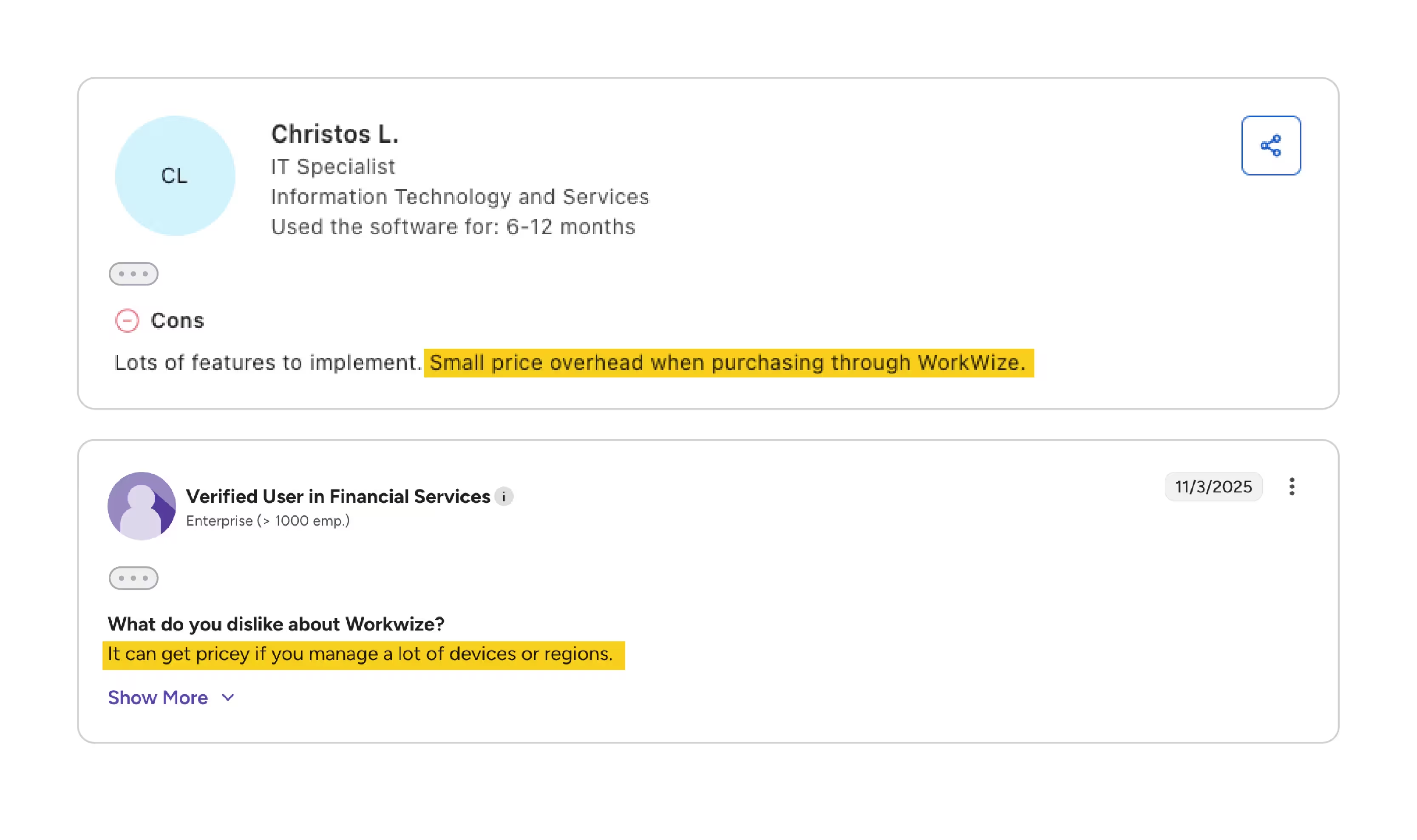
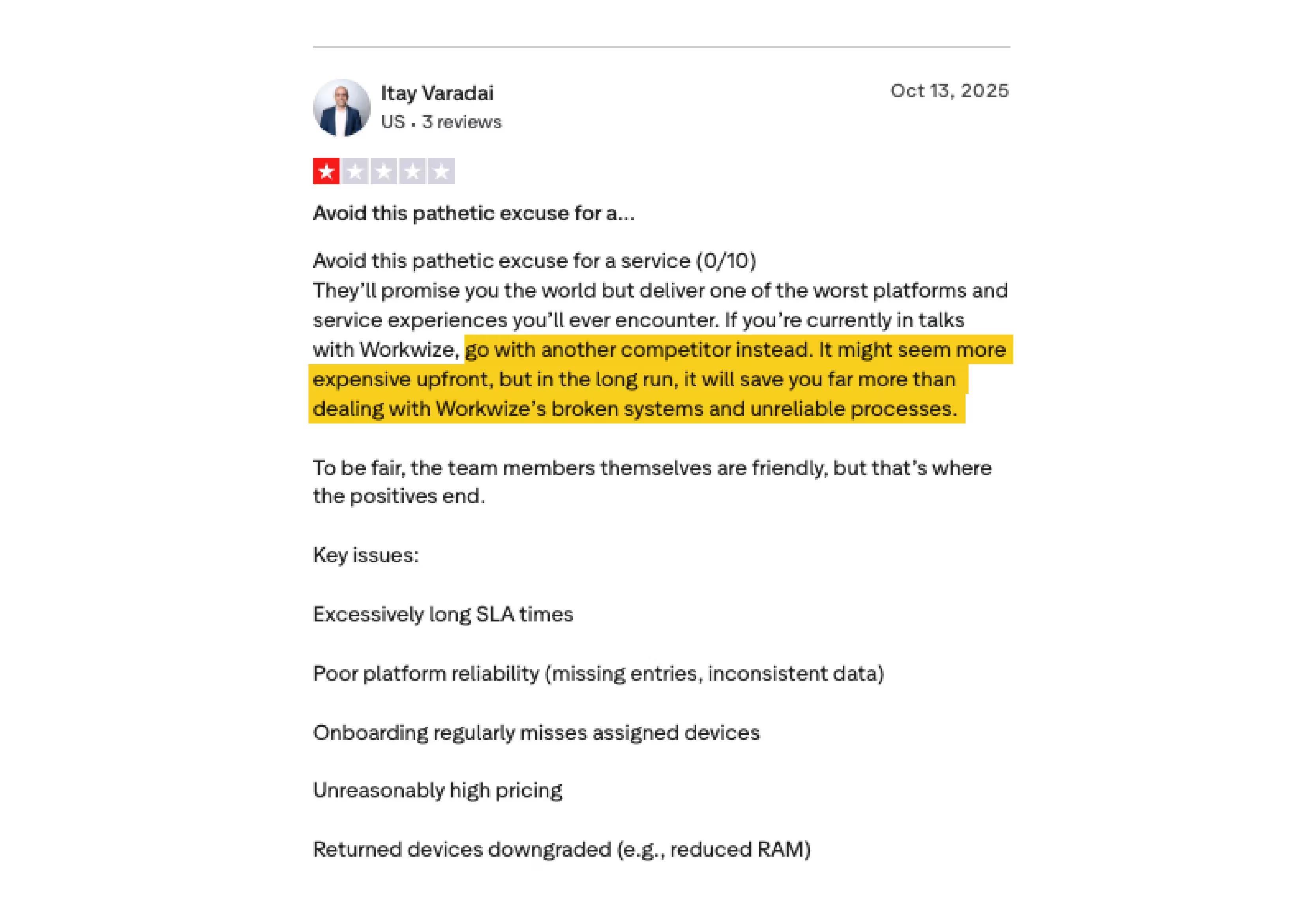
The review record backs this up: Workwize reviewers on G2 specifically flag that costs climb when you're managing a lot of devices or operating across many regions — exactly what you'd expect when per-service and regional charges stack on top of a recurring seat fee. A Trustpilot one-star reviewer went further, advising buyers to pick a competitor even if it looks pricier upfront, arguing it would cost less overall than dealing with Workwize's "broken systems and unreliable processes."
Winner: GroWrk for variable, seasonal, or scaling usage. Workwize's seat-plus-fees structure makes a like-for-like quote comparison essential — ask for the full fee schedule, not the per-seat headline.
How fast does each platform deliver — and where?
Placing the order is the easy part. Getting the right device — correct spec, correct keyboard layout, correct accessories, correct tax treatment — to the right employee, in the right country, on time, is the hard part. And when fulfillment depends on cross-border movement or weak local coverage, more potential failure points appear: customs holds, duty surprises, courier handoffs, unclear ownership, and missed ETAs. How often those bite varies by vendor and lane — which is exactly why it belongs on your due-diligence list rather than taken on faith either way.
Because GroWrk buys in-country where possible, the device is sourced where it's needed and the customer does not have to depend on a warehouse in another market. Workwize is fast inside its strongest warehouse regions (5–7 days from stock) — but that speed is geography-dependent in a way local sourcing isn't, and it thins out the moment an order falls outside the footprint. Deel IT is strongest when the order is auto-triggered by onboarding inside Deel.
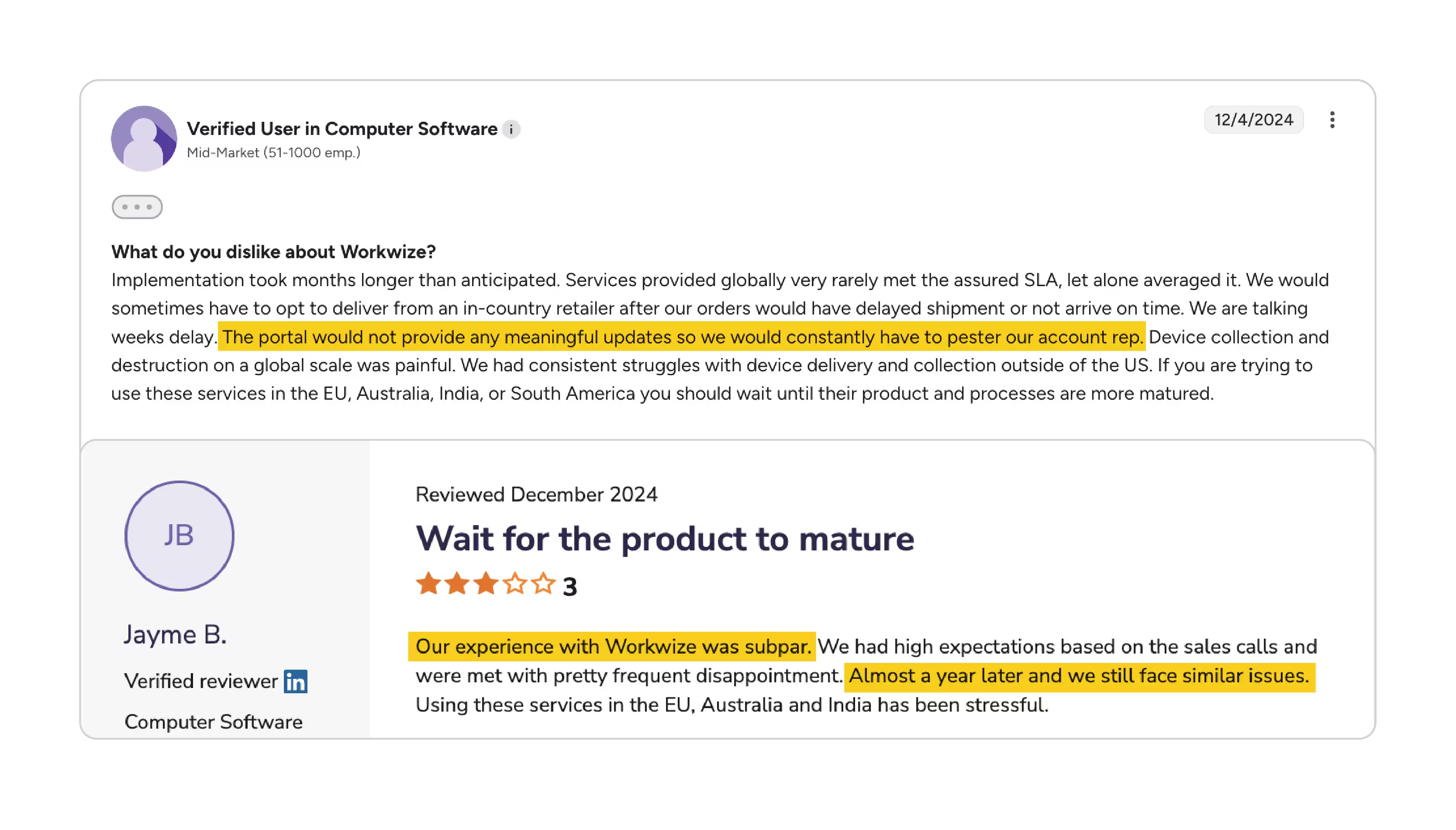
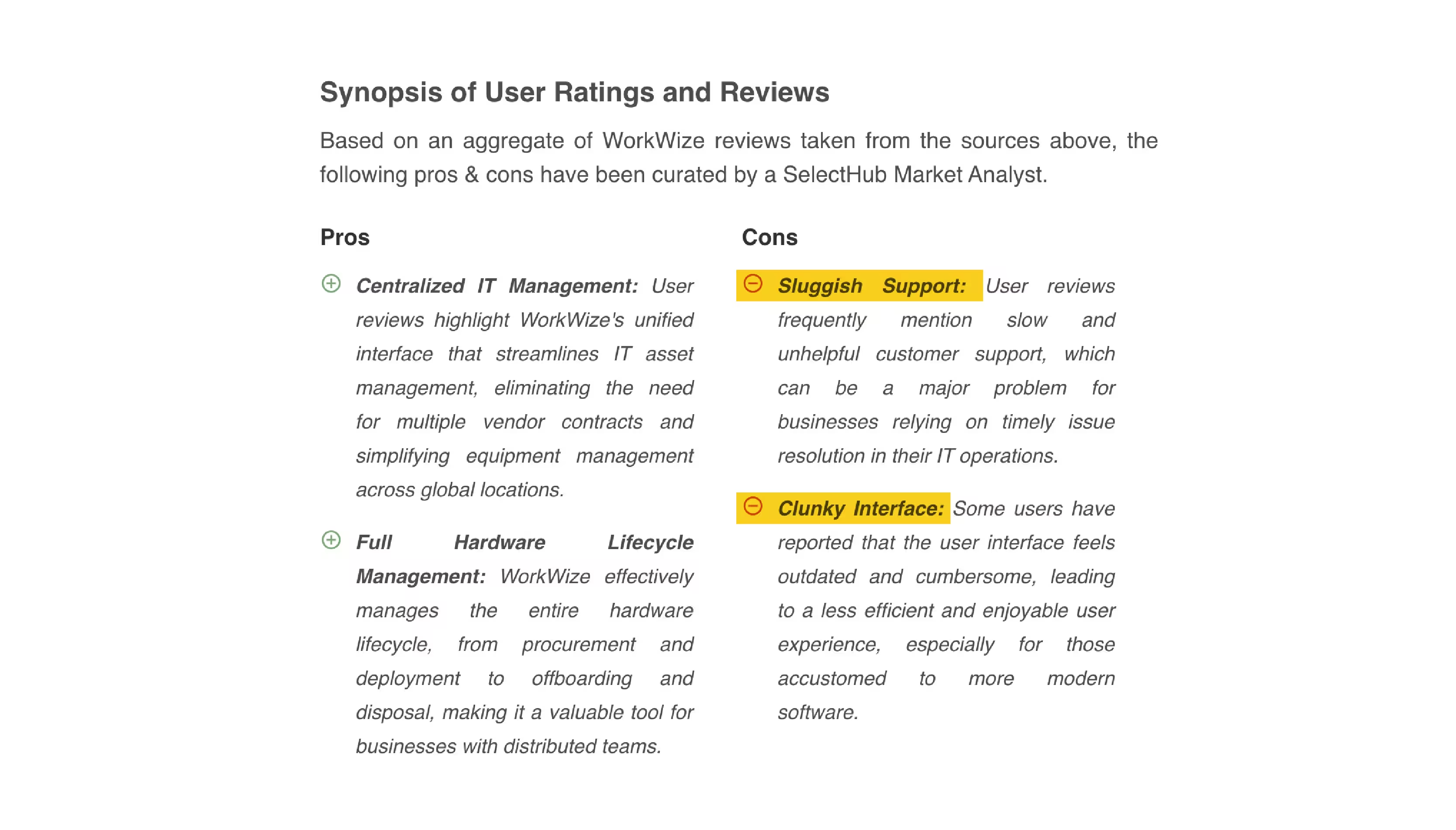
One thing to pressure-test with any vendor here, Workwize included: status visibility. Multiple Workwize reviewers describe a portal that didn't surface meaningful order updates, leaving them to chase their account rep for ETAs — and independent analyst summaries flag sluggish support and a clunky interface among recurring cons, while at least one Software Advice reviewer described the overall experience as subpar with the same issues persisting nearly a year on. Logistics visibility is genuinely hard for every vendor in this category, so don't take any dashboard demo at face value; ask to see live, in-flight order tracking, not a screenshot.
Winner: GroWrk for global execution; Workwize inside its core regions; Deel IT for Deel-native onboarding.
How does each platform handle lifecycle and end-of-life?
A device's cost doesn't end at delivery. The spread between "buy-and-ship" and "manage-and-optimize" is enormous — and it lives in retrieval, redeployment, repair, and disposal.
This is GroWrk's strongest ground, and it's not just our claim. Even Workwize's own comparison couldn't score the EOL round better than a tie, with GroWrk credited for the most granular disposal options and the strongest in-platform buyback workflow. GroWrk lets you request end-of-life from the inventory view or an employee profile, review a buyback quote before approving it, and route each device to buyback, recycling, donation, or destruction — with NIST 800-88 and DoD 5220.22-M erasure and SOC 2 Type 2 / ISO 27001 backing. Redeployment closes the loop: a recovered laptop becomes the next hire's laptop instead of a new purchase.
Workwize routes ITAD through a partner network with a resale channel — capable, but vendor-dependent. Deel IT treats end-of-life as a single wipe-and-retire step with no in-platform choice of disposal path.
Winner: GroWrk — the most lifecycle control and the clearest path to recovering value rather than overbuying.
Where Workwize wins (and where it doesn't)
A comparison that lets Workwize win nothing isn't a comparison — it's a brochure. Two places Workwize is the honest better pick:
- Concentrated teams in its core regions. If your people sit where Workwize has local warehouse depth, you get local availability and 5–7 day delivery that's hard to beat — and reviewers consistently confirm it performs well across the US, Europe, and North America. The warehouse model isn't bad — it's narrower than the coverage headline suggests.
- Catalog breadth. 1,200+ SKUs including office furniture and company merch. GroWrk deliberately focuses on IT equipment and its lifecycle. If you're outfitting whole home offices with desks and chairs, Workwize carries more.
One thing that is not on the list: pricing predictability. The seat fee is the headline, but service charges, logistics, and reported product markups sit on top of it. And automation, often pitched as a Workwize differentiator, is parity, not advantage — GroWrk runs the same HR-triggered workflows and lifecycle automations, and ships its own AI/MCP integration.
None of that changes the thesis. It sharpens it: Workwize can be excellent inside its strongest footprint. The question is how much of your team lives outside it.
Is Deel IT worth it if you don't already use Deel?
Deel IT's one genuinely best-in-class move is instant security at offboarding: record a termination in Deel and the device locks and wipes immediately, before it's even returned, with retrieval starting in parallel. Neither GroWrk nor Workwize fires that natively. If Deel is your system of record, that's a real reason to buy.
The flip side is the whole pitch depends on it. Run your HRIS, payroll, or identity outside Deel and the native automation becomes a one-way sync with admin overhead, and you're buying an IT module priced as an add-on to a suite you're not fully using.
When should you choose Workwize vs Deel IT vs GroWrk?
- Choose Workwize if your team is concentrated in its core warehouse regions, your catalog needs are broad, and you've validated the full fee schedule — seat fee plus service charges — against your actual usage.
- Choose Deel IT if Deel is already your system of record and HR-triggered onboarding/offboarding matters more to you than standalone lifecycle depth.
- Choose GroWrk if your people are genuinely global — across mature and emerging markets — and you need local sourcing, lifecycle depth, and pricing that flexes with real usage instead of warehouse overhead.
The real question isn't who has the longest feature list. It's this: can your platform actually execute in the country your next hire lives in — with local ownership, lifecycle visibility, and a clear SLA?
For global teams, that's where GroWrk is built to win.
Questions to ask each vendor
Ask Workwize:
- Which countries are served from local warehouse stock, local partners, or cross-border fulfillment? Get the list.
- On a cross-border order, who pays import duties — and what's the realistic lead time vs. the 5–7 day core-region number?
- What happens when an employee is outside a warehouse region for delivery and retrieval?
- What's a realistic implementation timeline for our size — and can you put SLA commitments per region in writing?
- When an order is delayed in transit, does the portal show it, or do we find out by emailing our rep?
- What does the all-in fee schedule look like for a team our size — seat fee, platform fee, per-service and logistics charges, and any markup on hardware — modeled against our last 12 months of device activity?
Ask Deel IT:
- Does the lock-and-wipe automation fire if our HRIS isn't Deel?
- What's the total cost for IT asset management alone, without the broader Deel platform?
- Can it handle our full lifecycle — redeployment, repair, granular disposal — outside Deel workflows?
Ask GroWrk (yes, us too):
- How do you keep service consistent across many in-country partners, and what's the SLA when a partner slips?
- What does retrieval and shipment visibility look like end to end?
- How fast is real implementation for a team our size?
(That last block matters. Putting your own hard questions on the page is what separates a credible comparison from a sales sheet — and it's the part most competitors are too nervous to write.)
Frequently asked questions about GroWrk, Workwize, and Deel IT
Is GroWrk better than Workwize?
For globally distributed teams, yes. GroWrk sources, deploys, and recovers devices in-country across 150+ countries, while Workwize's strongest performance is concentrated in its ~14 listed warehouse markets. Workwize is a fair pick only for teams clustered inside those core regions — and even then, the per-seat fee should be evaluated alongside the service and logistics charges billed on top of it.
What is the main difference between GroWrk and Workwize?
The fulfillment model. Workwize ships primarily from a defined local warehouse footprint; GroWrk sources devices locally through in-country resellers in 150+ countries, reducing the need for cross-border fulfillment and the customs and duty questions that can come with it. Both platforms automate workflows — the difference is GroWrk's deeper lifecycle control: redeployment, in-platform buyback, and granular disposal options.
Does Workwize deliver outside its warehouse countries?
Yes. Outside its listed warehouse markets, fulfillment may come from local partners or cross-border shipping — the details vary by country and aren't published. Before signing, ask exactly which countries are served from local stock versus partners versus cross-border fulfillment, what the realistic lead times are, and who bears any import duties.
Is Deel IT worth it if we don't use Deel?
Rarely. Deel IT's standout feature — HR-triggered device actions like instant lock-and-wipe at termination — depends on Deel being your HR and payroll system of record. Outside Deel, you're buying an add-on module without its core advantage.
How many countries does GroWrk support?
GroWrk operates in 150+ countries with in-country sourcing, deployment, retrieval, storage, redeployment, repair, and end-of-life services — including emerging markets across Latin America, Africa, and Southeast Asia where warehouse-led models are weakest.
What is the best Workwize alternative?
GroWrk is the leading Workwize alternative for teams whose footprint extends beyond Workwize's core warehouse regions. It offers broader in-country coverage (150+ countries), deeper end-of-life and buyback options, comparable automation, and pay-per-service pricing instead of a seat subscription with service fees layered on top.
GroWrk procures, deploys, retrieves, stores, redeploys, repairs, and retires employee devices across 150+ countries — by prioritizing in-country sourcing and local execution over a one-size-fits-all warehouse map.
Whether you want a fully managed program or flexible À La Carte services, book a demo to see how GroWrk runs global IT operations with local execution, lifecycle visibility, and pricing that flexes with real usage.

Sources & review references
- Workwize on G2 — regional delivery delays (Middle East, LATAM, APAC), "more depots" request, the two-star implementation/SLA review, cost-at-scale and support complaints: g2.com/products/workwize-workwize/reviews
- Workwize on Software Advice — "subpar" experience, issues persisting ~a year later: softwareadvice.com/product/504301-Workwize
- Workwize on SelectHub — analyst-curated cons (sluggish support, clunky interface, limited flexibility); lists a starting price of $8 per user/month and a one-time setup fee of ~$540: selecthub.com/p/it-asset-management-software/workwize
- Workwize on Capterra — portal and order-visibility complaints, plus a vendor-invited review that nonetheless notes a price overhead on purchases made through Workwize: capterra.com/p/251659/Workwize/reviews
- Workwize on Trustpilot — one-star review advising buyers to choose a pricier-looking competitor because Workwize's unreliable processes cost more in the long run (small pool of ~11 reviews): trustpilot.com/review/[www.goworkwize.com](https://www.goworkwize.com)
- Workwize on Vendr — anonymized transaction data: platform fees of $8–$18 PEPM ($15–$25 with white-glove, +$3–$8 for premium support); pricing adjusts by geographic coverage; hardware procurement, logistics, and add-on modules billed on top: vendr.com/marketplace/workwize