





Here's what nobody tells you about IT procurement: the bottleneck isn't the buying part. It's everything that happens after you click "approve." We've built these sophisticated systems to buy things faster while completely ignoring that speed means nothing if the laptop is stuck in customs or shipped to the wrong address.
The real inefficiency? It's the gap between purchase and productivity. And almost nobody's talking about it.
Why Traditional IT Procurement Metrics Are Measuring the Wrong Thing
We've optimized IT procurement around metrics that made sense when everyone worked in an office and IT could physically hand someone a laptop on day one. Cost savings per transaction. Approval workflow duration. Vendor contract terms.
These numbers look great in quarterly reviews.
They're also measuring the wrong things.
You can approve a laptop purchase in four hours and still have a new hire sitting idle for two weeks because the device is stuck in customs. The disconnect between what we measure and what actually matters has never been more obvious, yet most IT procurement solutions are still built around the same outdated success criteria.
Look, these metrics aren't useless. They're just incomplete. When your workforce was centralized, the gap between purchase and deployment was small enough to ignore. Now that gap is where productivity goes to die, and we're still celebrating how quickly we can click "approve" on a purchase order.
Remote work didn't just change where people work, it fundamentally broke what IT procurement needs to accomplish. A fast purchasing process is meaningless when the fulfillment process is a disaster. I've seen companies slash their approval times by 60% while their average time-to-productivity for new hires increased by three weeks.
That's not efficiency. That's theater.
What We Measure vs. What Actually Matters:
Traditional procurement tracks cost per unit. Great, you saved $50 per laptop. Meanwhile, you chose a vendor who can't ship to Latin America, and now you're paying $200 in workarounds for every device going to that region.
We measure approval workflow duration. You got it down to 4 hours. Amazing. The laptop still takes 3 weeks to reach the employee because nobody's tracking what happens after approval.
We obsess over vendor contract terms. You negotiated a killer warranty. Too bad the vendor's support team doesn't answer tickets from employees in Asia-Pacific time zones.
Here's what you should be measuring instead: Time from requisition to employee productivity. Deployment success rate. On-time delivery percentage. Employee satisfaction with equipment quality and timeliness. Total cost of ownership including all the deployment disasters, support nightmares, and return logistics.
| Traditional Procurement Metric | What It Actually Measures | What You Should Measure Instead |
|---|---|---|
| Cost per unit | Purchase price negotiation success | Total cost of ownership including deployment, support, and returns |
| Approval workflow duration | Internal process efficiency | Time from requisition to employee productivity |
| Vendor contract terms | Legal and financial risk mitigation | Vendor delivery reliability and support responsiveness |
| Purchase order volume | Transaction activity | Deployment success rate and on-time delivery percentage |
| Cost variance to budget | Spending discipline | Employee satisfaction with equipment quality and timeliness |
Procurement teams are being evaluated on metrics they can control (purchase cycle time, cost variance, contract compliance) while being held responsible for outcomes they can't influence with traditional procurement tools. Deployment speed. Device availability. End-user satisfaction.
The tools we're using were designed for a different problem.
Real example: A software company with 300 employees reduced their laptop procurement approval time from 5 days to 8 hours by implementing a new platform. The procurement team celebrated. Quarterly review looked great. The CEO was happy.
Three months later, HR is panicking because new hires are taking 3.5 weeks to onboard instead of 2.
What happened? The new platform had zero visibility into what happened after approval. Laptops were getting shipped to a central warehouse (because that was cheapest), then re-shipped to employee locations. Added 10-12 days to every deployment. The "faster" procurement process made everything slower. But procurement got to report a win because they'd optimized their part of the process and nobody was tracking the whole picture.
You need to start tracking different numbers. Time from approval to employee productivity. Percentage of deployments that meet committed timelines. Cost of deployment failures (wrong specs, wrong location, damaged in transit). These metrics feel operational rather than strategic, which is exactly why most procurement platforms don't surface them.
But they're the numbers that actually impact your business.
The vendor selection process illustrates this perfectly. We spend months evaluating suppliers based on unit cost and payment terms, then act surprised when their global shipping capabilities can't support our distributed team. Price matters, sure. But delivery reliability matters more when you've got a developer in Poland waiting for equipment. We've prioritized the wrong variables because we're still using a procurement framework built for centralized operations.
The Post-Purchase Breakdown: Where Your Procurement Strategy Actually Fails
The moment a purchase order gets approved is when most procurement platforms consider their job done.
That's also precisely when the real problems begin.
Configuration. Shipping. Customs clearance. Last-mile delivery. User setup. Asset tagging. Inventory updates. None of these steps are typically considered "procurement," yet they're all direct consequences of procurement decisions. When you buy from a vendor with no distribution infrastructure in Latin America, you've created a logistics nightmare that'll cost you more in delays and workarounds than you saved on unit price.
The procurement decision and the operational outcome aren't separate things. They're the same thing. But we've built systems that treat them as completely separate domains.
This artificial separation is expensive.
I've watched companies celebrate a 15% cost reduction on laptop purchases while their IT team spends 40 hours per week managing shipment tracking, customs documentation, and failed deliveries. The savings evaporate in operational overhead, but it never shows up in procurement reports because we've defined procurement too narrowly.
Configuration represents one of the most underestimated post-purchase challenges. You can't just ship a laptop straight from a manufacturer to an employee in most cases. It needs to be configured, secured, loaded with required software, and prepared for the specific user.
Where does this happen? Who manages it? How long does it take?
These aren't procurement questions in the traditional sense, but they're direct results of procurement choices.
Some teams try to solve this by having local IT staff handle configuration. That works if you have local IT staff. For distributed teams, you're either shipping devices twice (to an office for config, then to the employee) or trying to walk non-technical employees through complex setup processes.
Both options are terrible.
What Actually Needs to Happen After You Click "Approve":
- ☐ Device configuration and software installation completed
- ☐ Security protocols applied (encryption, MDM enrollment, VPN setup)
- ☐ Asset tagging and inventory system updated with device details
- ☐ Shipping documentation prepared (commercial invoice, customs forms if international)
- ☐ Carrier selected based on destination country and delivery timeline requirements
- ☐ Tracking information captured and shared with employee
- ☐ Delivery confirmation received and verified
- ☐ Employee setup support scheduled (if needed)
- ☐ Asset record linked to employee profile in HR system
- ☐ Warranty and support information documented and accessible
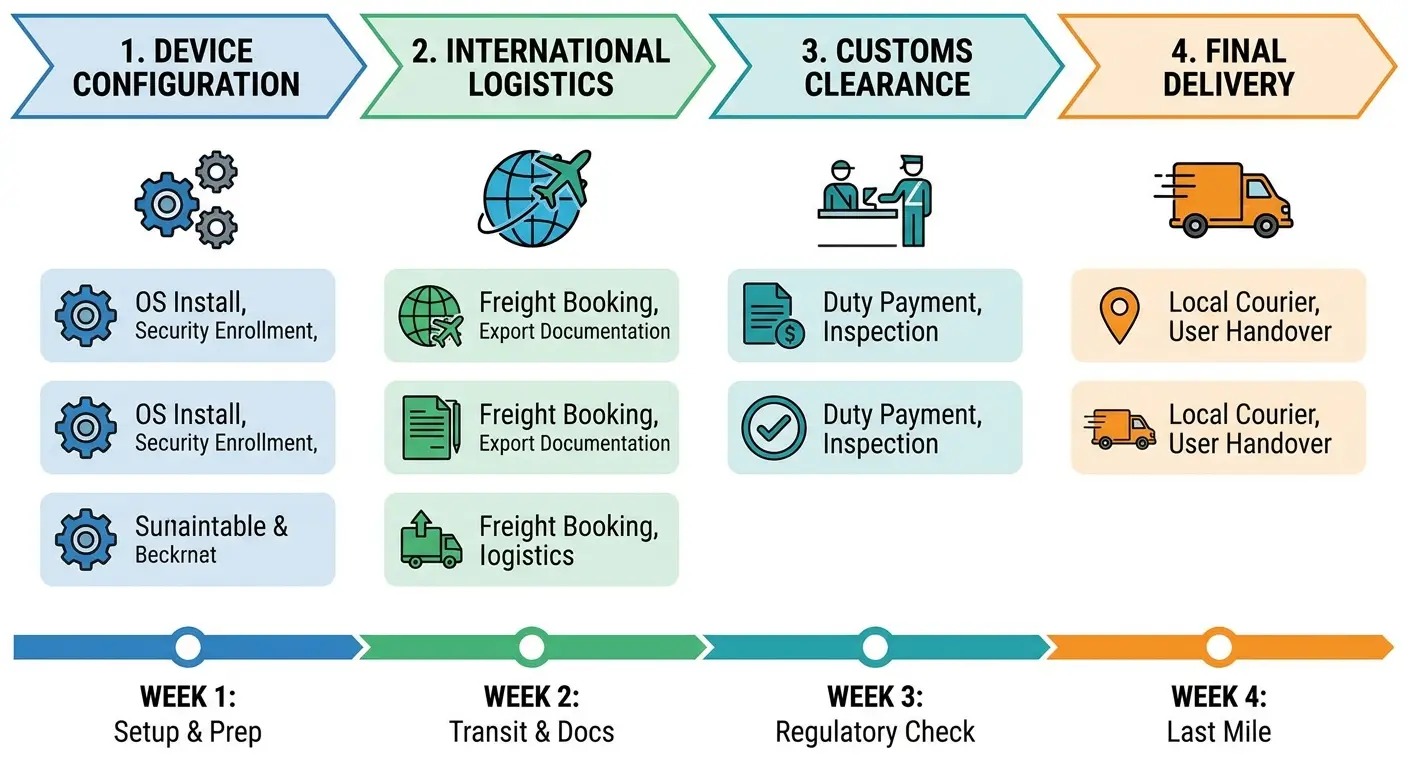
Returns and repairs create another post-purchase failure point. An employee leaves. A device breaks. A shipment arrives damaged. Your IT procurement service doesn't care, it already counted that purchase as complete. But now you need reverse logistics, device sanitization, inventory reconciliation, and possibly replacement procurement. The cycle time on these processes often exceeds the original purchase and deployment by weeks.
Another real example: A marketing agency hired a designer in Buenos Aires and ordered a high-spec MacBook Pro through their standard IT procurement service process. The purchase was approved in 24 hours. Great, right?
The device shipped from the vendor's US warehouse to Argentina, where it sat in customs for 11 days due to incomplete documentation. When it finally cleared, the local carrier couldn't deliver to the employee's residential address, required pickup from a depot 90 minutes away.
The employee received the device 19 days after their start date.
During that time, they worked on a personal laptop that couldn't run the required design software, delaying three client projects. The procurement team had no visibility into any of this because their system stopped tracking after the purchase order was fulfilled.
We treat hardware procurement like it's a one-time transaction when it's actually the beginning of a multi-year asset lifecycle. Every purchase decision creates ongoing operational obligations that most procurement tools don't track, measure, or optimize. We break this pattern down further in the state of IT lifecycle management.
You're flying blind through the parts of the process that actually impact your team.
Vendor Sprawl Isn't a Procurement Problem, It's a Coordination Problem
The conventional wisdom says vendor consolidation reduces complexity and increases leverage. Fewer vendors means better pricing, simpler contracts, easier management.
This logic holds up perfectly until you try to deploy hardware across 40 countries with different import regulations, power standards, and shipping infrastructure.
Suddenly that single global vendor can't deliver to half your locations. Or their pricing for international shipping is absurd. Or they don't support local-language customer service for your team in Japan.
You end up with vendor sprawl not because of poor procurement discipline but because operational reality demands it. The real challenge isn't reducing the number of vendors, it's coordinating between the vendors you actually need to serve a distributed workforce.
Most IT procurement service providers are built around consolidation as a goal, which means they're actively working against the operational flexibility you need. They'll flag every new vendor relationship as a risk or inefficiency without understanding that vendor diversity is often a feature, not a bug, when you're operating globally.
Vendor coordination requires different capabilities than vendor management. You need systems that can handle multiple suppliers shipping to the same employee (laptop from one vendor, monitor from another, accessories from a third) and ensure everything arrives in a coordinated timeframe. You need visibility across vendor systems so you can track a deployment that involves four different suppliers. You need the ability to route procurement to different vendors based on the employee's location, not standardize on one vendor globally. See how Upwork centralized device logistics across 30+ countries with GroWrk.
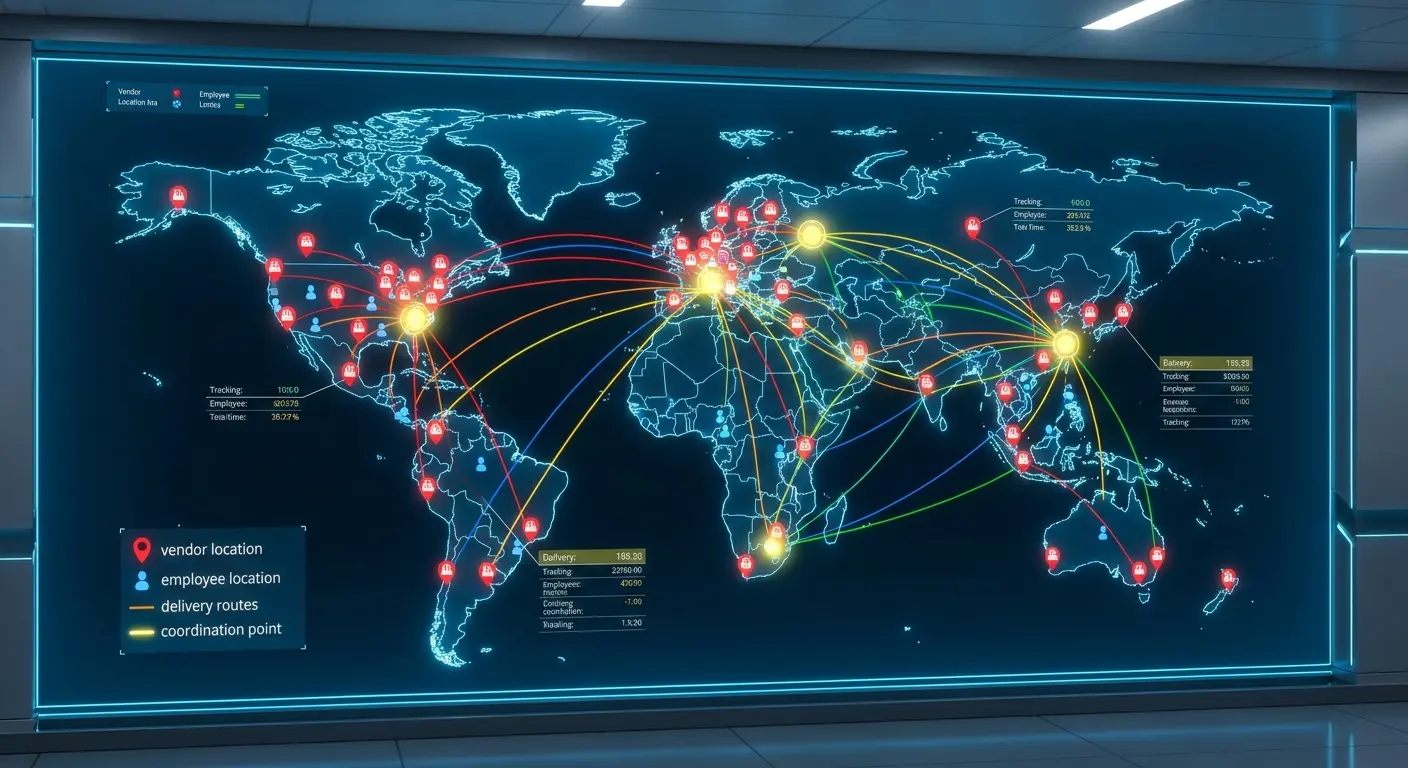
Single Vendor vs. Multi-Vendor Reality:
| Coordination Challenge | Single Global Vendor Approach | Multi-Vendor Regional Approach |
|---|---|---|
| Delivery to 40+ countries | Possible but expensive; single vendor charges premium for difficult markets | Cost-effective; use regional vendors with local infrastructure |
| Local language support | Limited; usually English-only support regardless of employee location | Available; regional vendors provide native language support |
| Customs and compliance | Your problem; vendor ships but doesn't handle local regulations | Shared responsibility; local vendors understand regional requirements |
| Repair and replacement speed | Slow; devices must be shipped internationally for service | Fast; local vendors provide same-country support |
| Payment and invoicing | Single currency, simpler accounting | Multiple currencies, requires coordination but enables local payment methods |
| Warranty enforcement | Complex across borders; single point of failure if vendor relationship sours | Distributed risk; regional vendor issues don't impact global operations |
The compliance implications of multi-vendor operations are real. Each vendor has different data handling practices, security standards, and contractual terms. When you're shipping devices to employees in the EU, you need to ensure every IT procurement service provider in the chain is GDPR compliant. When you're deploying in China, you need vendors who understand local data residency requirements.
Consolidation often means accepting the lowest common denominator of compliance capabilities.
Quality control becomes more complex with multiple vendors, but it's manageable with the right systems. The bigger risk is inconsistent vendor performance that you can't see because your data is fragmented across different platforms. An employee in Brazil has a terrible experience with Vendor A, but you don't know about it because that feedback lives in a separate system from your procurement data. You renew the contract with Vendor A because your centralized metrics look fine, even though they're failing in specific regions.
Vendor relationships need to be managed at the operational level, not just the contract level. Your procurement team can negotiate great terms, but if the vendor's support team can't solve a delivery issue in real-time, those terms are worthless. We need IT procurement service infrastructure that connects contractual relationships with operational performance.
How Remote Work Exposed the Logistics Blind Spot in IT Buying
When most of your team worked in one or two offices, logistics was someone else's problem. You'd order equipment, it'd ship to the office, IT would receive it, configure it, and hand it to employees. The logistics complexity was invisible to procurement because it happened downstream.
Remote work eliminated that buffer.
Now logistics is your problem, and most procurement teams weren't ready for it. Shipping to 200 different addresses across 30 countries involves customs regulations, import duties, address validation, failed delivery management, and a dozen other operational challenges that traditional procurement systems don't address. We surveyed IT leaders on exactly these cross-border hurdles in the state of global IT hardware procurement.
I've seen procurement teams who could execute a complex vendor negotiation completely fall apart when trying to figure out why a laptop's been stuck in customs in Vietnam for two weeks. The skills don't transfer. The systems don't support it.
The blind spot is massive.
Customs and import regulations represent a particularly painful discovery for teams scaling internationally. Every country has different rules about what documentation is required, what duties apply, what items are restricted. A procurement decision that made perfect sense from a cost perspective creates a compliance nightmare when you try to ship the resulting equipment to certain countries.
Duties and taxes can add 30-50% to the effective cost of a device in some markets, completely eliminating the savings you thought you were getting.
Address validation sounds trivial until you're trying to ship to an employee in a country where street addresses don't follow Western conventions. Or where residential deliveries aren't standard. Or where the address format in your system doesn't match what local carriers require.
Failed deliveries due to address issues are incredibly common and incredibly frustrating for everyone involved.
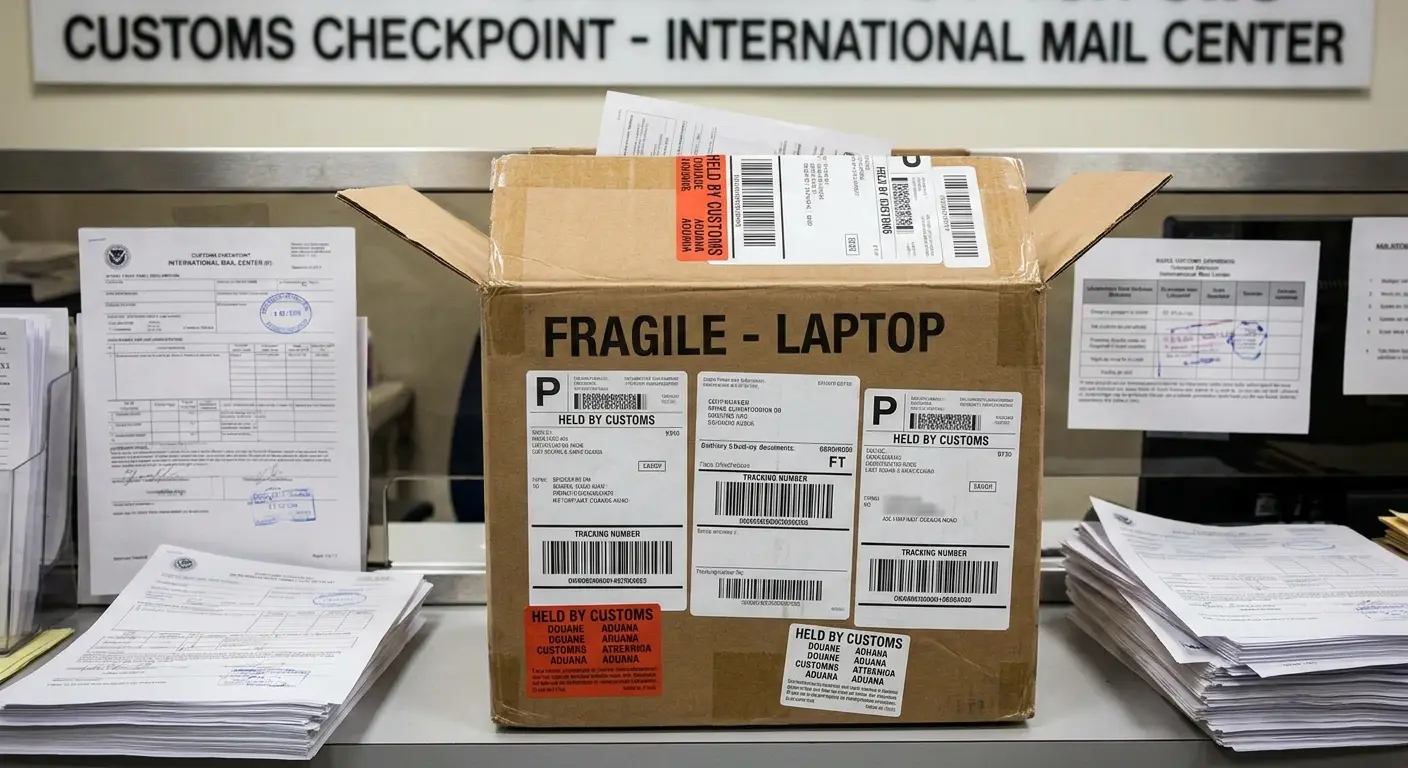
Real example that still makes me angry: A fintech startup hired their first employee in South Korea and used their standard US-based procurement service provider to ship a laptop. The address in their system followed US formatting conventions, which the international carrier couldn't properly interpret. The package was marked as undeliverable and returned to sender.
On the second attempt, they discovered that South Korean customs required additional documentation for electronics imports that their vendor hadn't provided.
The third attempt succeeded, but the employee received their laptop 6 weeks after their start date.
The company had no processes for international address validation, customs documentation, or alternative local vendors. They learned about each requirement only when something failed.
The security implications of shipping to residential addresses are significant. Packages get stolen. Devices get lost. You need tracking, insurance, and contingency plans. You also need to think about what data is on a device if it goes missing in transit. Most IT procurement service systems don't have any concept of these risks because they were designed for office delivery.
Time zone coordination becomes an operational challenge when you're managing global deployments. A shipment issue that needs resolution happens while your procurement team is asleep. By the time they're online, the delivery window has passed, and you've missed the employee's start date.
Real-time visibility and 24/7 support become requirements, not nice-to-haves.
The Hidden Cost of Treating Hardware Like Software Subscriptions
SaaS procurement taught us that subscriptions are easier than capital purchases. You can scale up and down, you can expense instead of depreciate, you can avoid the complexity of asset ownership.
This model works brilliantly for software.
We've started applying the same logic to hardware through device-as-a-service programs, and it's creating unexpected problems.
Hardware has physical presence. It needs to be shipped, stored, maintained, and eventually returned. You can cancel a software subscription instantly. Canceling a hardware subscription means coordinating device returns from potentially dozens of countries, managing data sanitization, handling damaged or lost equipment, and reconciling inventory.
The subscription model hides these costs until you try to scale down or churn equipment, and then they hit all at once.
I'm seeing companies pay more in return logistics and inventory management than they're saving on the subscription model, but those costs are categorized differently so they don't show up in procurement analysis.
The appeal of hardware subscriptions is obvious. Predictable monthly costs. Easier budgeting. No capital expenditure approval processes. Automatic refresh cycles. For growing companies, the flexibility seems worth any premium.
The problems emerge when you look at the total cost of ownership over time, including all the operational overhead the subscription model generates.
Device refresh cycles sound great in theory. Every 24 months, your team gets new equipment. In practice, this means coordinating mass returns and redeployments across your entire distributed team on a rolling basis. Someone needs to manage that process. Someone needs to ensure data is properly migrated. Someone needs to handle the logistics of getting old devices back and new devices out.
That someone is usually your IT team, and it's a significant time investment.
Hardware Subscription Total Cost Analysis Template
Direct Subscription Costs
- Monthly per-device fee: $_____
- Commitment period: _____ months
- Total committed spend: $_____
- Damage/loss insurance (if separate): $_____/month
Hidden Operational Costs
- IT staff time for refresh coordination: _____ hours/year @ $_____ = $_____
- Return shipping costs (if not included): $/device × _____ devices = $
- Data migration support time: _____ hours/refresh @ $_____ = $_____
- Inventory reconciliation overhead: _____ hours/quarter @ $_____ = $_____
- Failed return recovery costs: $_____/year (estimate 5-10% non-return rate)
Comparison to Purchase Model
- Equivalent device purchase price: $_____
- Expected useful life: _____ years
- Amortized annual cost: $_____
- Maintenance/support costs: $_____/year
- Residual value at end of life: $_____
- Total cost over subscription period: $_____
Break-Even Analysis
- Subscription total cost over _____ months: $_____
- Purchase total cost over same period: $_____
- Difference: $_____
- Break-even point (months): _____
Data security and compliance become more complex with subscription models. You don't own the devices, which means you need clear contractual terms about data handling, device sanitization, and what happens if a device is lost or damaged while in your possession. Different procurement service providers have different standards, and the burden of ensuring compliance is on you.
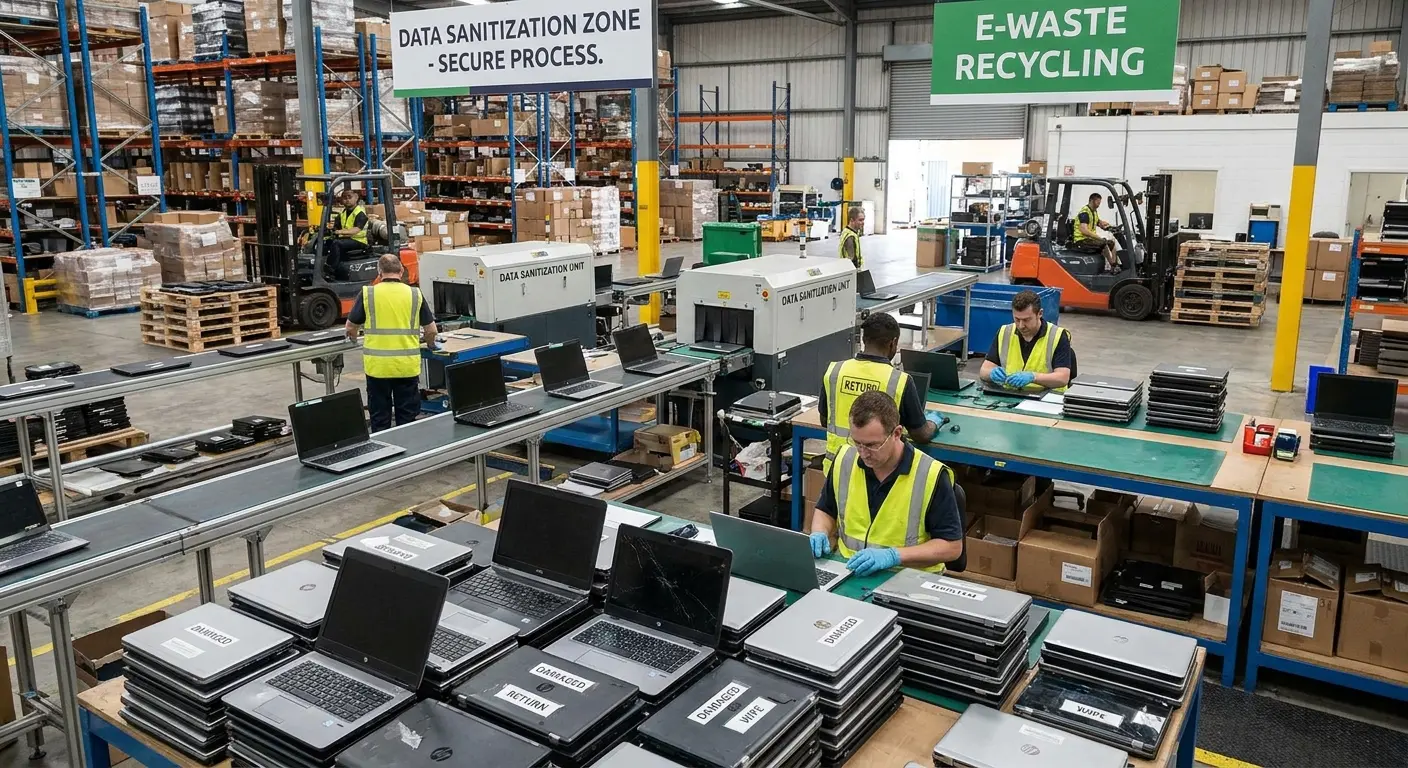
The economics of subscriptions vs. purchase depend heavily on your employee retention and company growth trajectory. If you're growing fast, subscriptions can make sense because you're constantly adding seats. If your growth slows or you need to reduce headcount, you're stuck with subscription commitments and return logistics challenges.
I've seen companies locked into 36-month device subscriptions when their workforce contracted by 30%, creating a painful mismatch between committed spend and actual needs.
IT procurement software designed for subscription management often lacks the operational features needed to handle the physical logistics of returns and replacements. You get great visibility into subscription costs and renewal dates, but no help coordinating the actual movement of devices across borders.
The gap between financial management and operational execution remains wide.
Compliance Theater vs. Actual Asset Security in Distributed Teams
Most companies have impressive-sounding IT asset policies. All devices must be encrypted. All access must be logged. All equipment must be returned within 48 hours of termination.
These policies were written for office environments where IT had physical control over devices. They're largely unenforceable for distributed teams, but companies keep them on the books because removing them feels like reducing security.
What we've created is compliance theater: policies that exist to satisfy auditors but don't reflect operational reality.
An employee in Argentina gets terminated. Your policy says the device must be returned in 48 hours. How? Who coordinates the pickup? What happens if the employee refuses? What's your enforcement mechanism across international borders?
Most companies have no good answers, so they just hope it doesn't become an issue.
Real asset security for distributed teams requires different approaches: remote wipe capabilities, device monitoring, insurance for lost equipment, and realistic return processes that account for international logistics. We need to update our security frameworks to match our operational reality instead of maintaining policies we can't enforce.
Encryption and security software can be mandated and verified remotely, which makes them more effective controls for distributed teams than physical security measures. You can require and confirm that devices are encrypted, that security software is installed and updated, that VPN access is required. These controls work regardless of where the employee is located.
Device monitoring and remote management tools give you visibility and control that physical possession used to provide. You can track device location, monitor for security threats, enforce software updates, and remotely wipe devices if needed. These capabilities are essential for distributed teams but require investment in mobile device management (MDM) platforms and clear policies about employee privacy.
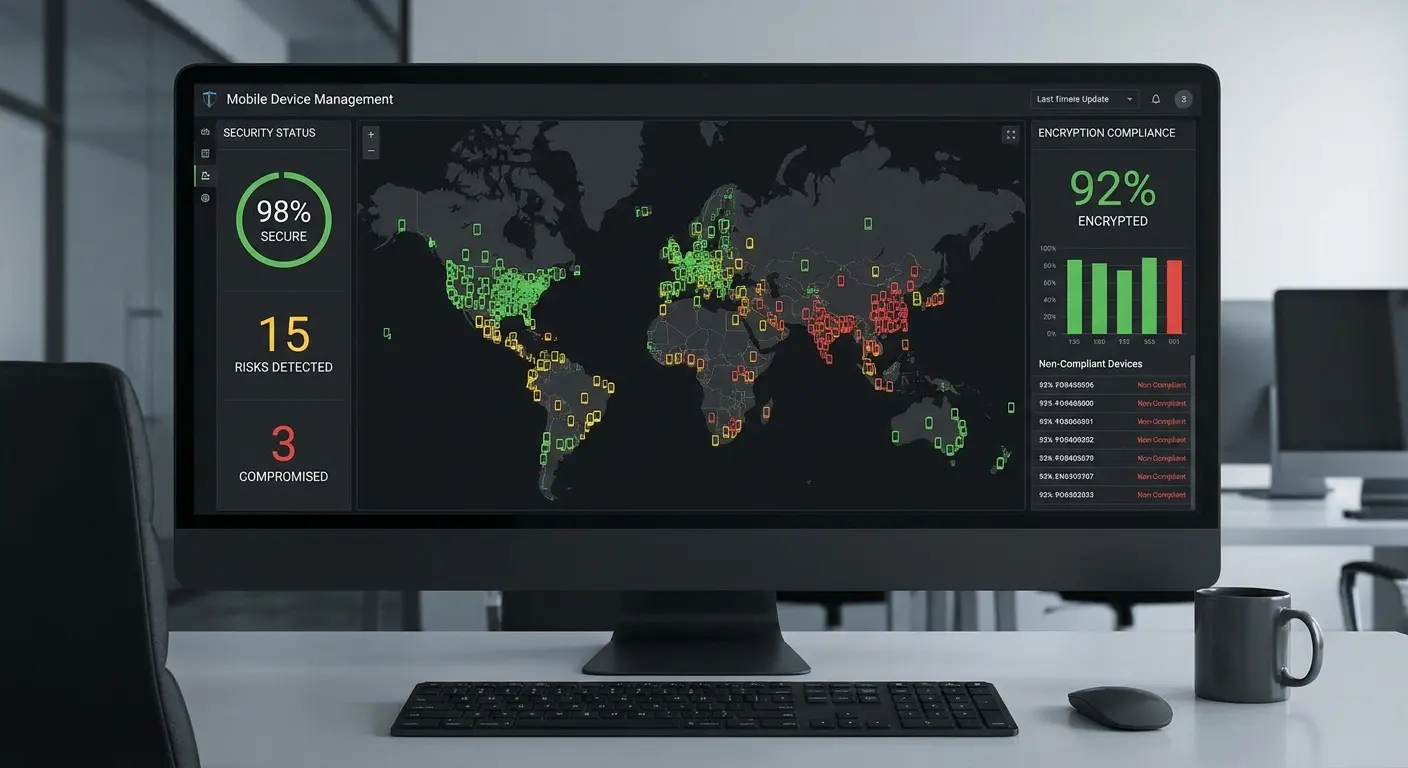
Return processes need to be realistic and enforceable. A 48-hour return requirement makes no sense when international shipping takes weeks. You need processes that account for local logistics capabilities, provide prepaid return shipping, and have escalation procedures for non-compliance.
You also need to accept that some percentage of devices will never be returned and build that cost into your planning.
Insurance and financial recovery mechanisms matter more for distributed teams. You can't prevent every loss or theft, but you can ensure you have coverage and can recover costs from employees when appropriate. This requires clear contractual terms in your employment agreements and coordination between HR, legal, and IT.
The IT procurement service you choose directly impacts your security posture. Vendors with strong device tracking, remote management capabilities, and established return logistics make compliance easier. Vendors who simply ship devices and consider their job done leave you exposed.
Why Your Procurement Platform Can't Fix a Fulfillment Problem
We keep trying to solve operational problems with procurement tools.
Your procurement platform is great at managing vendor relationships, tracking spend, enforcing approval workflows, and generating compliance reports.
It's terrible at tracking shipments, coordinating multi-vendor deployments, managing device configuration, and handling returns.
These are different problem domains that require different systems.
Procurement platforms are expanding their feature sets to try to cover the full lifecycle, but they're building logistics and asset management capabilities as an afterthought. The result is procurement tools that do fulfillment poorly and fulfillment tools that do procurement poorly.
We need to accept that IT buying for distributed teams requires multiple specialized systems that integrate well, not one platform that tries to do everything.
The integration points between procurement, logistics, asset management, and IT service management are where the real value lives.
Procurement platforms excel at structured, repeatable processes. Vendor onboarding. Contract management. Purchase approvals. Spend analysis. These are their core competencies, and they do them well.
Fulfillment requires flexibility and real-time problem-solving. A shipment gets delayed. An address is wrong. A device arrives damaged. These situations need immediate operational response, not workflow automation.
The data models are fundamentally different. IT procurement software tracks purchases, vendors, and costs. Fulfillment systems track shipments, locations, and status updates. Asset management systems track devices, users, and lifecycle states.
You need all three perspectives, but forcing them into a single data model creates compromises that make each function less effective.
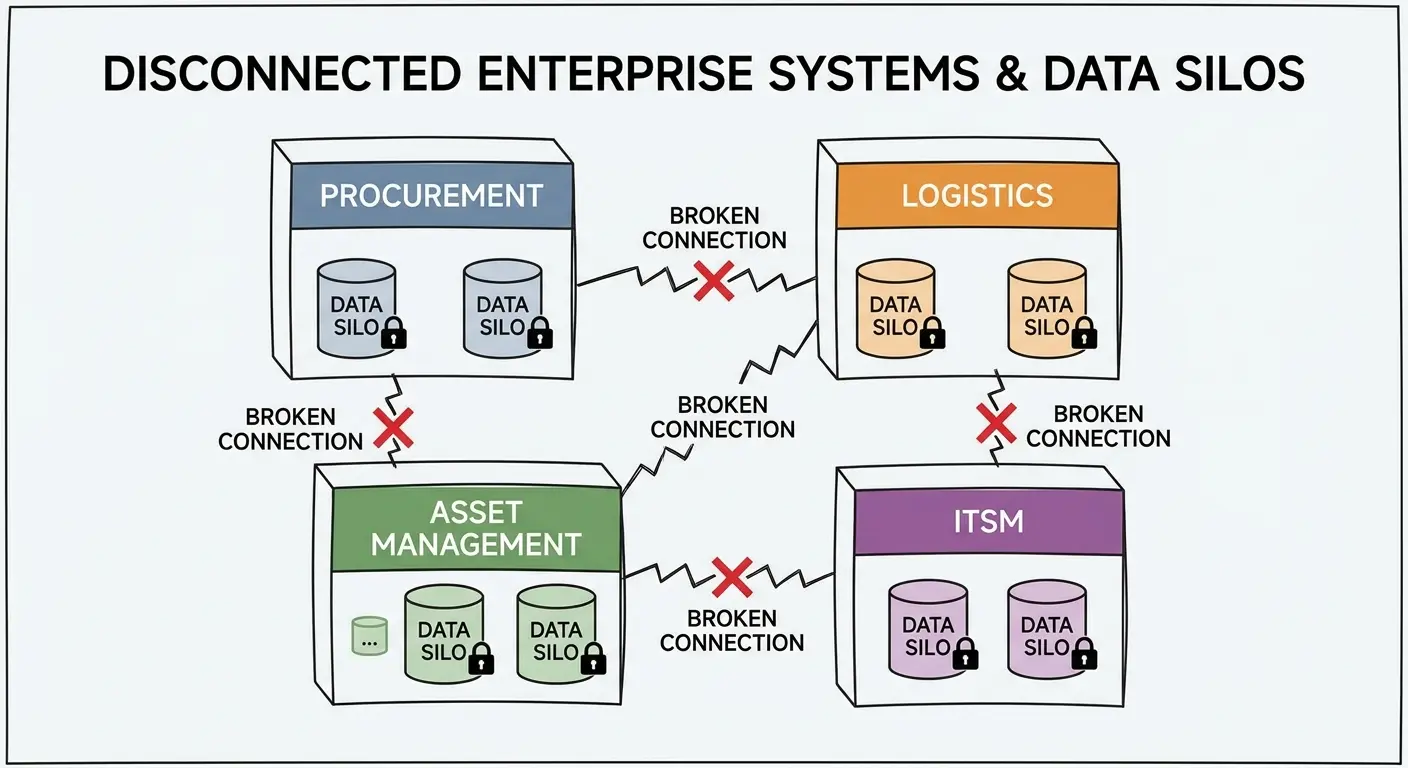
Integration between specialized systems is challenging but more effective than trying to build everything into one platform. You need your IT procurement software to trigger fulfillment processes, your fulfillment system to update asset records, and your asset management system to inform procurement decisions. These integrations require API connections, data synchronization, and workflow orchestration across platforms.
The vendor ecosystem reflects this specialization. You have procurement platforms, logistics providers, asset management tools, and IT service management systems. Each category has evolved to solve specific problems well. The companies trying to build end-to-end platforms are competing with specialized vendors in each category and typically losing on feature depth.
Your procurement platform can tell you what you bought and how much you spent. It can't tell you if the device arrived on time, if the employee is satisfied, or if the deployment process worked smoothly.
Those insights require different systems with different data sources.
Building Procurement Strategy Around Employee Experience (Not Just Cost)
Employee experience rarely appears as a line item in procurement discussions. We optimize for cost per unit, vendor terms, and process efficiency.
Meanwhile, your new hire in Singapore is on day eight without a laptop, your designer in Mexico received a device with the wrong specs, and your engineer in Germany is waiting on a monitor that's been stuck in customs for three weeks.
These experiences shape how employees perceive your company, impact their productivity, and influence retention. But we don't measure them in procurement reviews.
We should.
Time-to-productivity is a business metric that procurement directly impacts. Every day a new hire waits for equipment is a day you're paying salary without getting output. Every time an employee struggles with inadequate hardware, you're losing productivity and creating frustration.
We need to reframe procurement success around the employee outcomes it enables, not just the transactions it completes. This isn't about being nice, it's about recognizing that procurement decisions have downstream business impacts that dwarf the cost savings we typically optimize for.
Onboarding experience sets the tone for an employee's entire tenure. When equipment arrives on time, works correctly, and meets their needs, you signal competence and care. When it doesn't, you signal disorganization and deprioritization.
First impressions matter, and for remote employees, equipment delivery is often their first tangible interaction with your operations.
Device quality impacts daily work satisfaction in ways that are hard to quantify but easy to feel. An underpowered laptop that struggles with basic tasks creates constant friction. A monitor that's too small forces eye strain. Peripherals that don't work properly waste time and create frustration.
These aren't one-time annoyances. They're daily experiences that compound over months and years.
Support responsiveness when something goes wrong matters as much as getting it right initially. Devices break. Shipments get lost. Mistakes happen. How quickly you resolve these issues determines whether they're minor inconveniences or major frustrations.
Your IT procurement services choices directly impact support capabilities. Vendors with poor support infrastructure save money upfront but cost you in employee satisfaction and IT team time.
I've worked with companies that reduced their hardware budget by 20% and saw their employee satisfaction scores drop significantly. The savings were real, but the cost in morale, productivity, and eventual turnover was higher.
Procurement can't ignore these tradeoffs just because they're harder to measure.
The equipment you provide signals how much you value different roles. When engineers get top-tier devices but customer support gets budget laptops, you're communicating priorities. When remote employees get slower service than office employees, you're creating a two-tier culture.
These signals are powerful and often unintentional, but they're direct results of procurement decisions.
Your procurement service provider should be evaluated partly on the employee experience they enable. Do they deliver on time? Is their support responsive? Do employees report satisfaction with the equipment quality?
These questions matter more than quarterly cost reports in determining long-term procurement success.
The Integration Gap: When Your Stack Doesn't Talk to Your Supply Chain
Your HR system knows when someone is hired and what role they're in. Your IT service management platform tracks support tickets and device issues. Your procurement system has vendor relationships and purchasing history. Your asset management tool knows what equipment exists and where it is. Your logistics provider has shipment tracking and delivery status.
None of these systems talk to each other in most organizations.
The result is manual data entry, information silos, delayed responses, and constant reconciliation work. Someone needs to check the HR system to see who's starting, create a procurement request, monitor the purchase approval , track the shipment, update the asset record, and notify the employee.
Each step involves switching systems, copying data, and hoping nothing falls through the cracks.
This integration gap is where most operational failures happen. Information exists, but it's trapped in isolated systems.
The technology to connect these platforms exists. APIs are standard. Integration platforms are mature. What's missing is the recognition that integration is a strategic priority, not a technical nice-to-have.
The employee lifecycle drives IT procurement needs, but most IT procurement solutions don't connect to HR data. You find out someone is starting when IT gets a ticket, not when the offer is accepted. This delay compresses your procurement and deployment timeline, making it harder to deliver equipment on time.
Direct integration between HR and procurement systems enables proactive ordering based on hiring pipeline data.
Asset tracking requires data from multiple sources. When was it purchased (procurement system)? Where is it (logistics provider)? Who has it (HR system)? What's its condition (IT service management)? When is it due for refresh (asset management)? Pulling this information together manually is time-consuming and error-prone.
Automated data flows between systems create a single source of truth.
Support ticket resolution depends on asset information that often lives in different systems. An employee reports a hardware issue. Your support team needs to know what device they have, when it was purchased, what warranty coverage exists, and what the replacement process is.
If this information is scattered across systems, resolution takes longer and requires more back-and-forth.
Financial reporting and compliance require reconciliation across procurement records, asset inventories, and actual device locations. Auditors want to know that what you bought matches what you have and where you say it is.
When these records live in separate systems with manual updates, discrepancies are inevitable. Automated reconciliation catches issues faster and reduces audit risk.
The integration challenge isn't primarily technical. Most systems have APIs and support integrations. The challenge is organizational. Procurement, IT, HR, and finance often operate independently with separate systems and priorities.
Building integrations requires cross-functional collaboration and shared accountability for outcomes.
GroWrk handles this integration challenge by managing the entire device lifecycle from procurement through deployment, support, and returns. Instead of trying to connect disparate systems, we provide a unified procurement platform that coordinates with your HR system to trigger equipment orders, manages global logistics to ensure timely delivery, and maintains asset records that stay current automatically.
You get the integration benefits without the technical complexity of connecting multiple vendors and platforms. For distributed teams struggling with the coordination overhead of global IT purchasing, this approach eliminates the gaps where things typically fall apart.
Final Thoughts
IT procurement for distributed teams is fundamentally different from traditional procurement, but most organizations are still using tools and frameworks designed for centralized operations.
The shift required isn't just technical. It's conceptual.
We need to stop measuring procurement success by transaction efficiency and start measuring it by employee outcomes. We need to recognize that logistics, asset management, and support are inseparable from procurement decisions, not downstream problems for other teams to solve.
We need systems that integrate across the full device lifecycle, not point solutions that handle one step well and ignore the rest.
The companies that figure this out will have a real competitive advantage in attracting and retaining distributed talent. The ones that don't will keep celebrating procurement metrics that don't correlate with business results while wondering why their remote employees are frustrated and unproductive.
The solutions exist. The technology is available. What's needed is a willingness to rethink what IT procurement services need to accomplish and build systems that deliver on those outcomes.
You can't optimize what you don't measure. If your procurement metrics don't include time-to-productivity, deployment success rates, and employee satisfaction, you're optimizing for the wrong outcomes. Start tracking the numbers that impact your business, even if they're harder to measure than cost per unit.
The integration gap between systems is costing you more than you realize. Every manual handoff is an opportunity for delays and errors. Every disconnected system creates information silos that slow decision-making.
Treating integration as a strategic priority rather than a technical project will pay dividends across your entire operation.
Distributed work isn't a temporary trend that'll revert to office-centric models. Your IT procurement infrastructure needs to be built for this reality, not adapted from office-era assumptions. The IT procurement companies investing in proper distributed-first procurement capabilities now will be better positioned for whatever work models emerge next.
The procurement decisions you make today create operational obligations for years. Choose vendors, processes, and systems that can scale with your team's geographic distribution and support the employee experience you want to deliver.
Short-term cost savings that create long-term operational headaches aren't savings at all.
Technology sourcing and IT sourcing strategies need to account for the full deployment lifecycle, not just the purchase transaction. Your procurement service provider should be a partner in solving operational challenges, not just a vendor who fulfills orders.
Choosing IT procurement solutions that actually deliver
The best IT procurement solutions are judged by what happens after the purchase order, not before it. When you compare IT procurement solutions, weigh deployment speed, global logistics, and asset recovery alongside unit price, because IT procurement solutions that ignore the post-purchase stage quietly create the biggest costs. The strongest options close the gap between buying hardware and getting it productive in an employee's hands.
Before you commit, map how your chosen IT procurement solutions handle exceptions: a delayed shipment, a failed device, or a remote hire in a new country. Mature IT procurement solutions treat those edge cases as the norm rather than the surprise, and the right IT procurement solutions scale with your headcount instead of breaking under it.