



.jpg)
As distributed teams grow, SMBs and mid-market companies often evaluate platforms like Allwhere to manage employee devices and logistics across regions. In practice, many teams searching for Allwhere competitors do so after running into limitations around platform depth, visibility, and operational efficiency, especially as device volumes and geographic complexity increase.
Teams comparing Allwhere alternatives frequently point to a lack of a truly centralized management platform, manual processes that rely on spreadsheets, limited real-time visibility into asset retrieval, and higher-than-expected logistics and retrieval costs. For scaling teams, these constraints can slow onboarding and offboarding, increase operational overhead, and make it harder to manage IT assets predictably across global teams.
.jpg?width=600&height=338&name=cost%20of%20onboarding%20a%20new%20employee%20(3).jpg)
What is Allwhere?
Allwhere is a device lifecycle management platform designed to help companies procure, deploy, track, and retrieve employee devices. It supports core IT asset management workflows such as device procurement, inventory tracking, and asset retrieval for distributed teams.
The platform is often used by companies looking for a lightweight, pay-as-you-go approach to managing employee devices. However, for SMBs and mid-market teams scaling across regions, Allwhere is frequently described as bare-bones, with limited automation, minimal centralized visibility, and a reliance on manual coordination for tasks like device retrieval and logistics tracking.
Why teams consider Allwhere alternatives
While Allwhere supports basic device lifecycle management, many scaling teams compare alternatives as their operational needs grow beyond lightweight, manual workflows.
Common reasons teams explore Allwhere competitors include:
- Limited platform depth and centralization: Teams report relying on spreadsheets or manual processes due to the lack of a fully centralized management platform with real-time visibility into device status and lifecycle steps.
- Manual and slow asset retrieval workflows: Device retrievals that should take days or weeks can stretch into months due to poor coordination, limited communication, and lack of real-time tracking.
- Higher and opaque logistics costs: Pricing for services like device retrieval is not always transparent upfront, creating cost uncertainty—especially for SMBs managing tighter budgets.
- Inefficient cross-border logistics: In some regions, shipments are routed inefficiently across borders, increasing delivery time, cost, and operational complexity.
- Regional coverage limitations: Teams operating in Latin America or the Asia Pacific region often find Allwhere’s global coverage insufficient for a truly distributed workforce.
- Communication and support gaps: Inconsistent communication, delayed responses, and limited proactive support during retrieval and logistics processes push teams to seek more reliable alternatives.
What Allwhere does well
Allwhere is designed to support companies that want a lightweight, pay-as-you-go approach to managing employee devices, without committing to long-term subscriptions.
Key strengths include:
- Pay-as-you-go pricing model: Allwhere avoids subscription fees, which can appeal to teams that want flexibility and prefer to pay only for the services they use.
- End-to-end device lifecycle coverage (at a basic level): Supports core stages of the IT asset lifecycle, including device procurement, deployment, tracking, and retrieval for employee devices.
- Global logistics focus: Provides international shipping and logistics services for distributed teams, making it viable for companies operating across multiple countries.
- Asset tracking and inventory management: Enables teams to track IT assets and manage inventory, helping maintain basic visibility over employee devices.
- Support for remote onboarding: Helps simplify onboarding for new hires by coordinating device delivery and deployment for remote employees.
.jpg?width=600&height=338&name=cost%20of%20onboarding%20a%20new%20employee%20(4).jpg)
Allwhere competitors at a glance
Allwhere operates in the IT asset management space alongside platforms that vary widely in lifecycle depth, automation, pricing transparency, and global coverage. The table below highlights how leading Allwhere competitors compare for SMBs and mid-market scaling teams.
|
Vendor |
Best for |
Key differentiator |
|---|---|---|
|
GroWrk |
SMBs, mid-market, and enterprise teams managing global IT assets |
Full IT asset lifecycle management with transparent, usage-based pricing and centralized visibility across 150+ countries |
|
Workwize |
Enterprises seeking a managed, zero-touch logistics model |
White-glove, end-to-end lifecycle automation with broad global coverage |
|
Firstbase |
Enterprise-focused, remote-first organizations |
Leasing-based IT equipment management with long-term contracts |
|
ZenAdmin |
Teams prioritizing IT security and automation |
Combines hardware, software, security, and IT workflows in one platform |
|
Rayda |
Small to mid-sized distributed teams |
Simple device provisioning with high-touch customer support |
|
Retriever |
Companies focused on secure device returns |
Specialized in laptop retrieval and certified data wiping |
|
Tequipy |
Small teams needing basic device visibility |
Lightweight asset tracking without complex logistics |
|
Unduit |
Large enterprises with complex IT inventories |
Advanced ITAM reporting, compliance, and ITSM integrations |
|
Esevel |
Teams operating primarily in APAC |
Regional lifecycle support with cost-effective pricing |
|
Deel IT |
Companies hiring internationally through Deel |
IT equipment management tied to Deel’s HR and payroll ecosystem |
Top Allwhere competitors and alternatives
Allwhere competes by focusing on a pay-as-you-go model, avoiding subscription fees that competitors charge. Key competitors to Allwhere include Workwize, GroWrk, Hofy, and Firstbase.
GroWrk
GroWrk is a global IT asset management platform that supports the entire device lifecycle for companies managing employee devices across distributed teams. Unlike Allwhere’s more lightweight and manual approach, GroWrk provides a centralized management platform designed to scale from SMBs to enterprise environments.
Key features
- End-to-end IT asset lifecycle management, including device procurement, deployment, tracking, retrieval, and disposal
- Zero-touch deployment for macOS, Windows, and Linux devices
- Centralized inventory management with real-time asset tracking and visibility
- Global logistics and device lifecycle support across 150+ countries
- Automated workflows integrated with existing HRIS and MDM solutions
- Secure device retrieval, remote support, and SOC 2–certified security controls
Best for
- SMBs, mid-market, and enterprise teams managing global IT assets
- Companies that need real-time visibility and centralized control over the entire device lifecycle
- Teams looking to replace manual workflows, spreadsheets, and fragmented logistics providers
Not ideal for
- Organizations that only need basic asset tracking without procurement or retrieval
- Teams looking for a minimal, hands-off solution without operational control
Workwize
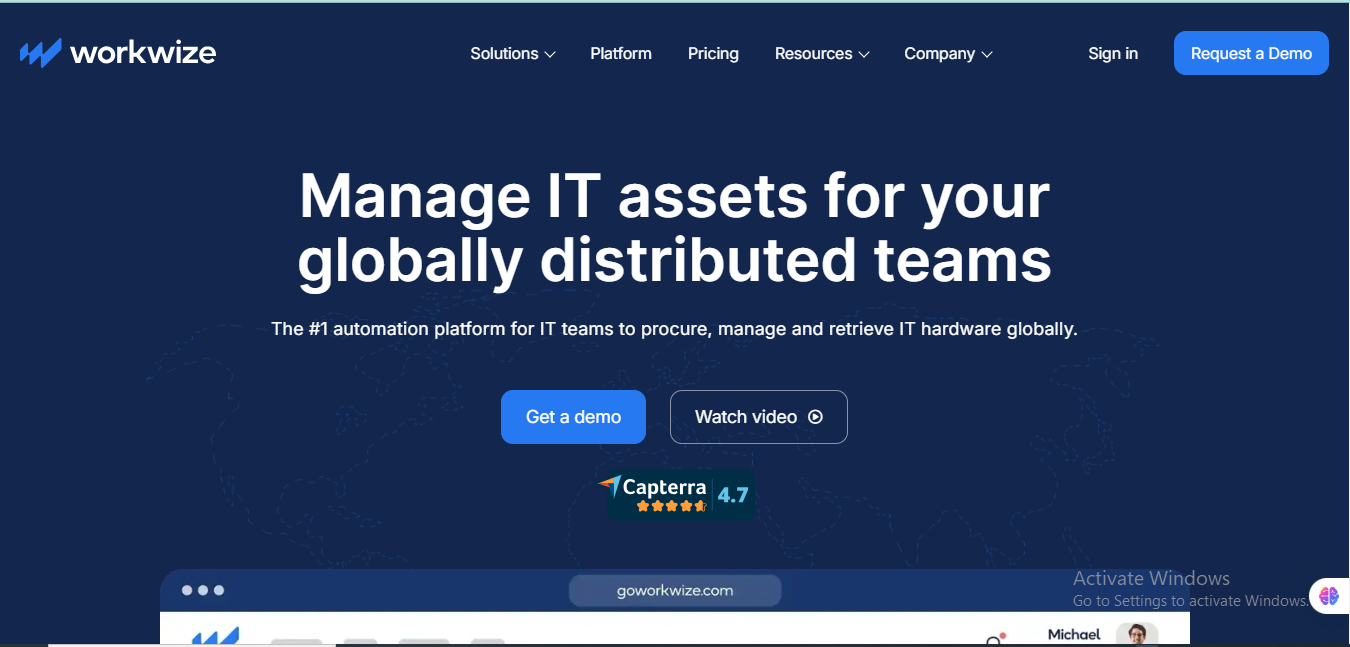
Workwize is a global IT asset management platform built to automate the entire device lifecycle for distributed teams. Compared to Allwhere’s more manual and lightweight approach, Workwize positions itself as a zero-touch solution designed to reduce hands-on coordination across procurement, deployment, and retrieval.
Key features
- Zero-touch IT asset management covering procurement, deployment, retrieval, and disposal
- Automated workflows that manage the full IT asset lifecycle end to end
- Centralized platform for managing employee devices across global teams
- Global logistics operations spanning 100+ countries
- Real-time asset tracking and inventory visibility
- Secure device retrieval and certified data wiping
Best for
- Companies seeking a managed, low-touch approach to global device lifecycle management
- Distributed teams that want automation over manual coordination
- Organizations prioritizing end-to-end lifecycle coverage over lightweight tooling
Not ideal for
- Teams that want hands-on control over vendors or logistics processes
- Organizations looking to avoid managed-service models
- Companies that prefer usage-based, modular IT operations
Firstbase
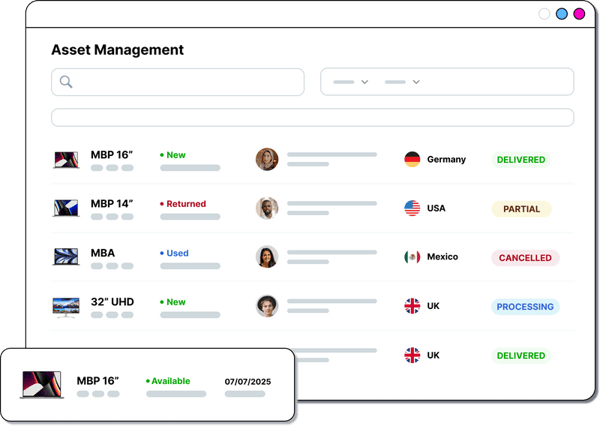
Firstbase is an IT equipment management platform for remote-first companies, covering procurement, deployment, monitoring, and retrieval in 150+ countries. Unlike Allwhere’s more bare-bones tooling, Firstbase provides a more structured management solution, though it is primarily geared toward larger organizations.
Key features
- Device procurement, deployment, and retrieval for distributed teams
- Centralized platform for managing employee devices and IT assets
- Support for the full IT asset lifecycle, from onboarding to offboarding
- Global operations spanning 150+ countries
- Integrations with HR systems to support remote onboarding workflows
Best for
- Enterprise-focused, remote-first organizations
- Companies that prefer standardized device programs at scale
- Teams managing large volumes of employee devices globally
Not ideal for
- SMBs and mid-market teams needing flexible, usage-based operations
- Companies sensitive to long-term commitments or rigid device programs
- Teams looking for a lightweight, highly customizable setup
ZenAdmin
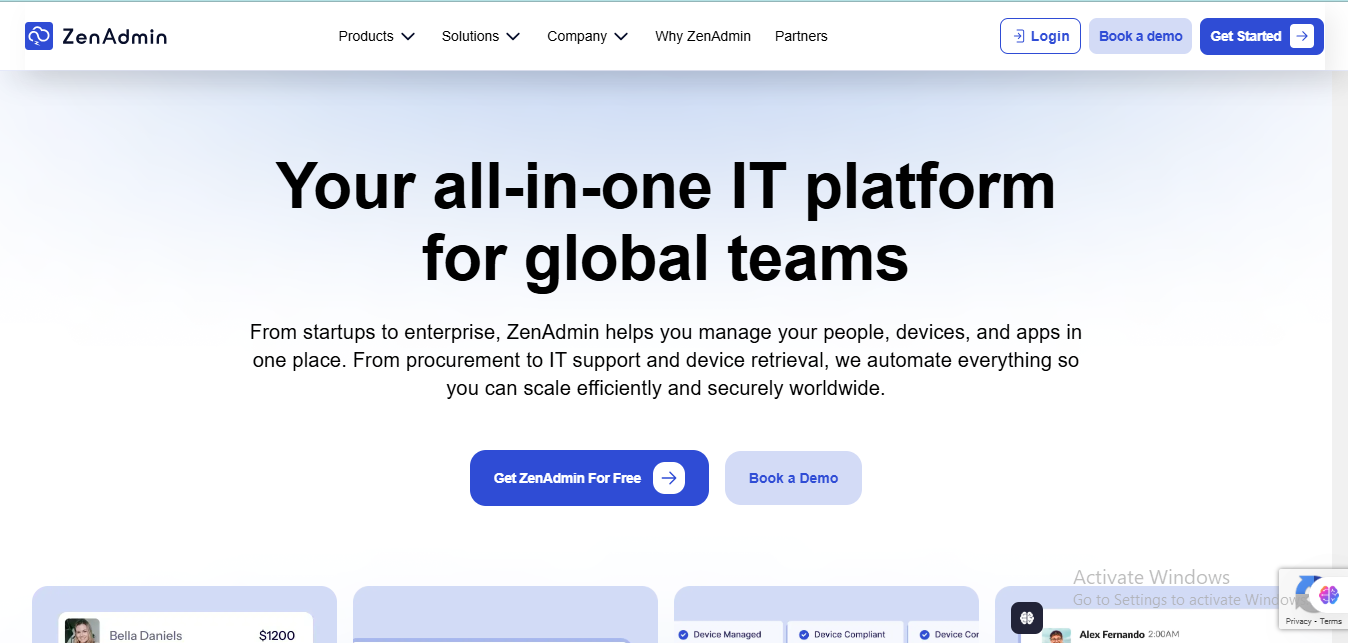
ZenAdmin is a full-stack IT management platform designed for remote and distributed teams. Compared to Allwhere’s more logistics-focused and manual approach, ZenAdmin emphasizes automation and centralized control across IT workflows.
Key features
- End-to-end IT management covering hardware, software, security, and access control
- Automated workflows that streamline onboarding and offboarding for remote teams
- Centralized visibility into IT assets, applications, and employee access
- Built-in security and compliance controls alongside asset management
- Integrations with HR systems and identity tools to reduce manual processes
Best for
- Distributed teams looking for a comprehensive IT management solution
- Companies prioritizing automation, security, and centralized workflows
- Organizations that want more than device logistics alone
Not ideal for
- Teams looking only for basic device procurement or retrieval services
- Organizations that want a lightweight, logistics-first platform
- Companies seeking minimal setup without broader IT management tooling
Rayda
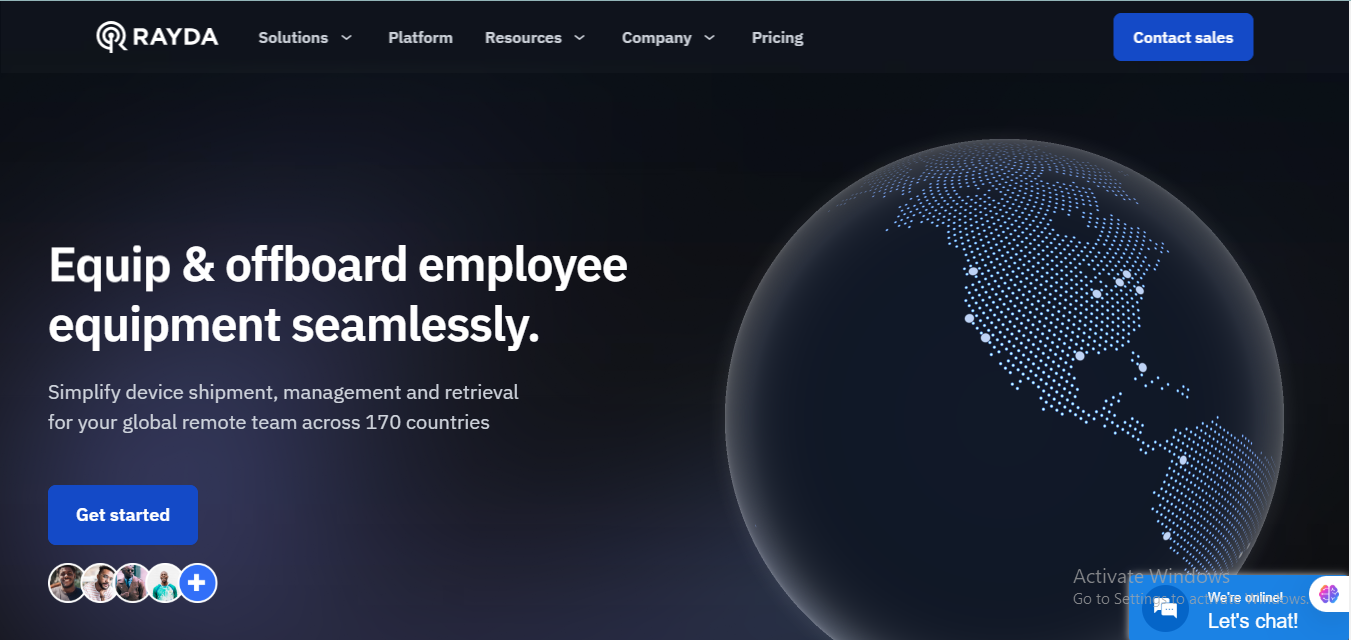
Rayda is an employee equipment management platform built to help small and mid-sized distributed teams manage device procurement, delivery, and retrieval with less operational overhead. Compared to Allwhere’s more manual workflows, Rayda focuses on simplicity and hands-on support rather than complex logistics tooling.
Key features
- Device procurement and delivery for remote and distributed teams
- Asset tracking and inventory management for employee devices
- Structured onboarding and offboarding workflows
- Device retrieval coordination for offboarding employees
- High-touch customer support to guide IT teams through operations
Best for
- SMBs and mid-market teams formalizing IT asset management
- Companies that want simpler workflows without building custom processes
- Teams that value guided support over self-managed logistics
Not ideal for
- Large enterprises with complex global logistics requirements
- Organizations needing advanced automation or zero-touch deployment
- Teams operating across a very broad set of countries
Retriever
Retriever is a specialized service focused exclusively on device retrieval and secure data wiping for offboarding employees. Unlike Allwhere, which attempts to cover multiple lifecycle stages with limited platform depth, Retriever concentrates on executing returns reliably and securely.
Key features
- Laptop and device retrieval coordination for offboarding employees
- Certified data wiping and chain-of-custody documentation
- Coverage focused on North America and select international regions
- Simple workflows designed to reduce delays during returns
Best for
- Companies that already manage procurement and inventory elsewhere
- Teams needing a dedicated solution for secure device retrieval
- Organizations prioritizing compliance and data security during offboarding
Not ideal for
- Teams looking for a full IT asset lifecycle or centralized management platform
- Companies needing procurement, deployment, or inventory management
- Distributed teams seeking a single system for global device operations
Tequipy
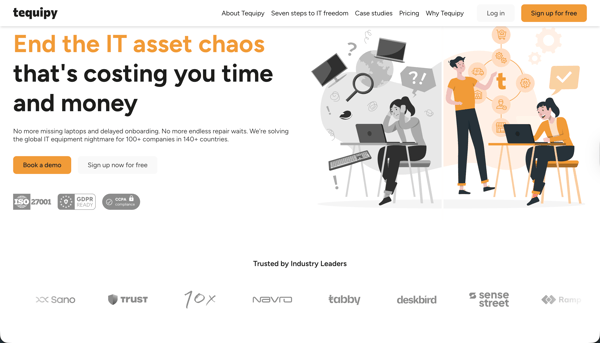
Tequipy is a lightweight employee equipment management platform designed for small teams that need basic visibility into devices without complex logistics or automation. Compared to Allwhere, Tequipy emphasizes simplicity over breadth, focusing on straightforward asset tracking rather than end-to-end lifecycle execution.
Key features
- Basic asset tracking for employee devices and equipment
- Inventory management with simple assignment and status tracking
- Support for remote onboarding workflows
- Integrations with existing HR systems for employee-device mapping
- Minimal setup designed for small, distributed teams
Best for
- Small teams and early-stage companies managing limited device fleets
- Organizations that want basic inventory visibility without heavy logistics
- Teams using external vendors for procurement and retrieval
Not ideal for
- Mid-market or enterprise teams with complex global operations
- Companies needing device procurement, retrieval, or lifecycle automation
- Organizations looking for a centralized, end-to-end IT asset management platform
Unduit
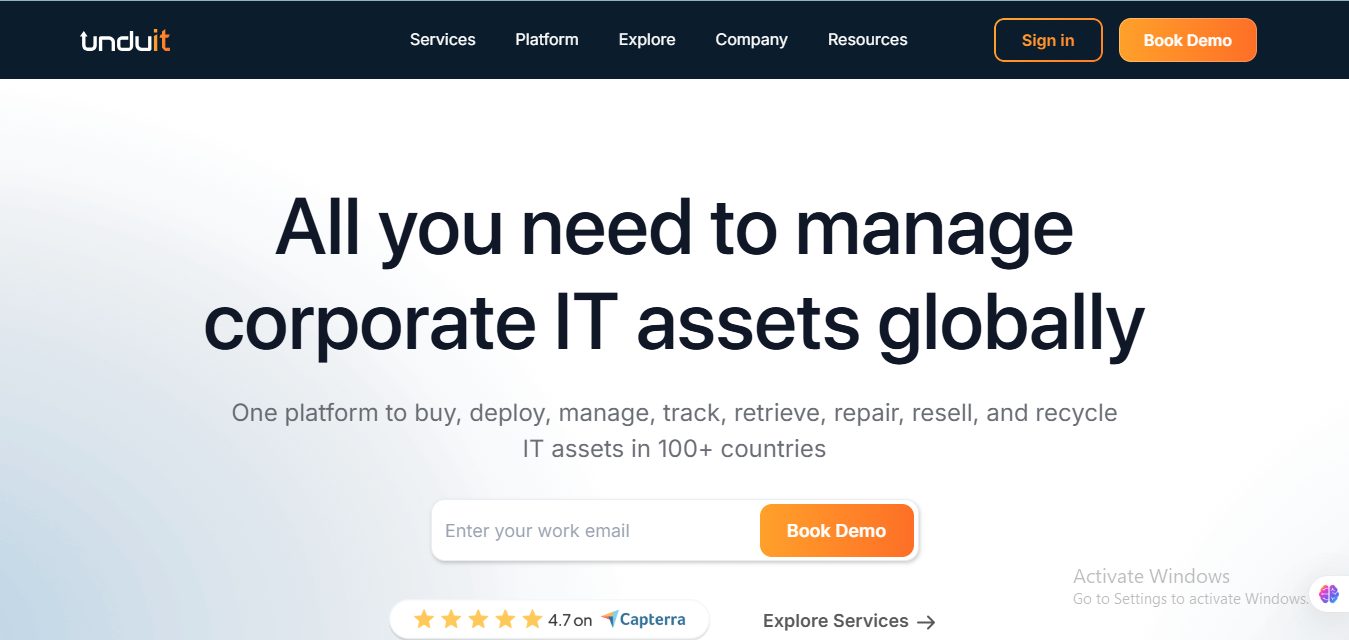
Unduit is a global IT management platform built for large enterprises seeking full control over their hardware lifecycle. Compared to Allwhere’s lighter, more manual tooling, Unduit focuses on governance, reporting, and integration with enterprise IT systems.
Key features
- Advanced IT asset tracking and inventory management
- Procurement and lifecycle workflows designed for enterprise environments
- Deep integrations with ITSM platforms such as ServiceNow
- Reporting and compliance tools for large-scale IT operations
- Centralized visibility into IT assets across departments and locations
Best for
- Large enterprises managing complex IT asset inventories
- Organizations with established ITSM and compliance requirements
- Teams needing detailed reporting and audit capabilities
Not ideal for
- SMBs or mid-market teams seeking simplicity and fast setup
- Companies prioritizing logistics execution over governance
- Distributed teams needing hands-on retrieval and redeployment support
Esevel
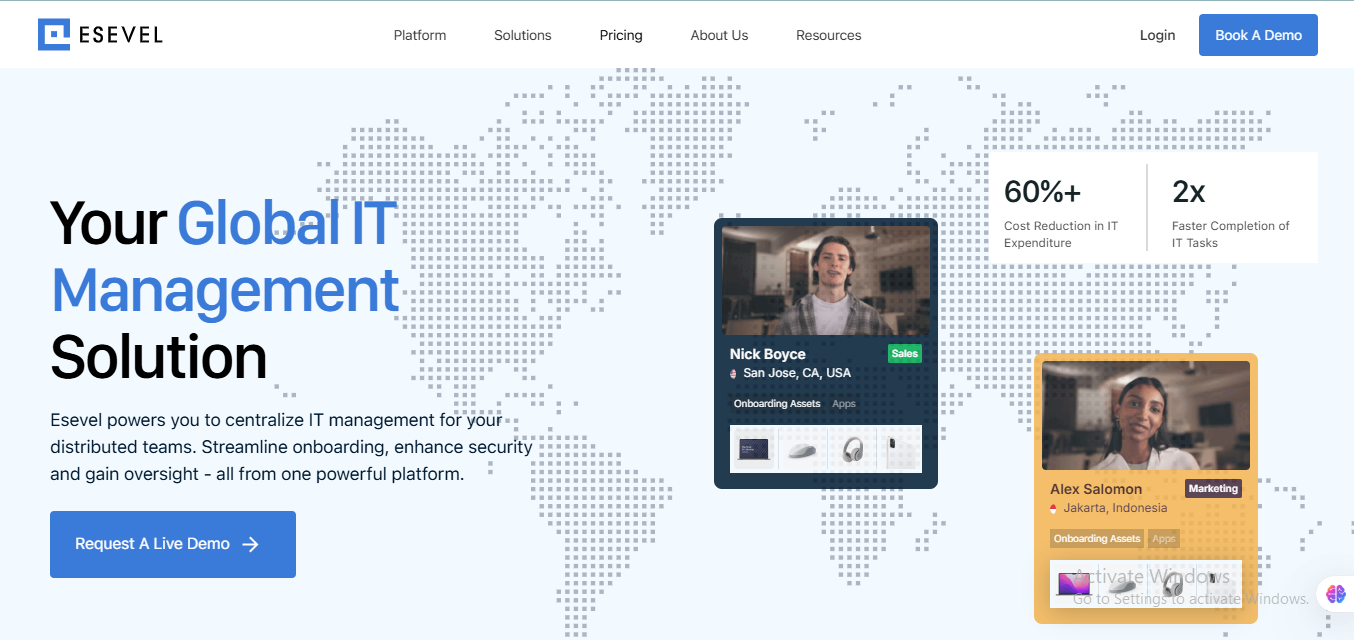
Esevel is a cloud-based IT management platform that helps distributed and remote teams manage the full device lifecycle from procurement to support. Compared to Allwhere’s broader but less consistent global coverage, Esevel positions itself as a more regionally focused solution with localized operations.
Key features
- IT asset lifecycle management covering procurement, deployment, tracking, and support
- Asset tracking and inventory management for employee devices
- Support for remote onboarding and offboarding workflows
- Regional logistics and vendor networks tailored to APAC markets
- Centralized dashboard for managing IT assets across distributed teams
Best for
- Companies operating primarily in the Asia Pacific region
- Distributed teams needing region-specific logistics and support
- SMBs and mid-market teams looking for localized lifecycle management
Not ideal for
- Organizations requiring truly global coverage across multiple continents
- Enterprises needing advanced automation or zero-touch deployment at scale
- Teams looking for a single platform to manage devices worldwide
Deel IT
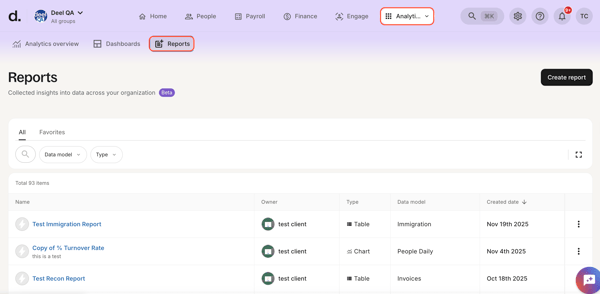
Deel IT, formerly Hofy, is a global IT asset management platform that supports the full device lifecycle in 130+ countries. Unlike Allwhere, Deel IT ties device procurement, deployment, and retrieval closely to HR workflows rather than operating as a standalone IT asset management platform.
Key features
- Global device procurement and deployment for remote employees
- Equipment retrieval and offboarding workflows linked to HR events
- Centralized visibility into employee devices within the Deel platform
- Coverage across 130+ countries to support international hiring
- Integrations with HR systems through Deel’s unified ecosystem
Best for
- Companies already using Deel for global hiring and payroll
- Teams that want IT equipment management embedded within HR workflows
- Distributed teams hiring internationally at scale
Not ideal for
- Organizations wanting a standalone IT asset management platform
- Teams needing flexible vendor choice or modular lifecycle services
- Companies that prefer IT operations to be independent from HR tooling
.jpg?width=600&height=338&name=cost%20of%20onboarding%20a%20new%20employee%20(2).jpg)
How to choose the right Allwhere alternative
Choosing the right asset management solution comes down to whether the platform can support your business as device volume, geography, and operational complexity increase—without adding friction or hidden costs.
When comparing Allwhere alternatives, scaling businesses should focus on the following criteria:
- Pricing transparency and cost control: Transparent pricing is a key requirement for many businesses. Platforms that require forms or sales conversations before revealing costs can slow decision-making and make budgeting harder, especially for SMBs and mid-market teams.
- Platform usability and intuitive interface: An intuitive interface saves time and reduces reliance on spreadsheets or manual tracking. Teams should look for centralized dashboards with real-time visibility rather than fragmented or bare-bones tooling.
- Lifecycle automation for onboarding and offboarding: Many IT asset management platforms automate the IT asset lifecycle to simplify onboarding and offboarding. Automation reduces manual coordination and helps devices move from new hires to retrieval without delays.
- Procurement, deployment, and logistics execution: Platforms that handle procurement, deployment, and retrieval end to end, often in less than a week, reduce operational overhead. World-class logistics matter most when teams are distributed across regions.
- Security and device management capabilities: Built-in MDM, remote access controls, and identity-based security features help protect IT assets throughout the lifecycle, especially for remote employees.
- Global readiness and scalability: As businesses expand, global logistics coverage and consistent service quality become critical. Solutions should scale without forcing teams into manual processes or region-by-region workarounds.
.jpg?width=600&height=338&name=cost%20of%20onboarding%20a%20new%20employee%20(5).jpg)
Why businesses choose GroWrk over Allwhere
As device fleets grow, many teams move away from Allwhere due to its bare-bones platform, manual workflows, limited visibility, and higher logistics costs in some regions. GroWrk is chosen by businesses that need a centralized system, predictable execution, and global IT operations that scale without added complexity.
GroWrk supports distributed teams through:
- Centralized asset management platform
One system to manage the entire device lifecycle, from procurement to retrieval and redeployment, with real-time visibility across global teams. - Transparent, usage-based pricing
À la carte pricing aligned to actual services used, avoiding hidden costs or inflated logistics markups. - Global logistics built for scale
Local procurement, shipping, and retrieval across 150+ countries, designed to reduce delays and inefficient cross-border routing. - End-to-end lifecycle automation
Automated workflows for onboarding, offboarding, device swaps, and returns that reduce manual coordination and save time. - Real-time tracking and retrieval visibility
Clear status updates for devices at every stage, eliminating spreadsheet-based tracking and communication gaps. - Security and device management controls
Built-in MDM support, remote access controls, and certified data wiping to protect IT assets throughout their lifecycle.
For SMBs, mid-market, and enterprise teams managing global IT operations, GroWrk offers a scalable alternative to Allwhere that prioritizes visibility, execution, and cost control across the entire device lifecycle.

Frequently asked questions
What is Allwhere used for?
Allwhere is used to manage employee devices across procurement, deployment, tracking, and retrieval. It’s commonly adopted by distributed teams that want a lightweight, pay-as-you-go approach to device logistics, though it offers limited automation and centralized visibility compared to full IT asset management platforms.
Why do companies look for Allwhere competitors?
Teams often evaluate Allwhere competitors as they scale and require more than basic device logistics. Common reasons include the lack of a centralized management platform, manual workflows, limited real-time visibility into asset retrieval, higher logistics costs in some regions, and restricted global coverage for truly distributed teams.
Is Allwhere an IT asset management platform?
Allwhere supports parts of the IT asset lifecycle, such as device procurement and retrieval, but it is generally considered more lightweight than a full IT asset management platform. Many businesses outgrow it when they need lifecycle automation, inventory depth, security controls, or centralized reporting across global teams.
How does Allwhere compare to GroWrk?
Compared to Allwhere’s more manual and bare-bones setup, GroWrk provides a centralized platform for managing the entire device lifecycle. GroWrk supports procurement, deployment, tracking, retrieval, redeployment, and disposal with real-time visibility, automated workflows, and global logistics coverage across 150+ countries.
Does Allwhere offer transparent pricing?
Allwhere does not publish pricing publicly, and businesses typically need to complete a form or speak with sales to see costs. Many companies prefer alternatives with transparent, itemized pricing that makes it easier to forecast spend and control logistics and retrieval costs.
What features should businesses look for in an Allwhere alternative?
When comparing alternatives, businesses should look for:
- Centralized asset management with real-time visibility
- Automated onboarding and offboarding workflows
- Transparent pricing models
- Global logistics and retrieval capabilities
- Security features such as built-in MDM and remote access controls
These features help reduce manual work, save time, and support scaling operations.
Are Allwhere alternatives better for SMBs and mid-market teams?
Many Allwhere alternatives are better suited for SMBs and mid-market teams because they offer deeper automation, clearer pricing, and more predictable service levels. As device volumes and geographic complexity increase, these platforms provide better control and visibility than lightweight, manual solutions.
Which Allwhere alternative is best for global teams?
The best alternative depends on a company’s size, regions of operation, and lifecycle needs. Teams managing devices across multiple countries often prioritize platforms that support end-to-end lifecycle management, global logistics, and centralized reporting, especially when visibility and execution speed matter.